Yellow Tang Facts
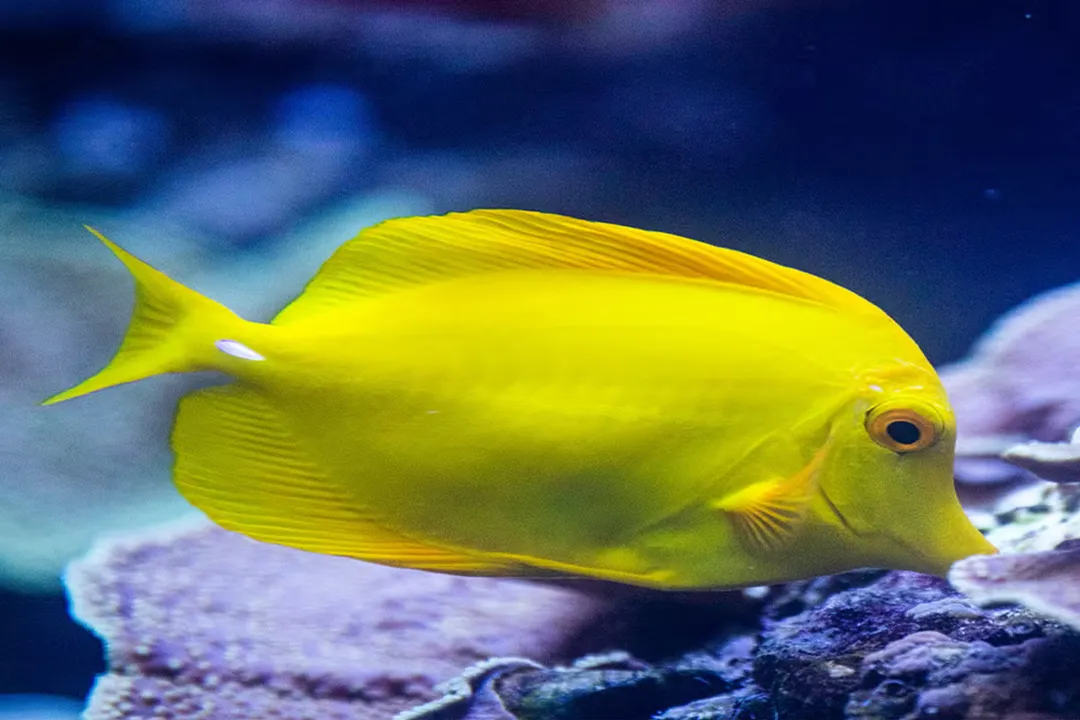
The iconic Yellow Tang, Zebrasoma flavescens, is instantly recognizable across the marine aquarium hobby and the coral reefs it inhabits due to its startlingly uniform, vibrant coloration. This small fish presents an almost pure, luminous yellow hue that can make it stand out dramatically against the blues and corals of its natural environment. [2][6] They belong to the surgeonfish family, Acanthuridae, [1][6][7] sharing ancestry with other well-known grazing fish of the reef system.
# Bright Yellow
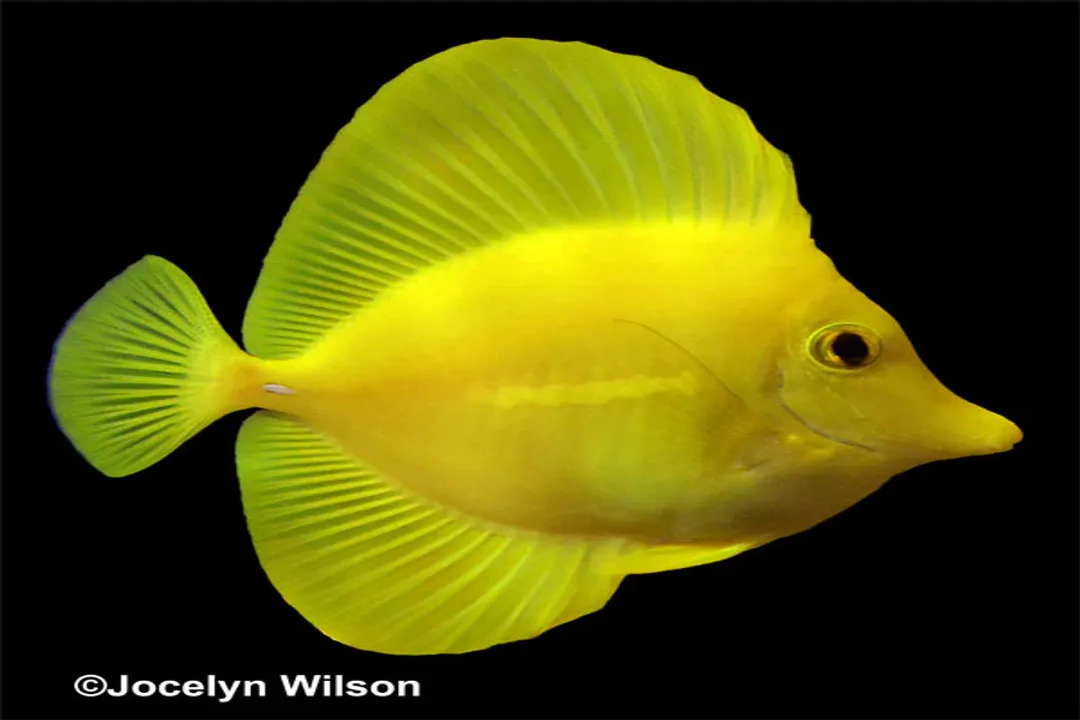
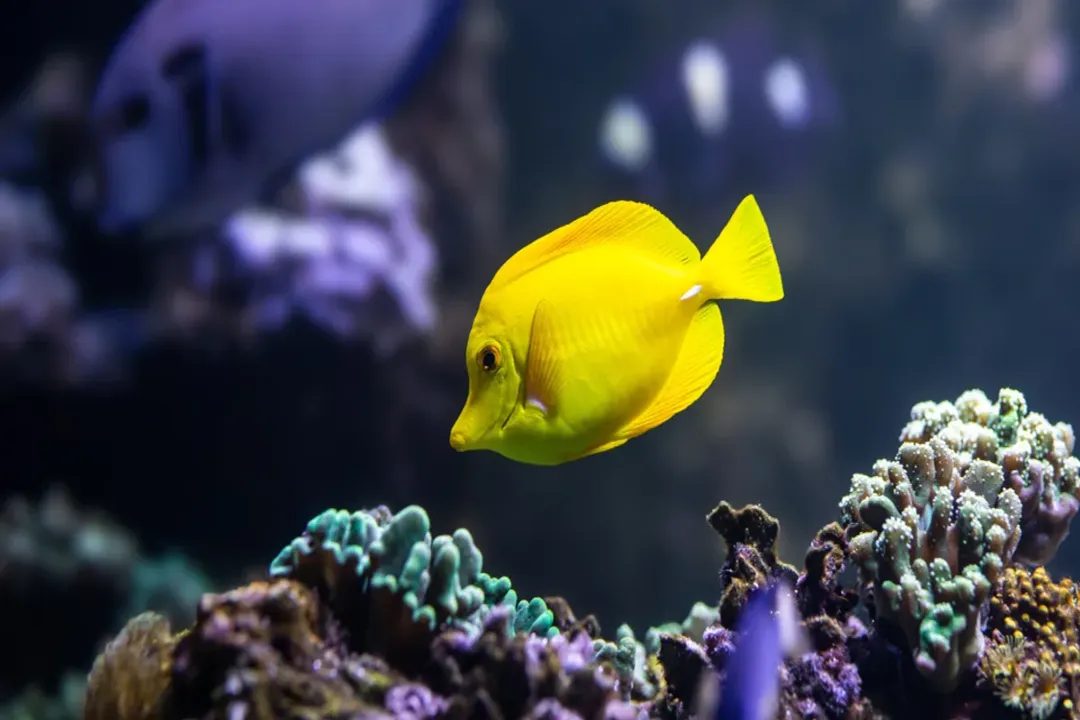
An adult Yellow Tang typically reaches a length of about 8 inches, or roughly 20 centimeters. [1][2][6][7] This size is relatively small for a reef inhabitant, yet their brilliance ensures they are seldom overlooked. While juveniles are noted for their brilliant, unblemished yellow, mature individuals might develop a slightly washed-out or even brownish or olive tint across the snout area. [2][7] This variation in color saturation across the body is a subtle characteristic that can sometimes distinguish age or even environmental stress, though the base color remains intensely yellow. [2] They possess a distinctive, compressed, oval-shaped body profile, characteristic of many surgeonfish, built for maneuvering through complex reef structures. [2][6]
# Tail Scalpel
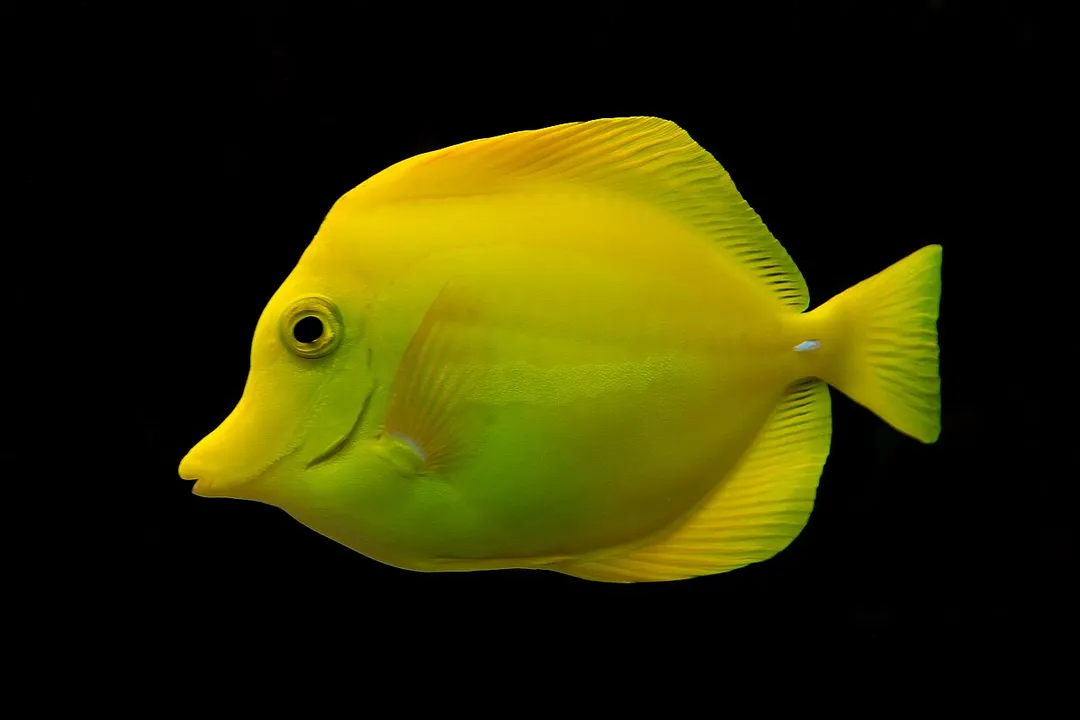
Perhaps the most defining and potentially dangerous feature of the Yellow Tang is the pair of razor-sharp, retractable spines located on either side of the base of the tail, or caudal peduncle. [1][3][6][7] These spines are the source of the family name, Surgeonfish, and they are indeed scalpel-like in structure. [1][3] They serve as a primary tool for defense against predators and, notably, for establishing dominance during territorial disputes with other fish, especially other tangs or similarly shaped species. [1][3][6] It is a crucial piece of defensive hardware that the fish can deploy when threatened. [1] It's a common misunderstanding that these blades are used for foraging; rest assured, they are purely defensive weapons and are never utilized in scraping algae from rocks. [3] Considering the fish only grows to about eight inches, having such a formidable, blade-like appendage highlights just how serious inter-species conflict can be on the reef, as this spine is proportionally quite large relative to the fish’s slender body profile. [1][2][6]
# Algae Grazers
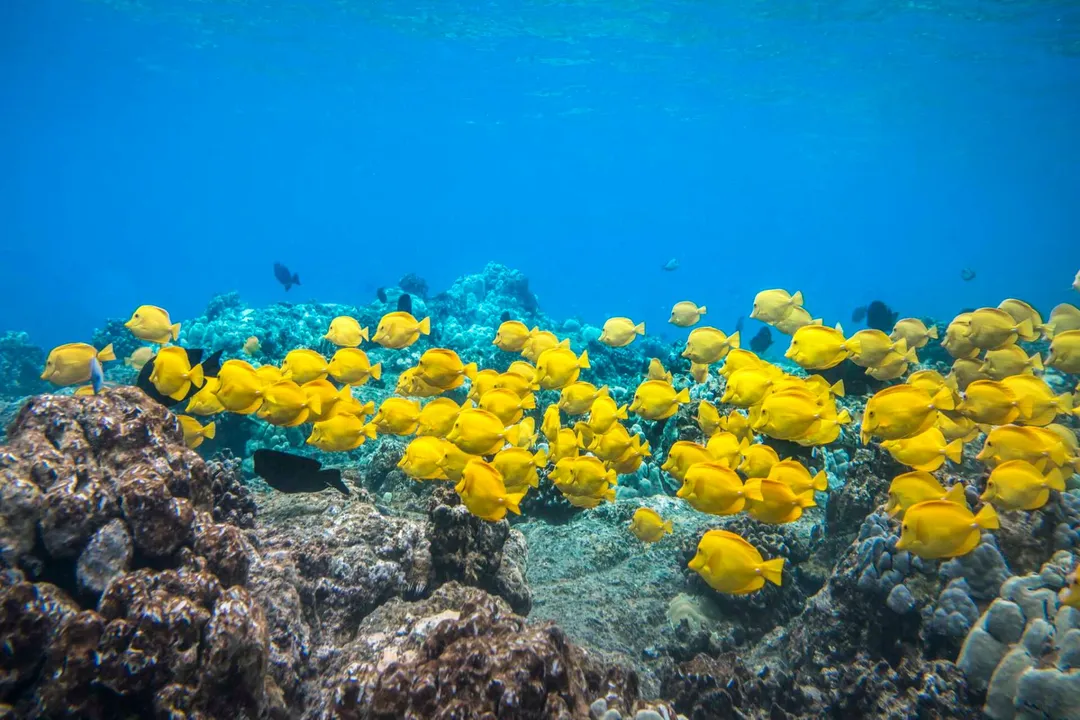
The dietary habits of the Yellow Tang are fundamental to their ecological niche. They are strict herbivores, classified as grazers whose primary food source in the wild is filamentous algae. [1][2][6][9] In a healthy, balanced reef setting, these fish perform an essential service by keeping algae growth in check, preventing faster-growing macroalgae from suffocating slower-growing corals. [1][7] This constant grazing maintains the delicate balance necessary for the reef community to thrive. [1][7] For aquarists keeping them, this means their diet cannot consist solely of standard fish flakes. They require a steady supply of marine algae or high-quality vegetable matter, such as specialized pellets or flakes formulated to meet their herbivorous needs. [1][7] Failure to provide sufficient roughage often leads to health issues, demonstrating that their feeding behavior is intrinsically linked to their well-being. [1]
# Ocean Habitat
The natural distribution of Zebrasoma flavescens is concentrated in the northern and western regions of the Pacific Ocean. [2][7] They are residents of the Indo-Pacific, inhabiting coral reefs and lagoons where the water is generally clear and warm. [1][6] They prefer the sunlit, outer reef slopes and shallow areas, often found swimming at depths ranging from about two meters down to fifty-five meters. [2] While they can sometimes be seen alone, they frequently form small aggregations or schools while cruising the reef face, seemingly moving together as they search for grazing patches. [1][2][7] This schooling behavior in the open water offers some protection, though when a perceived threat arises, they can retreat quickly into the complexity of the coral structure. [1]
One interesting observation when considering their environment is the sheer volume of grazing required to sustain them in the wild. A small school moving across a reef face effectively "mows" the algae growth, a process that is difficult to perfectly replicate in a closed aquarium system. [1][7] While providing adequate roughage in a tank is possible, the continuous, natural scraping motion across large surfaces that keeps them lean and healthy in the wild is a constant challenge for even experienced hobbyists to match. [1] Their presence in their native environment is a clear indicator of a healthy, algae-controlled reef ecosystem.
# Social Nature
In terms of temperament, Yellow Tangs are generally considered peaceful fish, especially when compared to some of their more aggressive surgeonfish relatives. [1][6] However, this peacefulness comes with significant caveats, particularly concerning territoriality. [1] While they might coexist peacefully with fish that look vastly different, they can become highly intolerant and aggressive toward other tangs, especially other Yellow Tangs or similarly shaped fish that compete for the same grazing territory. [1][6] Initial introductions into an established tank can sometimes see them behave shyly as they acclimate to their new surroundings. [7] Once settled, however, they will actively defend their preferred feeding or resting spots. [1] Their active swimming style means they are constantly moving through the water column, surveying their domain. [1]
# Tank Setup
Keeping Yellow Tangs successfully in captivity requires careful consideration of their environmental needs, particularly since they are active swimmers that require significant space to roam. [1] Because they are grazing herbivores, tanks must offer surfaces populated with algae or be provided with consistent, high-quality food sources. [1][7] They are sensitive to sudden changes in water chemistry, meaning stable, high-quality water parameters are essential for long-term health. [7] They are also known to be susceptible to certain external parasites, such as Ich, which often appear when the fish is stressed by poor conditions, making consistent water management paramount. [7] Successfully maintaining their vibrant color and active demeanor is a direct reflection of the stability and quality of the captive marine environment provided. [7] They often form tight bonds with their environment once established, becoming a permanent, bright fixture in the aquarium display. [1]
# Spawning Facts
Reproduction in the wild involves the Yellow Tang gathering in groups to spawn. [2][5] This mass spawning event often takes place near dusk or immediately after sunset. [2] The species practices pelagic spawning, which means the eggs are released into the water column where they float freely, relying on currents to disperse them. [2][5] This strategy contrasts with species that lay eggs on the substrate or guard them, allowing for a broader distribution across the ocean environment. [2]
Related Questions
#Citations
Yellow Tang
Yellow tang
Our Top Ten Yellow Tang Facts
Yellow Tang | Online Learning Center
Yellow tang Facts for Kids
Hawaiian Yellow Tang
Yellow Tang
Yellow Tang
Zebrasoma flavescens (Lemon sailfin) | INFORMATION