What is notable about the spiderlings after the female D. crocata deposits her eggs?
Answer
Spiderlings remain with the mother in her silken enclosure
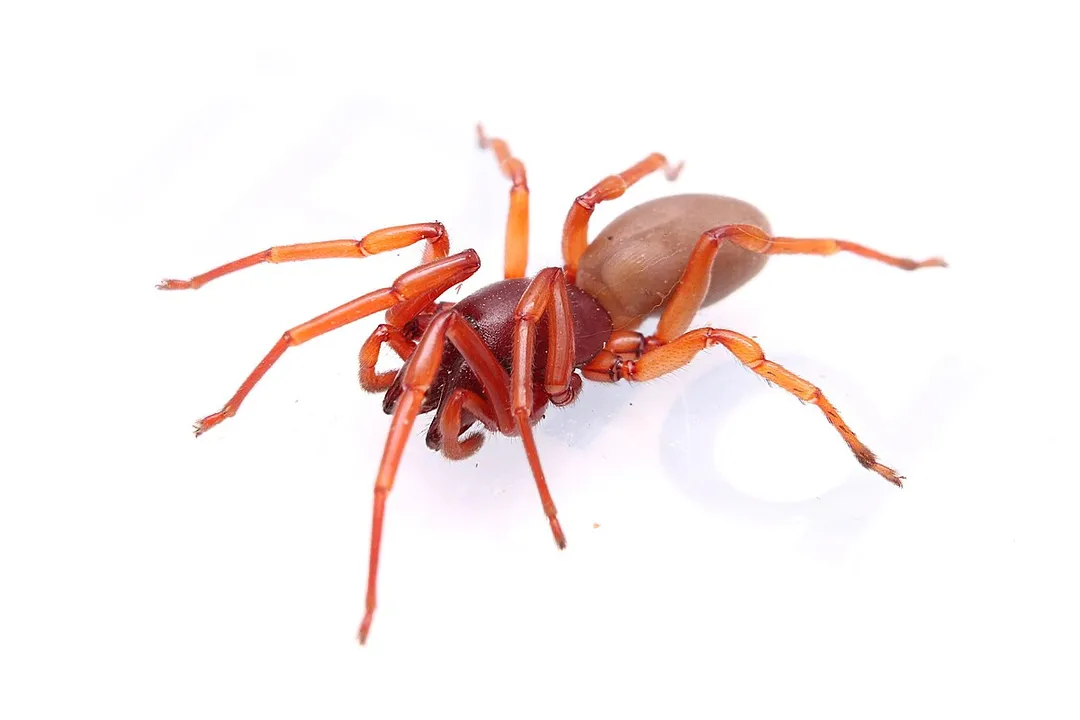
A significant aspect of the woodlouse spider's life cycle involves maternal care following reproduction. After mating in the spring, the female constructs a silken retreat where she deposits up to seventy eggs in a sac. Crucially, the spiderlings do not immediately leave upon hatching; they remain with the mother inside this secure, localized silken enclosure for an initial period before dispersing. This family unit occupies the protected space until the young are sufficiently developed to defend themselves, which can take several weeks. This reproductive strategy solidifies the occupation of a secure lair during the late spring and early summer months.
Related Questions
Where does the geographical origin of the woodlouse spider, Dysdera crocata, trace back to?What distinct physical feature leads to alarm or misidentification in Dysdera crocata?Which structural hideaway is cited as the most frequently cited location for D. crocata indoors?During which season is the woodlouse spider often cited as the most common time to encounter them?What material forms prime outdoor sanctuaries for D. crocata during the day?The presence of Dysdera crocata is almost entirely dictated by the location of which armored prey?How does the woodlouse spider hunt compared to orb-weavers or cobweb spiders?Besides common cracks and gaps, what documented means of entry has D. crocata used to enter dwellings?What is notable about the spiderlings after the female D. crocata deposits her eggs?In North America, the distribution of D. crocata stretches westward as far as which state?