How does the woodlouse spider hunt compared to orb-weavers or cobweb spiders?
Answer
Active hunter, not a web-builder for prey capture
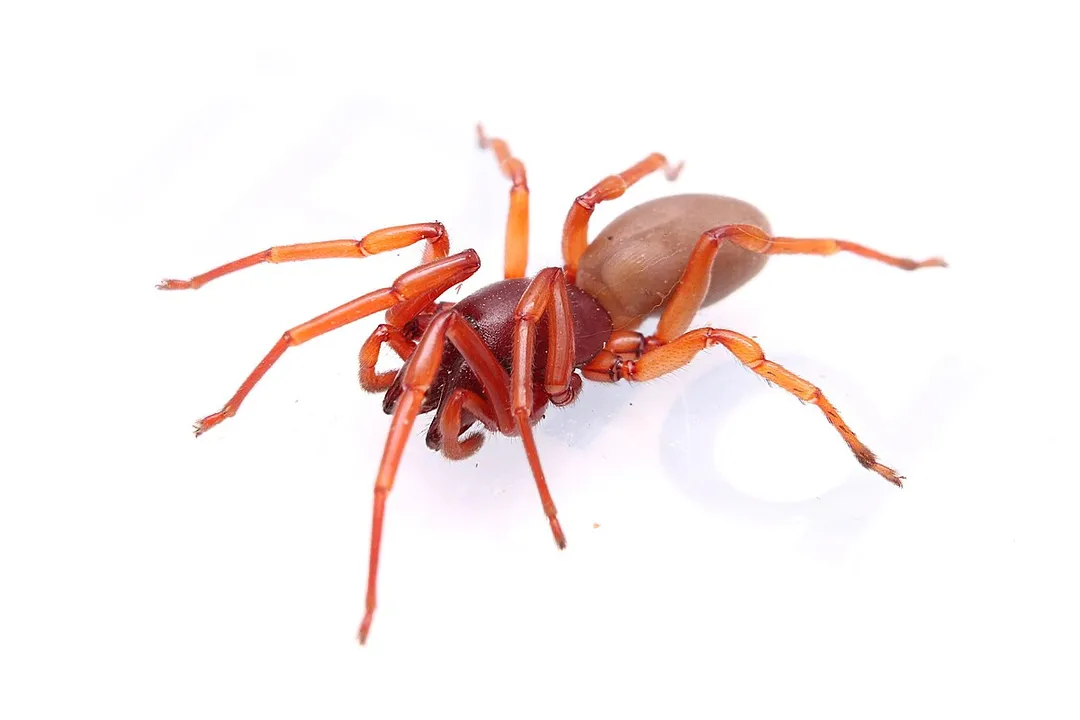
A key behavioral distinction for *Dysdera crocata* is that it functions as an active hunter; unlike many other common spiders such as orb-weavers or cobweb spiders, it does not spin large, elaborate webs dedicated to capturing prey in the air or across open spaces. Instead, its silk is reserved strictly for building personal security structures—silken retreats used for resting, molting, safeguarding eggs, and providing private chambers. Since woodlice are ground-dwelling, detritus-loving creatures active after dark, the spider must patrol the ground surface where isopods congregate, relying on its mobility and specialized powerful jaws to secure its meal rather than passive trapping webs.
Related Questions
Where does the geographical origin of the woodlouse spider, Dysdera crocata, trace back to?What distinct physical feature leads to alarm or misidentification in Dysdera crocata?Which structural hideaway is cited as the most frequently cited location for D. crocata indoors?During which season is the woodlouse spider often cited as the most common time to encounter them?What material forms prime outdoor sanctuaries for D. crocata during the day?The presence of Dysdera crocata is almost entirely dictated by the location of which armored prey?How does the woodlouse spider hunt compared to orb-weavers or cobweb spiders?Besides common cracks and gaps, what documented means of entry has D. crocata used to enter dwellings?What is notable about the spiderlings after the female D. crocata deposits her eggs?In North America, the distribution of D. crocata stretches westward as far as which state?