What function was the exceptionally long front horn likely used for?
Answer
Sweeping aside deep snow drifts to reach grasses
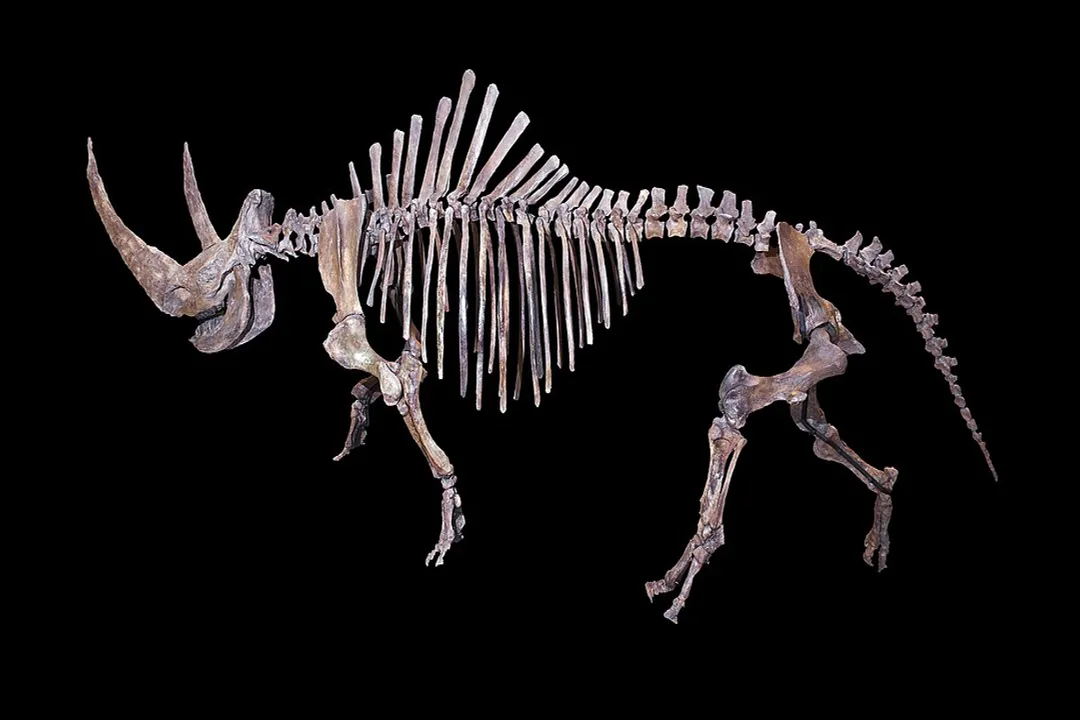
Paleontological evidence suggests that the remarkably long front horn, which often showed significant wear, blunting, or damage, was functionally employed in foraging behavior related to its environment. Given that the Woolly Rhino was a grazer living in cold conditions, it is highly probable that this imposing keratinous structure, which could exceed one meter in length, was used as a tool, functioning akin to a plow or snow shovel. This action would have allowed the animal to clear deep drifts of snow accumulated during the long winters, granting access to the underlying grasses and sedges that constituted its primary diet.
Related Questions
What is the scientific designation for the Woolly Rhinoceros?What characterized the insulating coat of the Woolly Rhino?What function was the exceptionally long front horn likely used for?What feeding behavior characterized the diet of *Coelodonta antiquitatis*?Which geographical regions defined the vast distribution of the Woolly Rhino?What was the preferred ecosystem inhabited by the Woolly Rhinoceros?Approximately how tall did the Woolly Rhino stand at the shoulder?What major environmental shift caused the Woolly Rhino's primary feeding ground to recede?How was the primary nasal horn of *Coelodonta antiquitatis* typically proportioned or shaped?Where are perfectly preserved, complete specimens of the Woolly Rhino often unearthed?