What is a fun fact about a slug?
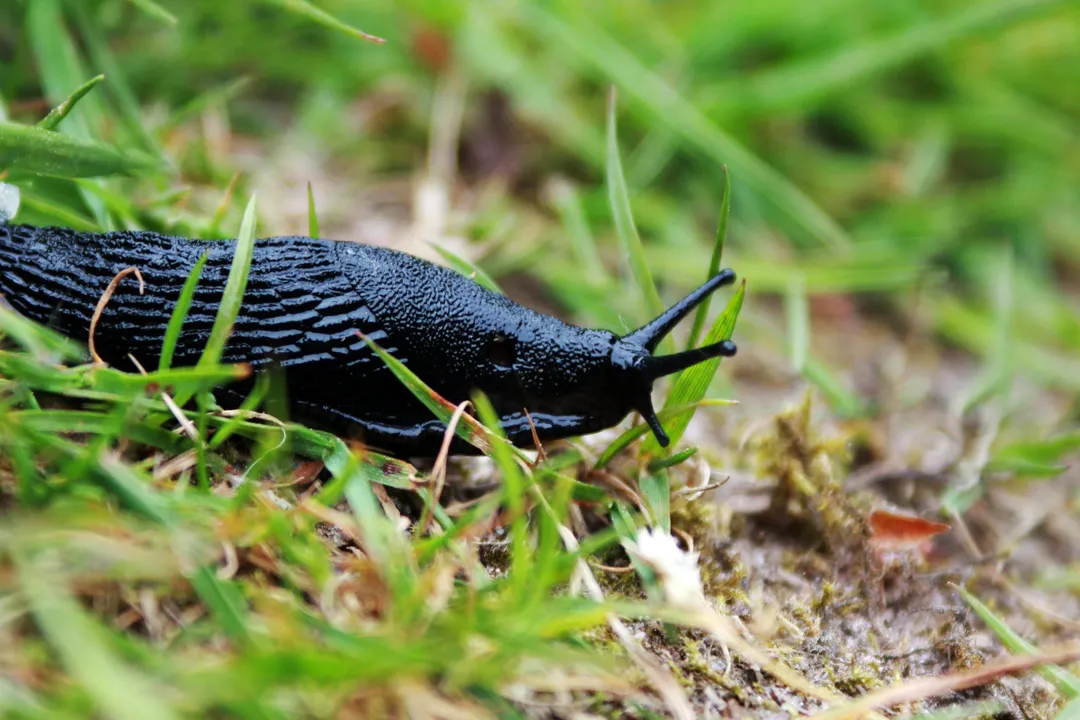
That seemingly simple, slimy garden visitor often elicits a sigh of frustration, perhaps followed by a quick kick, but beneath the surface moisture and that telltale trail lies a creature far more complex and interesting than most gardeners suspect. To begin appreciating them, one must first know the correct terminology: a group of slugs, believe it or not, is called a cornucopia, which seems fitting given their impressive biological characteristics.
# Teeth Records
Perhaps the most jaw-dropping statistic about these mollusks concerns their dental structure. Forget sharks; slugs hold the world record for the sheer number of teeth, with some species boasting over 20,000 tiny gnashers, and one source citing as many as 27,000. [3][4] These teeth are not individual chompers like ours; rather, they are arranged upon a ribbon-like structure known as the radula. [4][5] The slug uses this radula like an inbuilt cheese grater, rasping away at its food source. [3][5] Just like sharks, slugs are constantly losing and replacing these microscopic teeth throughout their lives. [3][4]
This incredible dental apparatus stands in stark contrast to their means of locomotion. Slugs are masters of soft-bodied engineering, possessing what is known as a hydrostatic skeleton—essentially, their body structure is supported by water pressure, much like a water balloon. [5] It is quite a fascinating biological split: their primary mode of movement relies on the simplest form of structural support (fluid dynamics), yet their primary method of consuming food involves one of the most complex, high-count dental arrangements in the animal kingdom. [3][5] This suggests an evolutionary path where investment in specialized ingestion tools outpaced the need for rigid internal support.
# Blue Blood
Another deeply surprising physiological fact relates to what circulates within them. While humans rely on iron in hemoglobin to give our blood its signature red hue when carrying oxygen, slugs utilize a different molecule: hemocyanin, which contains copper. [4][3] This results in slug blood, or haemolymph, being a pale blue or grey color. [4] This haemolymph doesn’t stay neatly contained in blood vessels; instead, it surrounds and bathes all the internal organs directly. [4]
Adding to their odd anatomy, most slugs are evolutionarily skewed. They are generally “right-handed,” meaning their breathing pore (called a pneumostome) and most major organs are oriented toward the right side of their body. [4] This asymmetry is a clear remnant from their evolutionary ancestors—the coiled snails—whose shells dictated a spiral orientation for their organs. [4]
# Reproductive Wonders
If their internal structures seem alien, their approach to reproduction is even stranger. Slugs, like most snails, are hermaphrodites, meaning an individual possesses both male and female reproductive organs. [3][4][5] While they prefer to exchange genetic material, this duality allows them a significant fallback: most species can self-fertilize if a mate cannot be found. [3][4] When two slugs do find each other, the mating ritual is quite the spectacle, often involving them partially encircling one another and connecting their male genitalia in a corkscrew fashion. [3] This process can take many hours, and if they become stuck, one might resort to chewing off the partner's (or even its own) penis to detach, though the victim can survive with only female genitalia and continue to breed. [3]
The reproductive output is staggering. A single slug can lay up to 100 eggs multiple times throughout a year. [3] Because both partners become pregnant during mating, the numbers quickly escalate. [3] Over the course of one slug’s lifetime, it can accumulate a phenomenal 90,000 descendants. [3]
# Life Underground
The casual observer often severely underestimates the actual slug population in any given location. While finding a few munching on lettuce might seem like an infestation, it is merely the tip of the iceberg. In the UK, it is estimated that at any given time, 95% of the local slug population is living underground, hidden in soil, woodpiles, or under damp debris. [3]
These hidden multitudes are often waiting in the form of eggs. Slug eggs are described as small, delicate, pearly white balls. [3] They are remarkably resilient and can lie dormant for years, only hatching when environmental conditions become optimal. [3] This dormant resilience means that even a thorough garden clearing one season might leave the soil primed for a massive emergence the next if the weather shifts just right.
For gardeners dealing with surface damage, recognizing this underground majority suggests that surface-level moisture management is only half the battle. To truly manage populations, one must consider the hidden layer. A practical tip is to lightly aerate or turn the top few inches of soil during dry periods, which exposes these hidden eggs to the elements and to natural predators like birds and ground beetles that operate in the topsoil layer, offering a proactive step against future visible outbreaks. [3][4]
# A Slime That Stays
The notorious slime is more than just a messy trail; it is the very essence of the slug's survival and movement. It serves as a lubricant, allowing them to glide across surfaces as their "stomach foot" contracts rhythmically. [3] Furthermore, this mucus prevents the gastropod from drying out, which is a constant threat for a creature lacking a shell for retreat. The slime is also highly absorbent, which is why water actually makes it more effective in facilitating movement. [3]
Crucially, every slug’s slime trail is unique, acting much like a human fingerprint and possessing its own specific scent to help the individual find its way back to shelter or known food sources. [3] While this slime deters some predators with its bitter taste, for humans, it is simply sticky and hard to wash off. If you find yourself covered in the residue after handling one, using vinegar is recommended as an effective aid in removal. [3]
# Not All Villains
Despite the bad press slugs receive from gardeners focused on seedlings, the vast majority of slug species are performing essential ecological services. [4] In the UK, less than a quarter of the approximately 40 species are considered serious plant pests. [4] Many species are critical decomposers, consuming decaying organic matter, fungi, and algae, returning those vital nutrients to the soil in the carbon and nitrogen cycles. [4] Without them, dead plant material would accumulate far more rapidly. [4]
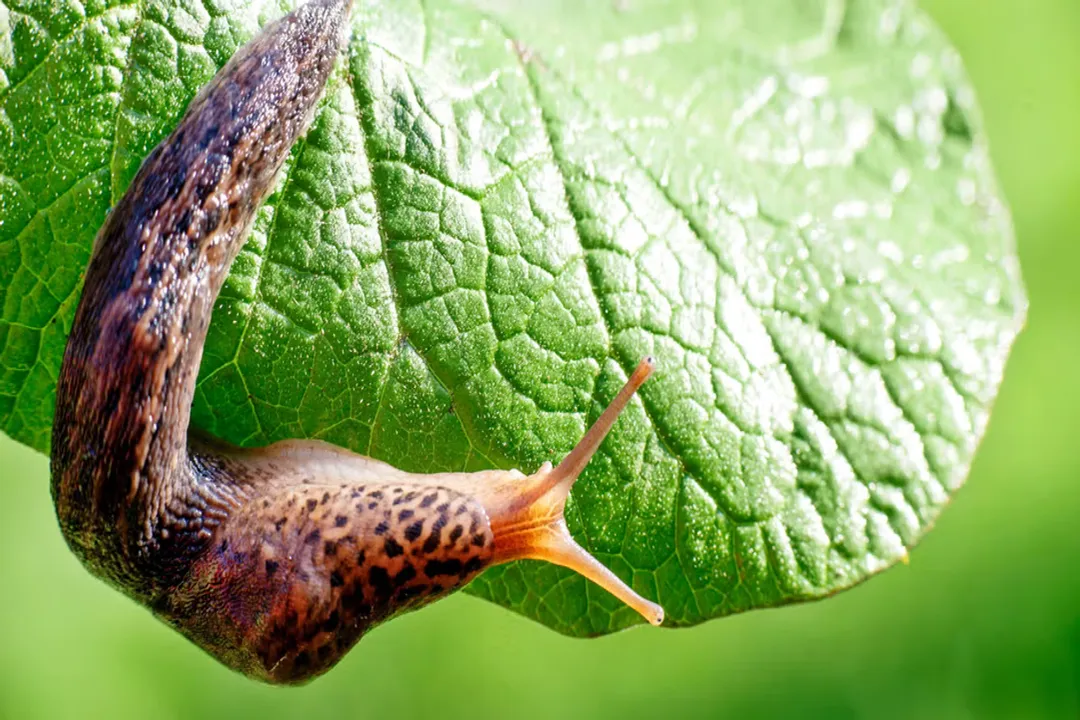
Some species have taken carnivorous habits to the extreme. The leopard slug (Limax maximus) has been reported eating other live slugs, while the ghost slug (Selenochlamys ysbryda), a white, eyeless species, actively hunts earthworms. [4] Even the shelled slug (Testacella) focuses almost exclusively on worms. [4] This shows that while many slugs are detritivores, others are active predators contributing to local invertebrate population checks.

# Size and Speed
To appreciate the scale of these creatures, it is useful to look at the extremes. The largest slug found in the UK is the ash-black slug (Limax cinereoniger), a woodland dweller that can reach lengths exceeding 30 centimeters, or about a foot long. [4] These giants prefer the fungi and algae of deciduous woodlands rather than tender garden leaves.
In terms of pace, the champion is the tramp slug (Deroceras invadens), which has been recorded moving at a blistering speed of 17.6 meters per hour, or roughly 29.4 centimeters per minute. [4] While that sounds slow by most animal standards, for a footed stomach relying on mucus, it’s a respectable burst of speed when attempting to escape notice. [4]
The sheer breadth of facts—from their copper-based blue blood to their ability to survive for years as dormant eggs waiting for the right moment—paints the slug not as a simple garden pest, but as a hardy, strange, and highly evolved member of the mollusk family. [3][4]
#Videos
Slugs (10 FACTS You NEVER KNEW) - YouTube
Related Questions
#Citations
10 fun facts about slugs / RHS Gardening
What are cool slug facts? : r/sluglife - Reddit
Interesting Facts about Slugs and Snails - Wild Stroud
8 Fun Facts About Slugs - Insight Pest Solutions
Slugs (10 FACTS You NEVER KNEW) - YouTube
10 Things You Didn't Know About Slugs - Wynnstay
10 fascinating facts about slugs that will surprise you