White Rhinoceros Facts
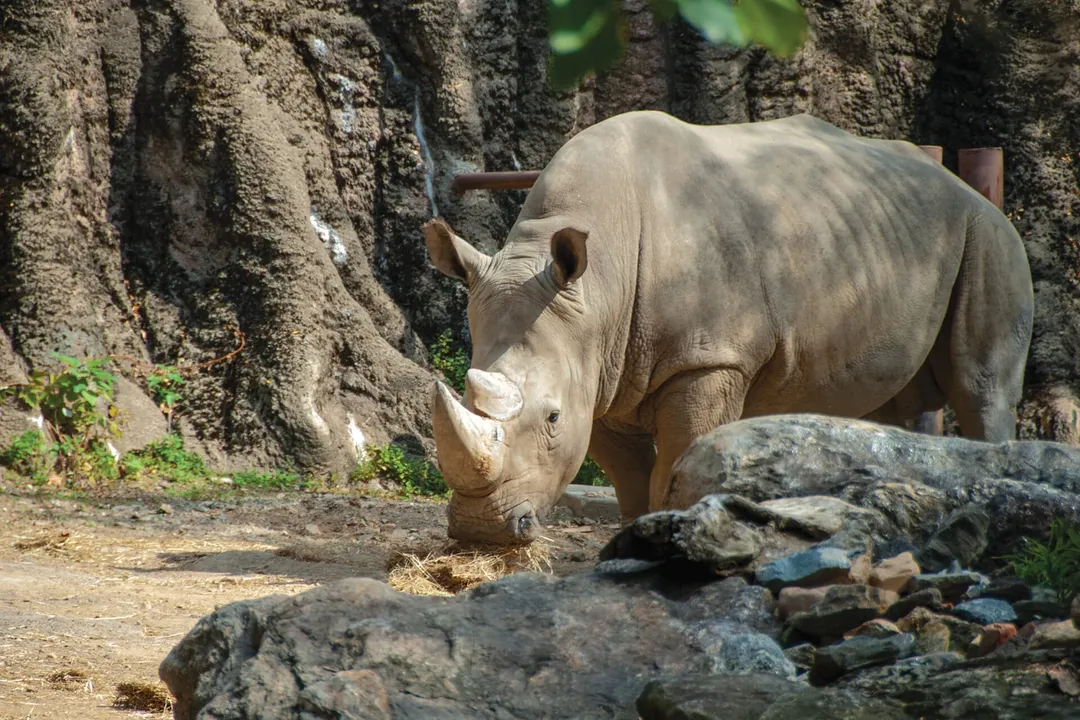
The sheer mass of the white rhinoceros demands attention; it stands as the largest land mammal in Africa, surpassed in global size only by the elephant. [1][2][5] These magnificent animals can weigh upwards of 4,000 pounds, with some males reaching close to 5,000 pounds, and stand nearly six feet tall at the shoulder. [5][6][8][10] Despite their imposing stature, their skin appears smooth from a distance, though it is thick and typically grey. [2][5] The species name "white" is, perhaps surprisingly, a misnomer; some theories suggest it originated from a mistranslation of the Afrikaans word "wyd," meaning wide, referring to its distinctive mouth shape, rather than its actual color. [1][3][4][6]
# Two Kinds
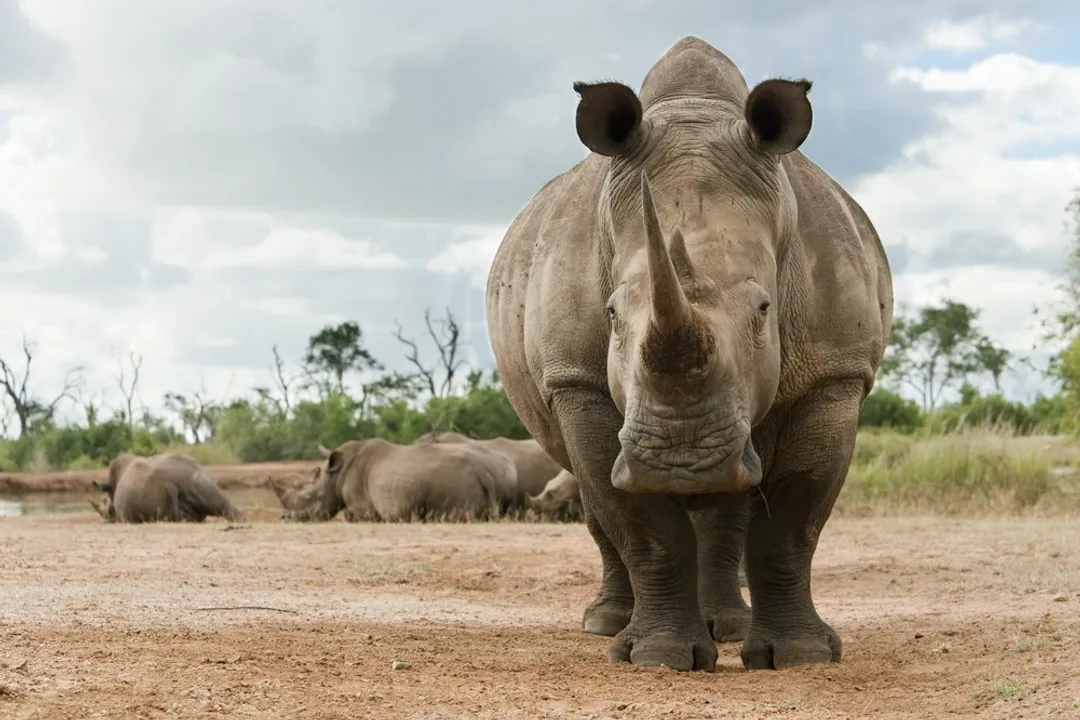
While often discussed as a single entity, the white rhinoceros actually comprises two distinct subspecies: the Southern white rhino and the Northern white rhino. [2][3][5][9] The Southern white rhino has enjoyed a remarkable, though hard-won, conservation comeback. At one point, this subspecies was pushed to the brink of extinction, yet dedicated conservation efforts have seen their numbers significantly increase, moving them from Critically Endangered to Near Threatened. [1][3][4][5] This population success story represents one of the world's greatest conservation achievements. [3][4]
In stark contrast, the Northern white rhino population has suffered catastrophic declines. [5] Sadly, as of recent assessments, there are only two known Northern white rhinos remaining, both females, living under constant guard in Kenya, making the subspecies functionally extinct in the wild. [2][5] The survival of the entire species now heavily relies on the Southern population's continued protection and growth. [3]
# Physical Form
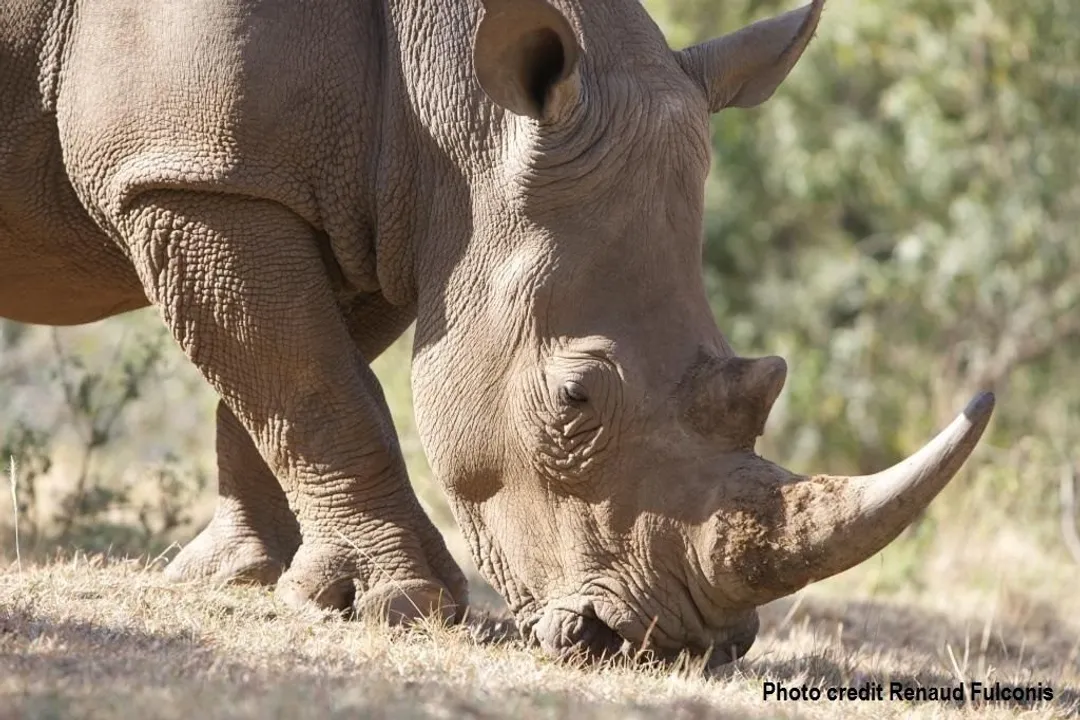
The defining feature of the white rhino, second only to its size, is its pair of horns. [4][6] These are not bone but are made of keratin, the same protein found in human hair and fingernails. [2][4][8] The front horn is the longer of the two and is quite formidable, sometimes growing to lengths exceeding three feet in exceptional individuals. [2][4][6] When considering that a standard American baseball bat is usually around 33 to 34 inches long, the largest white rhino horns can rival that everyday object in length, a sobering thought when imagining the impact of poaching. [4] The second horn is shorter but still substantial. [6]
Their massive heads are supported by thick necks. [10] Despite their immense weight—some reports list them over 5,000 pounds [2]—they can run surprisingly fast when motivated, capable of reaching speeds up to 30 miles per hour across the savanna. [6][10]

# Grazing Mouth
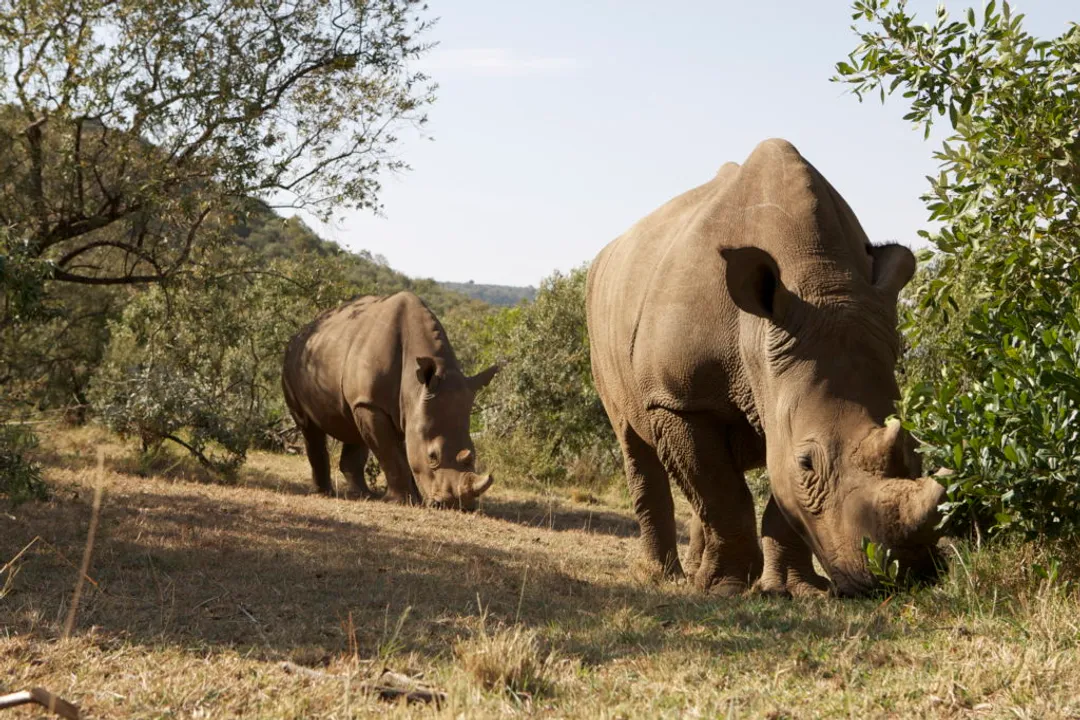
The physical difference between the two main African rhino species, the white and the black, is most clearly observed in their mouths, which dictates their feeding habits. [1][4][6] The white rhino is a pure grazer, meaning its diet consists almost entirely of grass. [1][3][4][6] To accomplish this efficient grazing, it has evolved a broad, square lip that acts much like a lawnmower, allowing it to clip short grasses close to the ground. [1][3][6][10] This structural specialization is what led to the widely accepted (though possibly erroneous) theory that "white" comes from the Dutch word "wyd" (wide). [1][3][4] This specialization means they are less adaptable to environments where grass is scarce compared to their browsing cousins. [3]
# Social Life
White rhinos are generally the most social of all rhino species. [2][5][10] While older bulls often prefer solitude, females frequently live in groups called "crashes," which can include up to 14 individuals. [2][5][6] These groups are usually composed of related females and their young. [2][5] This formation of stable, multi-generational family units is somewhat unusual among large terrestrial mammals and may offer some protection, though it also creates discernible patterns that poachers can potentially track. [5]
Calves are born weighing between 50 and 65 pounds. [10] They nurse for about a year but will typically remain close to their mother for two to three years, learning essential survival skills before dispersing. [2][6][10]
# Senses Poor
When navigating the world, the white rhino relies far less on sight than on its other senses. [5][10] They have notoriously poor eyesight; they often cannot see objects or movement clearly beyond about 20 or 30 yards. [2][6][10] This limitation is counteracted by highly developed senses of smell and hearing. [2][5][6][10] Their large ears can rotate independently, effectively acting like radar dishes to pinpoint sounds across the bushveld. [5][10] Their sense of smell is acute, helping them detect distant predators or changes in the environment long before their eyes would catch anything amiss. [2][5]
# Numbers Recovery
The conservation story of the Southern white rhino is one of hope against overwhelming odds. [3][4] By the late 19th century, this subspecies was nearly extinct, with estimates suggesting perhaps only 100 individuals remained alive. [4] Thanks to dedicated protection in South Africa and later Namibia and Kenya, the population has surged to over 16,000 individuals, bringing the species back from the brink. [1][3][5] The continued management of these animals, often involving translocations to establish new, secure populations, is a key part of their ongoing survival strategy. [5] Despite this success, the remaining population still faces an intense and organized threat that requires constant vigilance. [4]

# Horn Threat
The greatest danger facing the white rhino today is illegal poaching driven by the international black market for its horns. [1][3][5][8] The demand for rhino horn, used in some traditional Asian medicines and as a status symbol in some cultures, has led to devastating losses, particularly for the Southern subspecies in recent decades. [3][5] Anti-poaching units work tirelessly to protect these animals, employing advanced tracking and security measures to safeguard the remaining populations. [1][8] The continuous cycle of poaching means that conservation funding and boots-on-the-ground protection remain absolutely essential for the species to maintain any stability. [3][5] The fact that a species can recover so significantly only to be immediately pushed back by human greed highlights the unique challenge faced by these massive herbivores. [4]
Related Questions
#Citations
White Rhino - World Wildlife Fund
White rhinoceros - Wikipedia
White Rhino | Species | Save the Rhino International
White Rhino - International Rhino Foundation
White rhinos: facts, threats, and conservation - IFAW
White Rhinoceros Facts and Information | United Parks & Resorts
White Rhinoceros | San Diego Zoo Animals & Plants
White Rhinoceros | National Geographic
Southern White Rhinoceros - Philadelphia Zoo
White Rhinoceros (Ceratotherium simum) Fact Sheet - LibGuides