What are some interesting facts about the woolly rhinoceros?
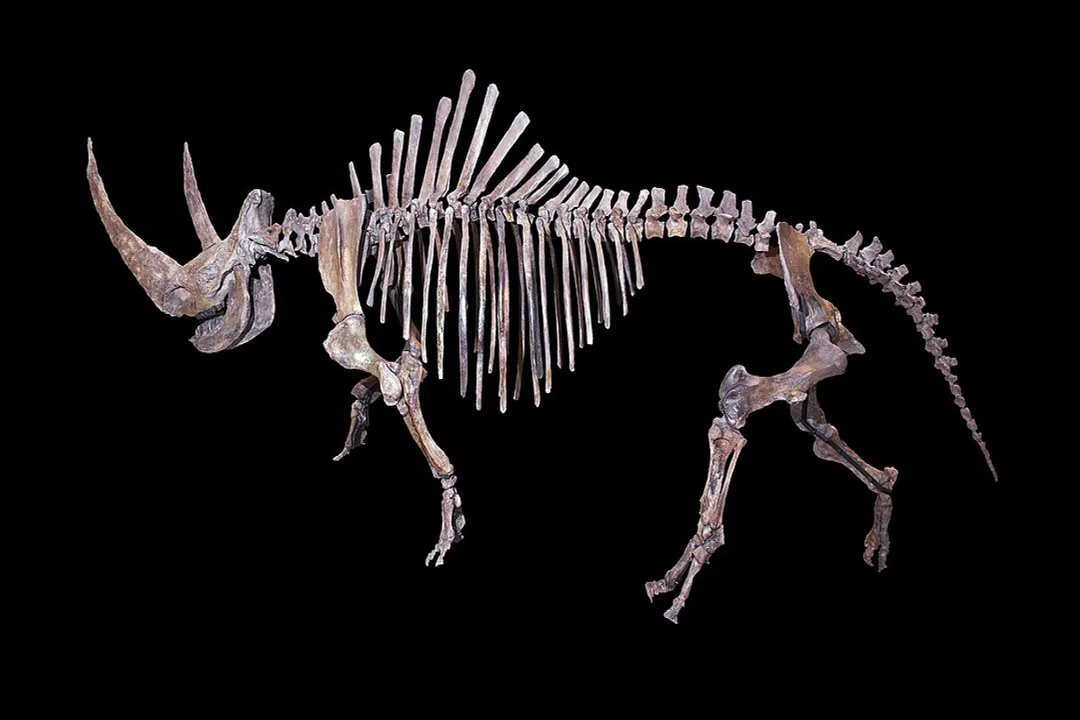
The woolly rhinoceros, Coelodonta antiquitatis, conjures images of a truly epic Ice Age landscape, roaming the cold, vast steppes alongside mammoths and early human hunters. These magnificent creatures were perfectly adapted to the harsh, cold environment that defined much of the Pleistocene epoch across Eurasia. [1][4] They are perhaps the best-known of the extinct rhinoceros species, largely due to the wealth of well-preserved remains, including fully frozen carcasses, and their frequent depiction in ancient cave art. [1][5]
# Shaggy Coat
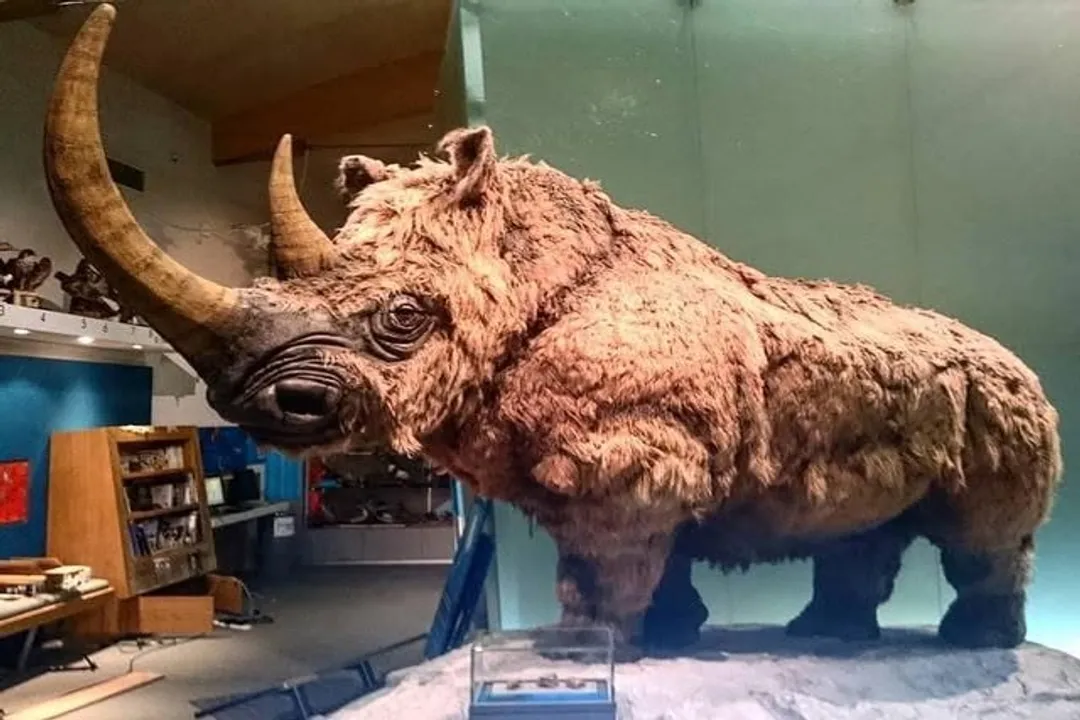
One of the most striking features distinguishing the woolly rhino from its modern relatives was its luxurious covering. [7] Unlike the mostly bare skin of African and Asian rhinos today, the woolly rhino sported a thick, shaggy coat of reddish-brown hair. [1][4][7] This dense pelage was a critical adaptation for surviving the frigid temperatures of the glacial periods. [4] Beneath this outer layer of long, coarse hair, they also possessed a thick undercoat of woolly fur, providing superior insulation against the severe cold. [4][5] Furthermore, evidence suggests they carried a significant layer of fat, much like a camel, which acted as an additional energy reserve and thermal buffer against the cold climate. [4][5]
# Spade Horn
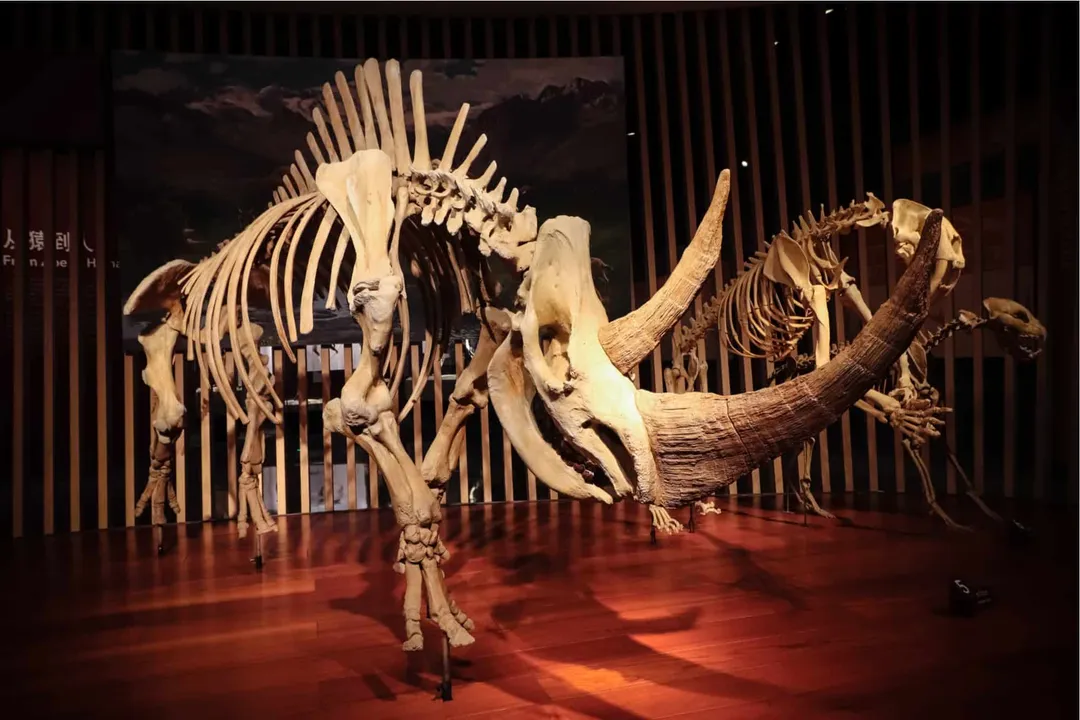
Like all rhinoceroses, the woolly rhino possessed horns, but theirs were uniquely shaped and positioned. [1] They had two horns, with the front one being significantly larger and far more distinctive than the second. [4][7] This anterior horn could grow quite long, sometimes exceeding a meter in length. [1][4] Crucially, this massive horn was often flattened vertically, giving it a spade-like or blade-like appearance rather than the rounded conical shape seen in many modern species. [4]
The function of this unusual horn is a topic of paleontological interest. While horns are typically associated with defense against predators or fighting rivals, the flattened shape suggests a specialized use related to its diet. [5] Given that the woolly rhino lived on the cold, grass-dominated steppe-tundra, one leading hypothesis suggests this wide, strong horn was primarily used as a tool to sweep or plow away snow during winter months. [1][5] This action would have exposed the low-growing, nutrient-rich grasses and sedges beneath, providing access to food when snow cover was deep—a behavior that would be metabolically expensive but essential for survival when facing prolonged winter scarcity. [5] The massive hump of fat stored on its body would have helped fuel this constant foraging effort in lean times. [4]

# Pleistocene Grazer
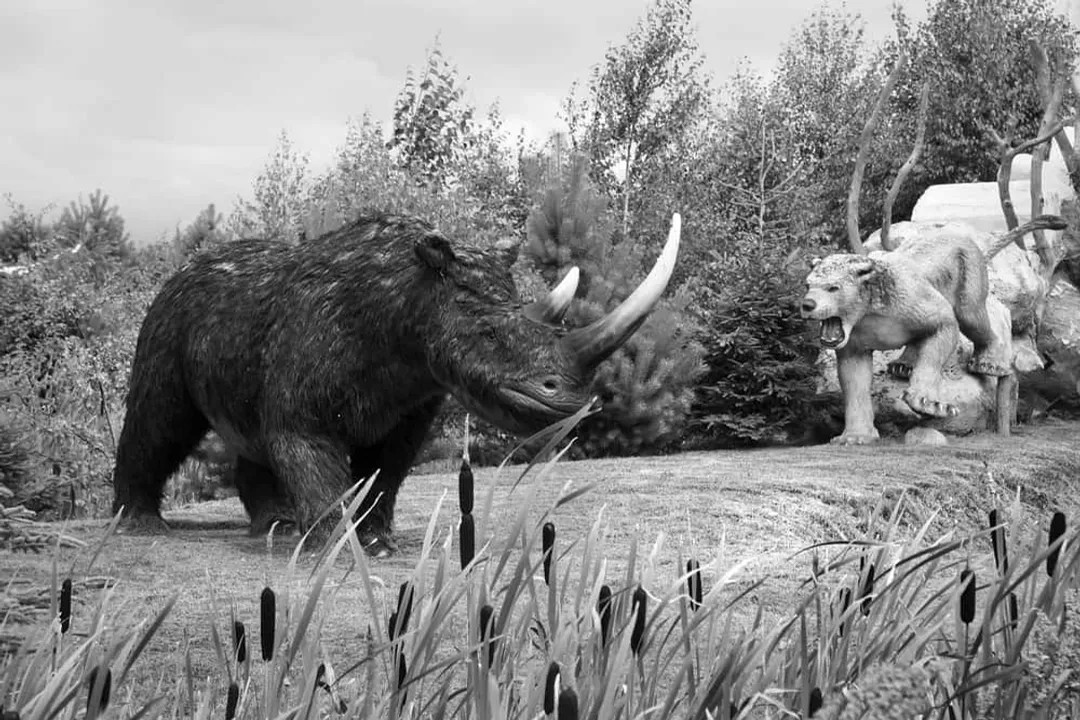
The environment that shaped the woolly rhino was not the dense forest or scrubland we often associate with some modern rhinos; rather, it was the cold, dry expanse of the mammoth steppe. [1][4] This habitat stretched across Eurasia, from Western Europe all the way to the edge of Siberia and eastern Asia. [1][4] They shared this landscape with an incredible diversity of megafauna, including the woolly mammoth, giant deer (Megaloceros), and cave lions. [1][4]
Dietarily, the woolly rhino was a dedicated grazer. [1][5][7] Analysis of their teeth and fossilized stomach contents confirms they specialized in consuming tough, fibrous, low-nutrient vegetation like grasses and sedges, perfectly matching the dominant flora of the Pleistocene steppes. [5][7] This grazing specialization contrasts with some modern rhinos, such as the Black Rhino, which are primarily browsers eating leaves and branches. [5]
Considering the vast range and the sheer amount of low-quality forage they needed to sustain their large bulk, one can extrapolate that a herd of woolly rhinos required an immense, relatively unbroken expanse of steppe habitat to thrive. [4] If this primary grazing habitat began to shrink or fragment, perhaps due to the end of the last glacial period, the impact on these large herbivores would have been immediate and severe, setting the stage for population decline long before human hunting pressure became the primary factor. [4]
# Size Reality
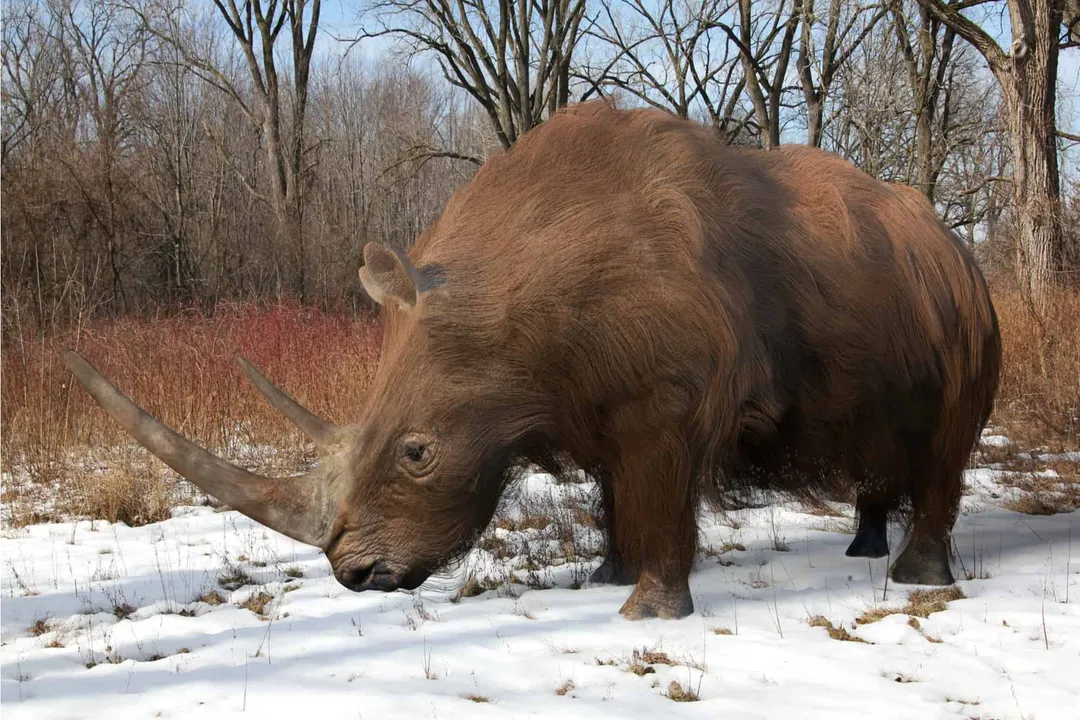
While often imagined as monstrously huge, the woolly rhino was actually medium-sized when compared to some of its extinct or extant relatives. [4] Estimates place their shoulder height generally between 1.3 and 1.7 meters (about 4.3 to 5.6 feet). [4] In terms of weight, they likely averaged around 2 to 2.5 metric tons, though some larger specimens might have approached 4 metric tons. [4] This made them significantly smaller than the largest modern rhinos, such as the White Rhino, which can weigh over 3.5 tons today. [5]
However, the perception of their bulk comes from their stocky build and heavy insulation. [5] They were more compact and robustly built than many modern rhinoceroses, with proportionally shorter legs that helped minimize heat loss—a classic evolutionary trade-off for surviving extreme cold. [4] To put their insulation strategy into perspective: maintaining such a thick coat and large fat reserve in a warming climate would require a constant, high caloric intake. When the climate warmed toward the end of the Ice Age, the productivity of the cold, dry steppe ecosystem decreased, likely making it impossible for the woolly rhino to fuel their insulating machinery, even if they found new, greener vegetation. [4]

# Final Days
The timeline for the extinction of the woolly rhinoceros is complex, marked by regional disappearances occurring over millennia. [4] They seem to have vanished from most of Western Europe around 30,000 years ago, though some isolated populations persisted longer in places like the northern Urals and the East Siberian plains. [4] The general consensus among scientists is that the final curtain fell around 10,000 years ago across most of their former range. [1][4]
The cause of their disappearance is subject to ongoing debate, usually framed around two main pressures: environmental change and human activity. [4][5] As the Pleistocene ended and the climate warmed, the vast, open steppe grasslands that sustained them were replaced by forests and wetlands—a habitat shift that reduced their preferred grazing grounds. [4] Compounding this environmental stress was the presence of early modern humans (Cro-Magnons), who were effective hunters and often depicted the rhino in their cave paintings. [1][4][5] It is most probable that the species could not withstand the combined impact of a rapidly changing, less productive environment and sustained, targeted hunting pressure from human populations that had become increasingly skilled and numerous. [4][5] While the fossil record shows they were abundant during the time of human habitation, their eventual scarcity marks the end of an Ice Age icon. [1][5]
#Videos
The MANY Interpretations of the Woolly Rhino! (Coelodonta)
Related Questions
#Citations
Woolly rhinoceros | Habitat, Extinction, & Facts - Britannica
Woolly Rhinoceros - Jacksonville Zoo
Woolly rhinoceros Facts for Kids
Woolly rhinoceros - Wikipedia
Woolly rhino Facts, Habitat, Pictures and Range - Extinct Animals
Woolly Rhino: Characteristics, Habitat, and Extinction - Facebook
Woolly Rhinoceros - Coelodonta antiquitatis - A-Z Animals
The MANY Interpretations of the Woolly Rhino! (Coelodonta)
What are some fascinating facts about woolly rhinos? - Quora