How did the insulating strategy of the Woolly Rhino compare to that of the Woolly Mammoth regarding fat layers?
Answer
The Rhino relied almost entirely on integumentary adaptations as it lacked a massive insulating fat layer.
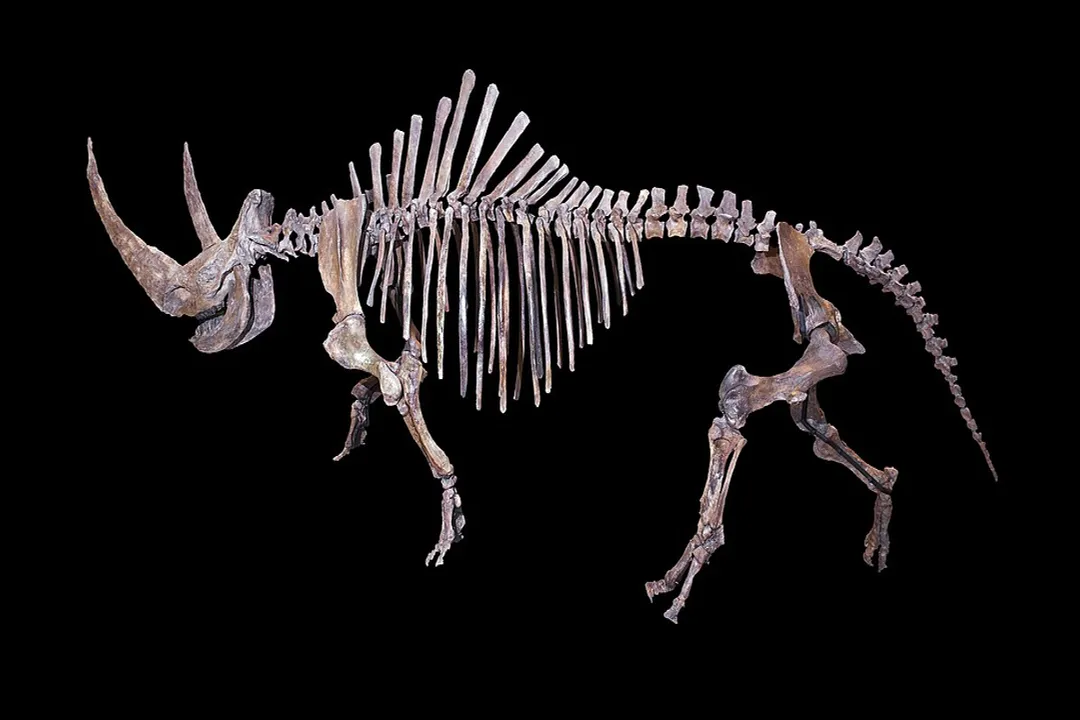
While both the Woolly Rhino and the Woolly Mammoth possessed thick coats for thermoregulation in the Ice Age, their reliance on other insulation methods differed significantly. The Woolly Mammoth, as a proboscidean, typically featured a massive insulating layer of subcutaneous fat. In contrast, the Woolly Rhino lacked this extensive fat layer, forcing it to rely almost entirely on its integumentary adaptations—the thick skin, the shaggy guard hairs, and the dense undercoat—to provide the necessary thermal inertia against severe cold.
#Videos
The MANY Interpretations of the Woolly Rhino! (Coelodonta)
Related Questions
What specific function is hypothesized for the flattened front edge of the *Coelodonta antiquitatis* frontal horn?What dietary classification defines the Woolly Rhinoceros, *Coelodonta antiquitatis*?How did the insulating strategy of the Woolly Rhino compare to that of the Woolly Mammoth regarding fat layers?How did the overall bulk of the Woolly Rhino compare to the modern White Rhinoceros?What structural characteristic of the Woolly Rhino's legs aided navigation on uneven or slippery terrain?What shape characterized the molar crowns of the Woolly Rhinoceros, indicative of its abrasive diet?How did the premaxilla structure in *Coelodonta antiquitatis* differ from its modern relatives, and what linked this difference?What two distinct components made up the thick exterior layer providing insulation for the Woolly Rhino?How did the shape of the Woolly Rhino's primary frontal horn contrast functionally with those of many modern species?What was the estimated average weight range for an adult male Woolly Rhinoceros?