What elements are analyzed via stable isotope analysis for rhino diet?
Answer
Carbon and nitrogen
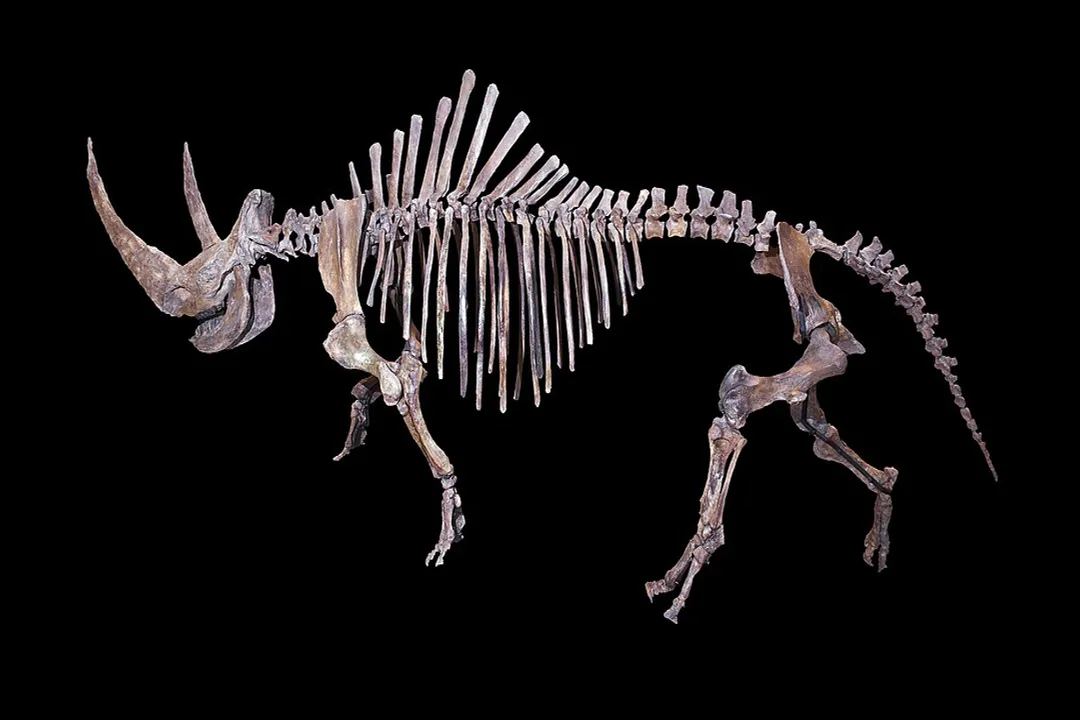
Stable isotope analysis is a sophisticated chemical fingerprinting technique used by scientists to reconstruct the diet of ancient animals like *Coelodonta antiquitatis*. This method focuses on measuring the ratios of specific isotopes, namely carbon and nitrogen, found embedded within fossilized bone samples. Different plant types leave distinct isotopic signatures; for example, C3 plants, which include woody shrubs, create a different chemical signature compared to C4 plants, which include certain types of grasses. By analyzing the relative abundance of these isotopes, researchers can accurately determine the proportional contribution of various plant groups to the animal's overall long-term diet.
Related Questions
What feeding classification characterized Coelodonta antiquitatis?What two specific types of flora dominated the Coelodonta antiquitatis diet?What elements are analyzed via stable isotope analysis for rhino diet?What specific dental structure allowed the woolly rhino to grind tough material?Which non-woody perennial was regularly included in the rhino's intake?What was the typical body mass range for the massive woolly rhino?How did the woolly mammoth's diet plasticity compare to the woolly rhino?What did microscopic enamel microwear reveal about masticated food texture?What primary component of the steppe environment did the rhino heavily rely on?Which extant rhinoceros species is considered a strong behavioural analogue for the woolly rhino?