Woolly Monkey Facts
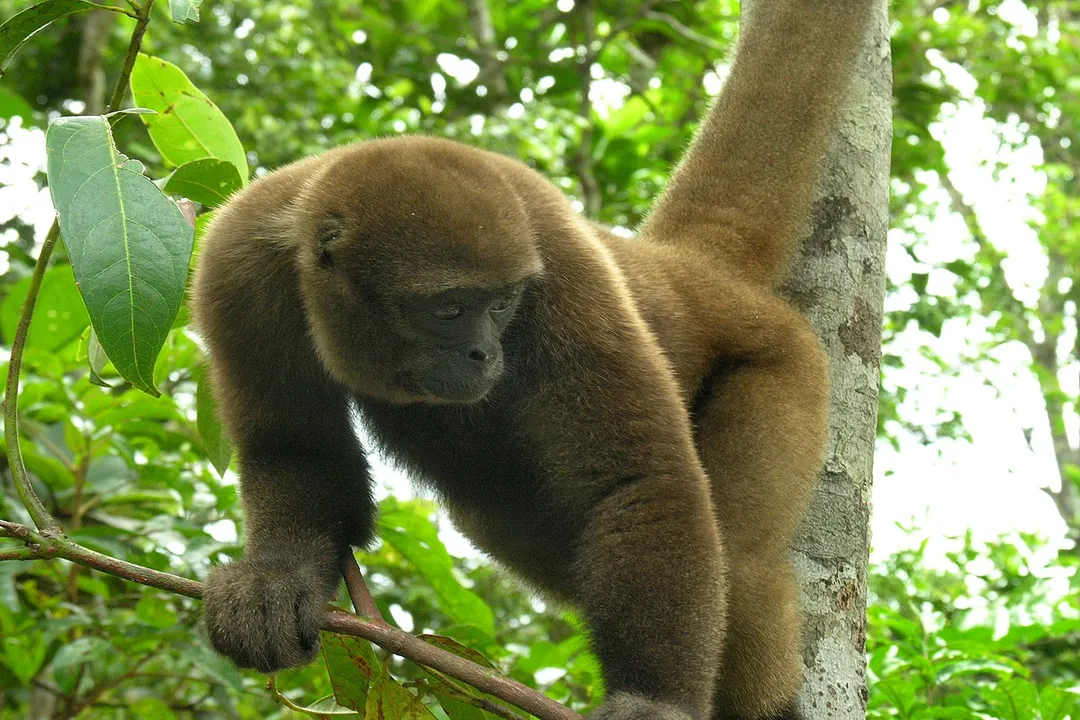
The woolly monkey, with its dense, shaggy coat and remarkable prehensile tail, represents one of the most striking primates inhabiting the upper reaches of South American forests. These New World monkeys belong to the genus Lagothrix, a name derived from Greek words meaning "hare tree," perhaps hinting at their agile, somewhat bouncing movements through the high canopy. [2] Seeing one is often a rare treat, as they spend the vast majority of their lives high above the forest floor, rarely descending. [1][5] Their thick fur, which gives them their common name, is not just for show; it serves a vital purpose in the often damp, cooler conditions of their lofty environment. [1]
# Shaggy Appearance
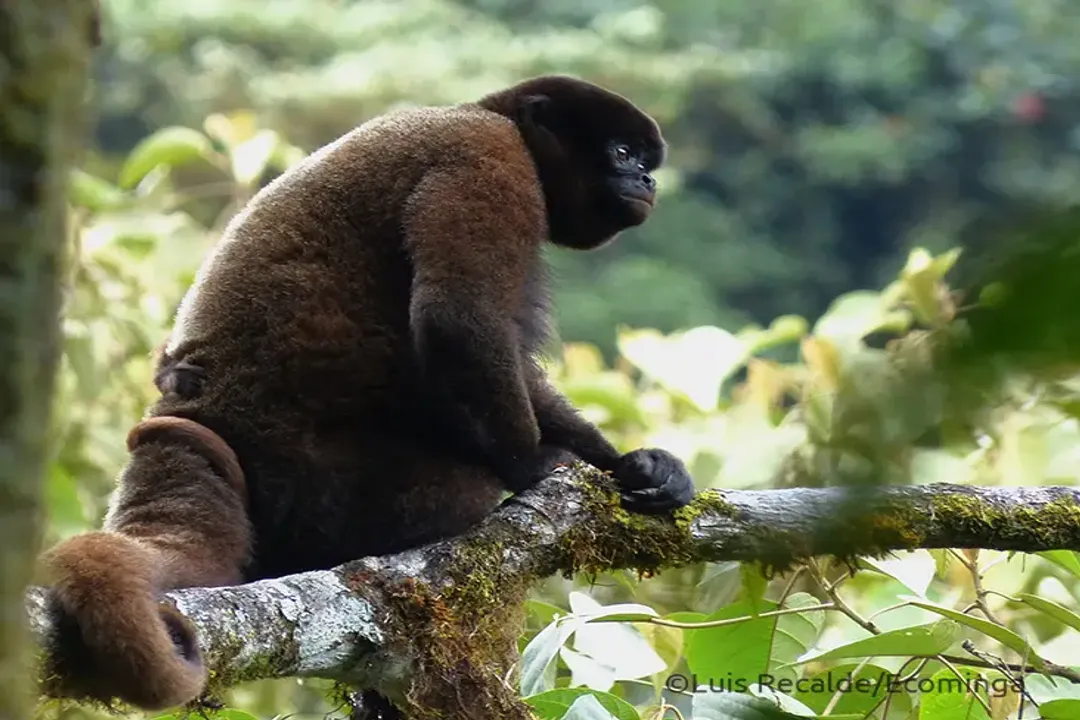
The most immediate identifier for this group of primates is their characteristic long, dense fur that makes them appear almost bulky, despite being relatively medium-sized monkeys. [5] This fur color can vary significantly across the different species and subspecies within the genus Lagothrix. For instance, some might be predominantly brown, while others exhibit darker, almost black coloration. [2][1] A notable exception or variation in appearance is sometimes seen in the Lagothrix lagotricha species complex, where individuals can display different shades, sometimes described as yellowish-brown or even greyish. [6]
Physically, they are substantial for New World monkeys. Adults can reach lengths of about 1.5 to 2 feet, excluding the tail, and their weight can range considerably, sometimes up to 15 or 20 pounds, though lighter specimens are also common. [1][5] The tail itself is an absolute marvel of biological engineering. It is exceptionally long—often longer than the body—and is fully prehensile. [1][2] This means it functions as a fifth limb, possessing a bare, tactile pad on the underside near the tip, allowing for an incredibly strong grip when grasping branches. [6] This feature is essential for their arboreal existence, enabling them to support their entire body weight while reaching for fruit or navigating tricky gaps. [2] If you observe one in motion, notice how the tail wraps around a branch first, providing stable anchorage before the monkey commits its hands or feet to the next hold; it’s a deliberate, weighted counterbalance used constantly while foraging. [1][6]
# Tropical Realm
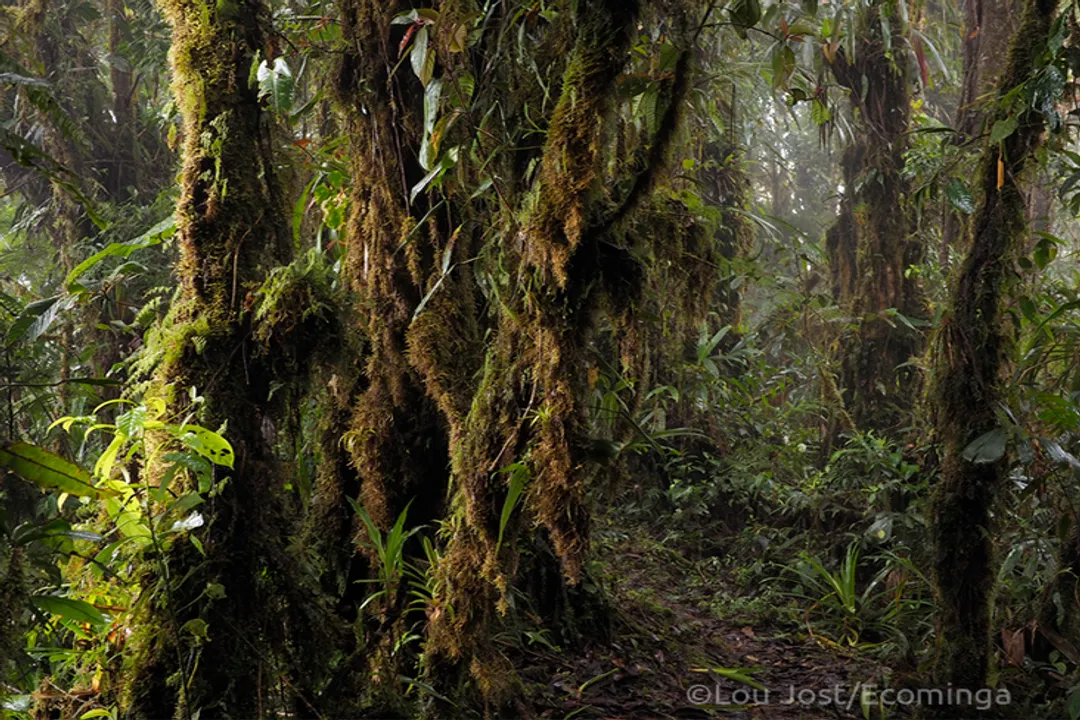
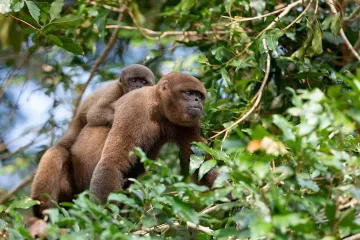
Woolly monkeys are endemic to the humid, evergreen forests of tropical South America. [1][2] Their geographic range generally encompasses the Amazon basin, stretching across several countries, including Colombia, Ecuador, Peru, Bolivia, and Brazil. [6][5] They are strictly arboreal, meaning they live almost exclusively in trees, preferring the highest strata of the forest canopy where sunlight is plentiful and predators from the ground are less of a concern. [1][5]
The altitude at which they thrive can sometimes be telling. While they are deep-forest dwellers, some populations inhabit the humid montane forests at elevations up to around 2,500 meters (about 8,200 feet). [6] This vertical separation—living high up—is a significant ecological adaptation. It reduces direct competition with terrestrial or lower-strata primates and allows them to exploit resources unavailable to others. However, this specialization also makes them acutely vulnerable to changes that affect the upper canopy, such as selective logging that removes the largest, fruit-bearing trees, even if the forest floor appears untouched. [1]
# Fruit Diet
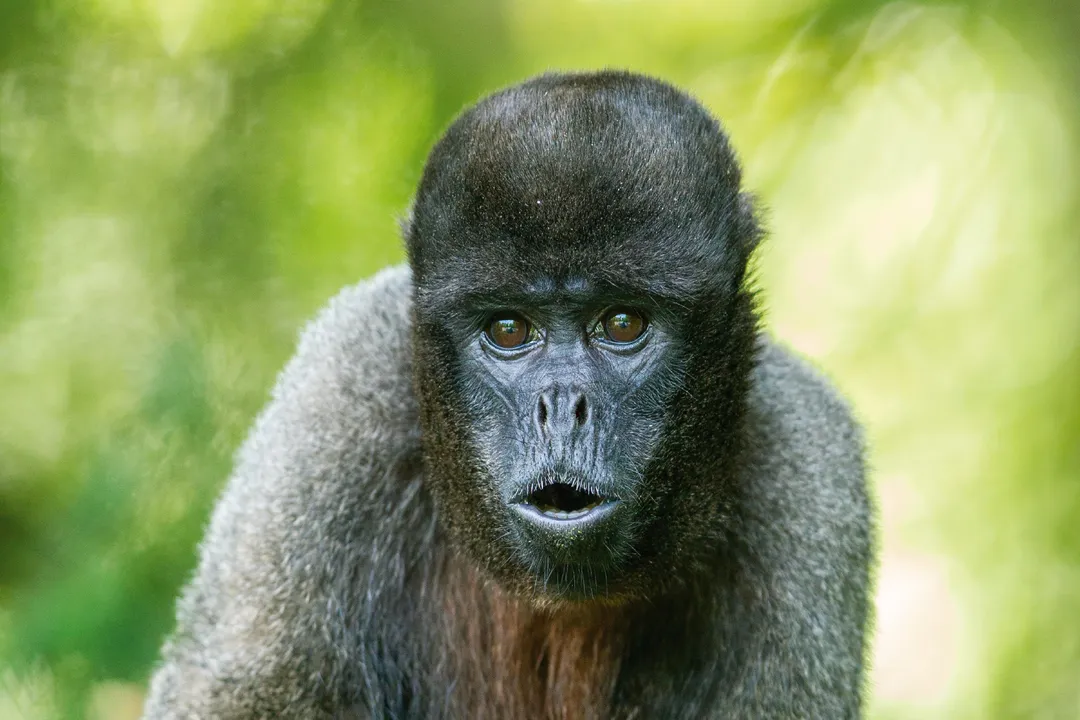
The primary nutritional requirement of the woolly monkey is met through an almost exclusive diet of ripe fruit, classifying them as highly specialized frugivores. [1][6] This reliance on fruit dictates much of their daily activity, as they must spend considerable time moving through the canopy in search of ripe goods. [2] A substantial portion—often over 80%—of their intake is composed of fruit pulp and seeds. [6]
While fruit forms the core, they are not solely reliant on it. They supplement their diet with young leaves, flowers, and occasionally insects or small invertebrates when available. [1][5] This slight dietary flexibility, particularly the consumption of leaves, is crucial for maintaining necessary minerals, especially during periods when preferred fruit resources might be temporarily scarce. It is fascinating to consider the sheer volume of fruit a troop must consume daily to sustain its members, given their size and energy needs for constant climbing and leaping. [6] Because they consume so much fruit, they play a vital role in seed dispersal throughout the forest, making them key contributors to forest regeneration, even if that role is an accidental byproduct of their intense search for the next ripe fig or berry. [1]
# Social Structure
Woolly monkeys are highly gregarious animals, living in cohesive social groups. [6] Group sizes can vary, but typically range between 10 and 30 individuals, though larger congregations have been observed. [1][5] These troops are generally structured around a core of related females, with males often moving between groups throughout their lives, suggesting a patrilocal or mixed social dynamic. [6]
Communication within the group is complex, involving vocalizations, facial expressions, and body postures. [6] They are known for having a wide repertoire of calls, which are essential for maintaining contact across the dense foliage of their habitat, where visual cues can be easily obscured. [5] For instance, loud calls are used to signal food discoveries or alert the group to danger.
The size of the foraging group presents an interesting trade-off. While larger groups offer better defense against predators like large cats or harpy eagles, they also increase competition for limited, localized patches of fruit. A large troop moving together must cover significant distances daily to avoid depleting local food sources too quickly. If the local resource density drops too low, the troop must split into smaller foraging parties to cover more ground efficiently, only to regroup later. This dynamic highlights the constant balancing act between safety in numbers and the energetic cost of resource scarcity. [6]
# Conservation Status
Sadly, the beautiful, shaggy coat and specialized lifestyle of the woolly monkey have positioned it precariously on the conservation scale. [4] Several species and subspecies are currently listed as Endangered or Vulnerable by conservation bodies. [1][5] The threats they face are multi-faceted and directly tied to human activity within their Amazonian home range. [4]
The single greatest danger is habitat destruction. Deforestation, driven by agricultural expansion, cattle ranching, and illegal logging, fragments and eliminates the continuous forest canopy they rely upon. [1][4] When large, mature trees—the prime fruit providers—are removed, the entire food supply for the troop can collapse rapidly, forcing them into dangerous territory or starvation. [1] Furthermore, the fragmentation isolates small populations, reducing genetic diversity over time, a subtle but long-term threat to species survival. [4]
Hunting pressure represents another significant challenge. Because woolly monkeys are large, relatively slow-moving in the canopy, and highly visible when foraging for fruit, they are frequent targets for subsistence or commercial bushmeat hunting. [6][4] In areas where human settlement borders their territory, this hunting can quickly decimate local populations that are already struggling with food scarcity. [1] Given their slow reproductive rate—typical of many primates, with long intervals between births—populations recover very slowly from such intense pressure. [5] Protecting these charismatic primates requires not just establishing protected areas, but also securing the corridors between them to allow for necessary movement and genetic exchange, ensuring their future in the wild remains viable. [4]
# Species Diversity
While we often speak of "the woolly monkey," the genus Lagothrix actually encompasses several recognized species, and the classification can sometimes be debated among primatologists, with debates centering on subspecies status. [6] The general features—thick fur and prehensile tail—unite them, but distinct variations exist. [2]
The Brown Woolly Monkey (Lagothrix lagotricha) is perhaps the most widely referenced and studied group, often found in the western Amazon basin. [5][6] However, distinctions are made based on geography and coloration, leading to names like the Colombian or Ecuadorian Woolly Monkey, depending on the exact subspecies being discussed. [2]
To illustrate the variation, one might compare the general characteristics in a simplified table format:
| Feature | Common Woolly Monkey (L. lagotricha complex) | Related Species (e.g., Muriqui - not Lagothrix, but an example of diversity) |
|---|---|---|
| Tail | Fully prehensile, strong grip [6] | Varies, often used for balance [6] |
| Fur | Very dense, shaggy [1] | Can be shorter or differently colored [6] |
| Social Unit | Large troops (10-30+) [1] | Can be smaller, different dominance hierarchies [6] |
| Conservation | High threat, often Endangered [4] | Threat levels vary by specific species/region [4] |
The diversity within the genus underscores the importance of conservation efforts tailored to specific regional populations, as saving one type of woolly monkey might not inherently save another if their ranges do not overlap. [6] They represent an ancient lineage of New World primates, and their continued existence reflects the overall health of the Amazonian canopy ecosystem they inhabit. [2][5]
Related Questions
#Citations
Woolly monkeys, facts and information | National Geographic
Woolly monkey - Wikipedia
Woolly monkey Facts for Kids
Woolly monkey - Apenheul
Woolly monkey | Tropical Rainforest, Primate, Social Behavior
Lagothrix lagotricha (Humboldt's woolly monkey) | INFORMATION
Common Woolly Monkey (Lagothrix lagothricha) - World Land Trust
Woolly Monkey | Peruvian Monkey Species - La Isla de Los Monos
[PDF] Woolly Monkeys