What chemical identified as a cryoprotectant enables the banded woolly bear to survive freezing solid in extreme cold?
Answer
Glycerol
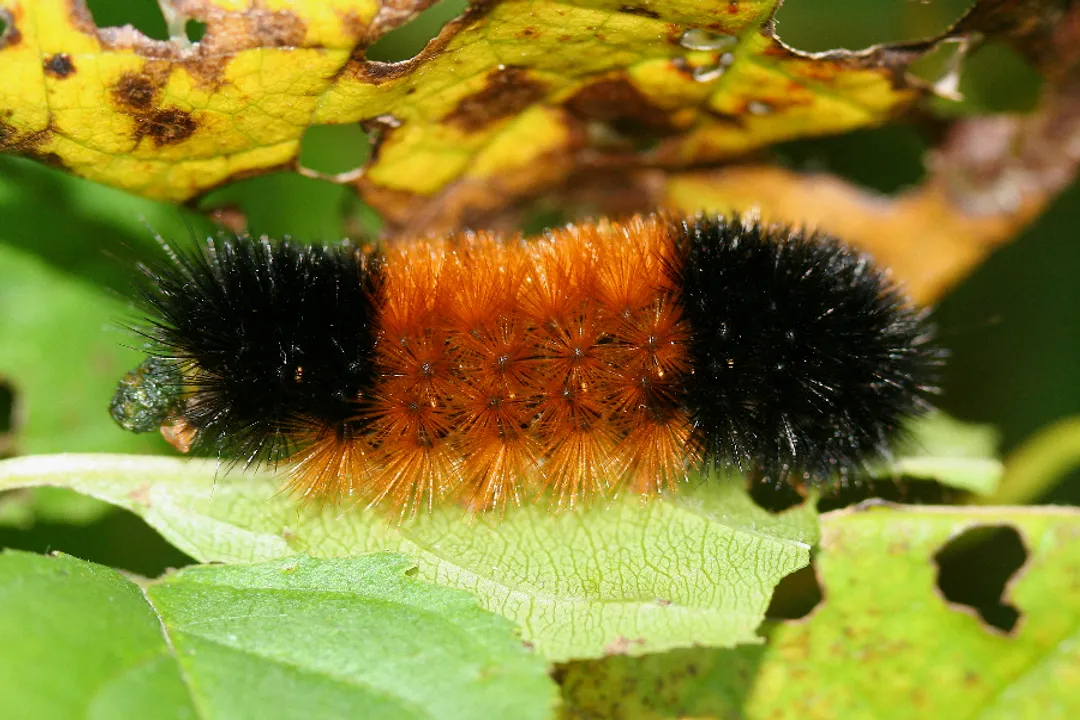
The process by which the woolly bear larva survives sub-freezing temperatures relies on the production of a natural cryoprotectant within its tissues, which is identified specifically as glycerol. This substance functions fundamentally like antifreeze, drastically lowering the freezing point of the internal cellular fluids. This biological antifreeze prevents internal cellular damage even when most of the caterpillar's physical mass freezes solid, allowing cells to withstand temperatures as low as $-90$ degrees Fahrenheit in northern latitudes. This adaptation is crucial for survival during prolonged periods of biological stasis in winter environments.
Related Questions
What chemical identified as a cryoprotectant enables the banded woolly bear to survive freezing solid in extreme cold?What common weather folklore predicts if a woolly bear caterpillar exhibits a wider rusty-brown band?What is the immediate, physical defense mechanism utilized by the *Pyrrharctia isabella* larva when it perceives a threat?What distinctive physical characteristic is noted on the forelegs of the adult Isabella tiger moth?Which other fuzzy caterpillar species, whose larva can be entirely black, is often confused with the true banded woolly bear?What proportion of its existence have Arctic woolly bears been observed spending in a frozen state?How long does the transformation period from the *P. isabella* pupa into the adult moth typically last?If a woolly bear prematurely emerges in late February in a northern climate due to an unseasonable warm spell, where should it be sheltered to allow it to re-enter diapause?Besides violets and dandelions, what specific garden vegetable is listed as a preferred food source for the *P. isabella* larvae?According to modern entomological observation, what does a wider brown band on a woolly bear actually suggest about its history?What potential minor health issue can result from contact with the stiff, hair-like bristles, called setae, on a woolly bear?