Woolly Rhinoceros Scientific Classification
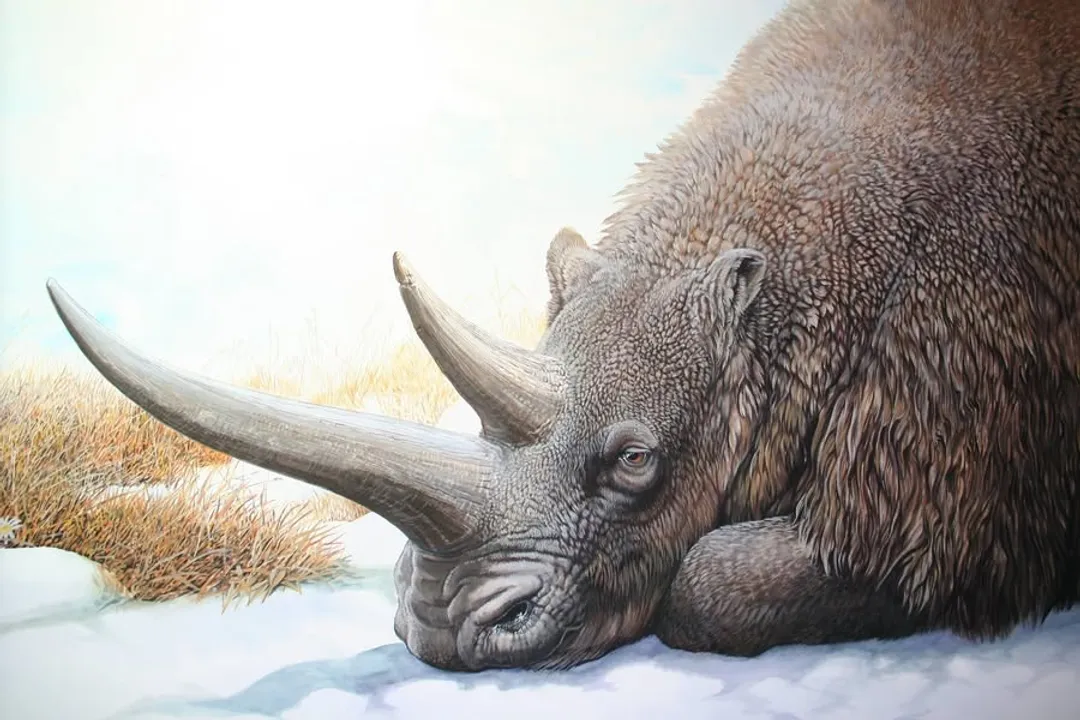
The scientific classification of the Woolly Rhinoceros, Coelodonta antiquitatis, places this iconic Ice Age megafauna within a very specific corner of the animal kingdom, allowing researchers to trace its evolutionary relationships to its living relatives today. Understanding its taxonomy is the first step in appreciating how this massive herbivore fit into the Pleistocene ecosystem. [1][4] Far from being a simple cousin to modern rhinos, the Woolly Rhino’s placement within the family Rhinocerotidae tells a story of adaptation to cold, steppe environments that favored thick coats and specialized dental structures over the sleek build of tropical species. [7]
# Kingdom Placement
As with all animals familiar to us, the Woolly Rhinoceros began its classification journey at the highest levels, confirming its status as a complex, multicellular organism. [1][4][8] It belongs to the Kingdom Animalia, the Phylum Chordata (meaning it possessed a notochord or backbone), and the Class Mammalia. [1][4][8] This membership in the Mammalia class immediately groups it with creatures that nurse their young and possess hair, traits that the Woolly Rhino certainly exhibited, evidenced by the thick pelt inferred from its common name. [5][9]
Moving down the hierarchy, the order Perissodactyla is critical. This order groups rhinoceroses with horses and tapirs, classifying them as odd-toed ungulates. [1][4][6][8] This grouping is based on the structure of their feet, specifically the presence of an odd number of functional toes—rhinos typically have three. [6] While modern rhinos are somewhat disparate in appearance and habitat, this ancient lineage shares fundamental skeletal characteristics rooted deep in their evolutionary past. [7]
# Family Grouping
The next step down brings us to the family Rhinocerotidae. [1][4][6][8] This is the formal grouping for all rhinoceroses, both extinct and extant. Within this family, the Woolly Rhino shares its direct evolutionary neighborhood with the five species of rhino alive today: the Black, White, Indian, Javan, and Sumatran rhinos. [7]
It is fascinating to observe how distinct the Woolly Rhino appears compared to its modern counterparts, yet the skeletal and dental evidence firmly places them together within Rhinocerotidae. [1] For instance, while modern Asian rhinos (like the Indian rhino) have a single horn, and African rhinos have two, the Woolly Rhino possessed two horns, with the front one being massive and flattened, distinct from the more conical horns of many living species. [1][9] This common familial structure suggests a shared common ancestor before the massive evolutionary radiation that led to the diversification of Asian and African lineages during the Neogene and Quaternary periods. [7] Thinking about the deep time involved, it’s insightful to consider that the divergence leading to the Coelodonta branch must have occurred long before the last Ice Age began, setting the stage for its unique adaptation to cold steppes rather than tropical forests or savannas. [7]
# Genus Classification
The genus name for the Woolly Rhinoceros is Coelodonta. [1][4][6][8] This term is derived from Greek, meaning "hollow tooth". [2] This name points directly to a key distinguishing characteristic: the enamel structure of its cheek teeth, which lack cementum, resulting in complex, deeply folded enamel patterns that fit the "hollow" description when worn down. [1]
The genus Coelodonta is monotypic in many classifications, meaning C. antiquitatis is the only recognized species within it, though some older or broader interpretations have sometimes included other extinct forms. [4] The defining features that separate Coelodonta from other prehistoric rhinoceros genera, such as Elasmotherium (the giant "Siberian Unicorn"), are related to the morphology of the skull and the structure of its signature horns. [1] The Woolly Rhino's horns were characteristically long, flattened, and curved backward, designed, many paleontologists speculate, for sweeping snow away from vegetation or for defense on the open plains. [1][9]
If we were to quickly compare the evolutionary position of Coelodonta against, say, the modern genus Rhinoceros (which contains the Indian rhino), we see a clear split within the family. [7] Coelodonta belongs to the subfamily Elasmotheriinae or sometimes a separate grouping depending on the classification schema, indicating a significant evolutionary distance from the genera containing modern African rhinos (Ceratotherium and Diceros). [1][4] This deep split within the family Rhinocerotidae shows that the adaptations for the Ice Age were driven by an independent evolutionary path within the rhino tree. [7]
# Species Designation
The full scientific name for the Woolly Rhinoceros is Coelodonta antiquitatis. [1][3][4][6][8] The specific epithet, antiquitatis, is Latin for "of antiquity" or "ancient," a fitting description for an animal extinct for millennia. [9] This binomial nomenclature, established through Linnaean taxonomy, allows for universal identification across scientific literature. [3]
While C. antiquitatis is the accepted standard name, the fossil record often yields synonyms, names given to fossils that, upon closer study, are determined to belong to the same species. [4] Early finds were often described under different genera before the consensus settled on the current placement within Coelodonta. [1]
To appreciate the context of this species, it’s helpful to review its temporal range. The Woolly Rhino lived across the vast Eurasian steppe during the Pleistocene epoch, surviving for hundreds of thousands of years before its final extinction around 10,000 years ago, shortly after the end of the last major glaciation. [9] The presence of its remains across this huge area, from Western Europe into Siberia and China, speaks to its success as a species adapted to the harsh conditions of the Mammoth Steppe environment. [1][5]
# Classification Summary Table
To consolidate the taxonomic structure, here is a breakdown of the Woolly Rhinoceros's placement according to widely accepted scientific consensus: [1][4][8]
| Taxonomic Rank | Group Name | Key Feature/Note |
|---|---|---|
| Kingdom | Animalia | Mobile, multicellular life |
| Phylum | Chordata | Possesses a backbone |
| Class | Mammalia | Warm-blooded, furred, nursed young |
| Order | Perissodactyla | Odd-toed ungulates (e.g., horses, tapirs) |
| Family | Rhinocerotidae | All rhinoceros forms |
| Genus | Coelodonta | Characterized by hollow-enamel teeth |
| Species | C. antiquitatis | The Woolly Rhinoceros |
This table clearly shows the narrowing focus from the broadest group of animals down to the specific extinct creature we are studying. [3][4] The most critical taxonomic identifiers that define the animal's unique adaptations—its "woolly" exterior and specialized teeth—are encapsulated in its genus name, Coelodonta, which stands out from the names given to other extinct rhino lineages. [2][7]
# Evolutionary Context and Insights
Examining the classification of C. antiquitatis helps us understand convergent evolution and phylogenetic relationships within mammals. [6] While the Woolly Rhino is famous for coexisting with the Woolly Mammoth (Mammuthus primigenius), sharing similar cold adaptations like thick coats, their classification places them in entirely different orders—Perissodactyla for the rhino and Proboscidea for the mammoth. [5] They were ecological equivalents in the same biome but were not close evolutionary relatives. [6]
One way to look at the data is by comparing the extinction events within the Rhinocerotidae family. The Woolly Rhino belongs to a group that appears to have evolved specialized adaptations for cold, whereas many of its relatives, like the modern tropical rhinos, survived by being associated with warmer, more temperate or tropical habitats. [7] The success of Coelodonta meant it thrived across Europe and Asia for a very long time. [1] When assessing the impact of climate change at the end of the Pleistocene, seeing the Coelodonta lineage vanish while the modern, more tropical rhinos persisted offers a stark contrast in evolutionary fitness to environmental shifts. The classification confirms that the adaptations that made it supreme in the Ice Age steppe were precisely what made it vulnerable once that specialized environment disappeared. [9]
The scientific names themselves, though seemingly dry data points, provide a functional handle on the animal's biology. For instance, knowing the genus is Coelodonta immediately cues a paleontologist to check the dental wear patterns—the "hollow teeth"—which are crucial for determining diet. This morphological detail, enshrined in the classification, is what allows researchers to reconstruct its life, confirming its grazing habits on tough steppe grasses, contrasting it with browsing specialists found in other rhino genera. [1][7] The classification is not just a filing system; it’s a coded summary of the animal's biology and evolutionary history.
Related Questions
#Citations
Woolly rhinoceros - Wikipedia
Coelodonta | Prehistoric Kingdom Wiki | Fandom
Coelodonta antiquitatis (Bronn, 1831) - GBIF
It's time for Megafauna Monday! You may be familiar with the woolly ...
Woolly Rhino | PHYLO: THE TRADING CARD GAME
The woolly rhinoceros Coelodonta antiquitatis from Starunia
Woolly rhinoceros | All Species Wiki - Fandom
Woolly rhino Facts, Habitat, Pictures and Range - Extinct Animals