What feeding behavior characterized the diet of *Coelodonta antiquitatis*?
Answer
Grazing almost entirely on low-lying vegetation
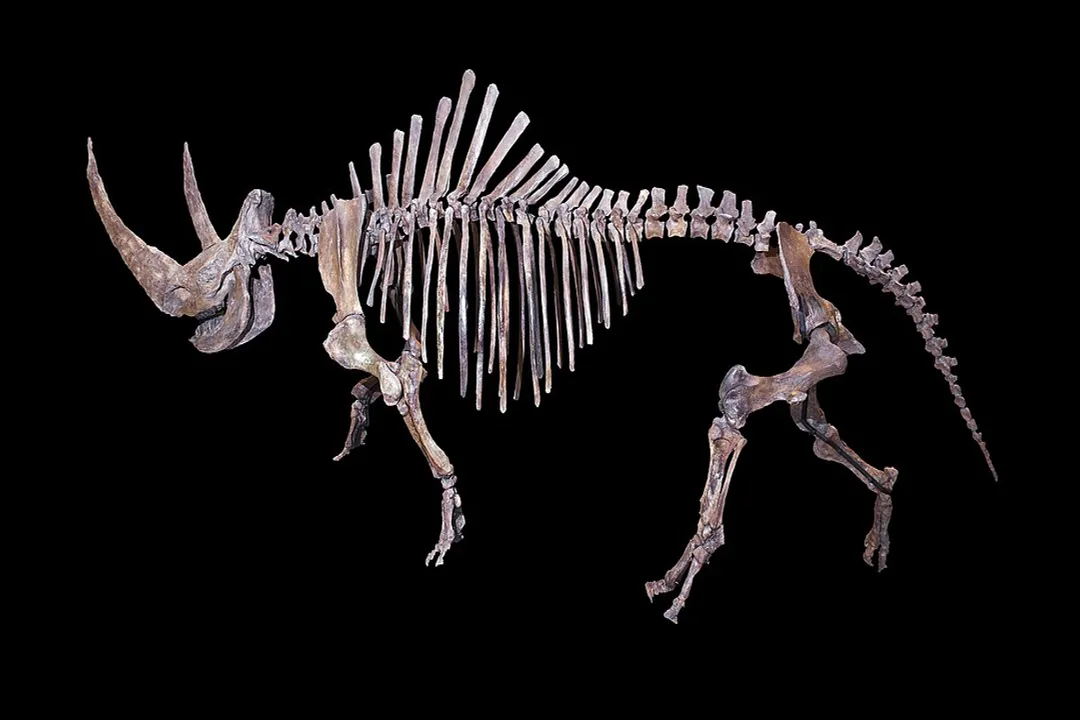
The Woolly Rhinoceros was fundamentally a grazer, meaning its diet consisted almost exclusively of vegetation growing close to the ground. Analysis derived from fossilized teeth and isotopic signatures confirms that grasses, sedges, and other low-lying herbaceous plants formed the bulk of its sustenance. This dietary classification distinguishes it from browsing rhinoceros species, which consume foliage from bushes and trees. Maintaining the massive body size of the Woolly Rhino necessitated a high-volume intake of this ground-level vegetation, making efficient access critical, especially during snowy periods.
Related Questions
What is the scientific designation for the Woolly Rhinoceros?What characterized the insulating coat of the Woolly Rhino?What function was the exceptionally long front horn likely used for?What feeding behavior characterized the diet of *Coelodonta antiquitatis*?Which geographical regions defined the vast distribution of the Woolly Rhino?What was the preferred ecosystem inhabited by the Woolly Rhinoceros?Approximately how tall did the Woolly Rhino stand at the shoulder?What major environmental shift caused the Woolly Rhino's primary feeding ground to recede?How was the primary nasal horn of *Coelodonta antiquitatis* typically proportioned or shaped?Where are perfectly preserved, complete specimens of the Woolly Rhino often unearthed?