Woolly Rhinoceros Facts
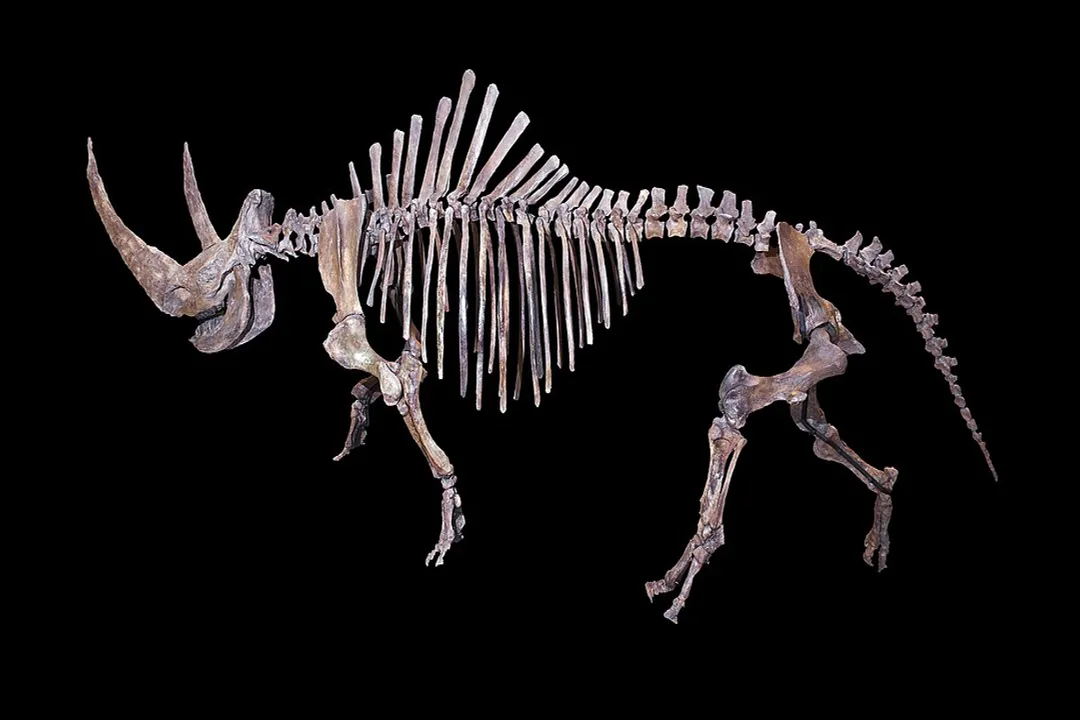
The Woolly Rhinoceros, Coelodonta antiquitatis, stands as one of the most iconic symbols of the Pleistocene Epoch, a truly massive creature perfectly tailored for the harsh, cold environments that characterized much of that era. Far from being a direct ancestor to any living rhinoceros species today, this magnificent beast thrived across the vast, sweeping plains of Eurasia when mammoths still roamed and Neanderthals hunted. [1][2][6] Its very name speaks to its most distinguishing feature: a dense, shaggy coat of fur that allowed it to withstand temperatures that modern rhinos, such as the Black or White species, could never tolerate. [4][5]
# Ice Age Titan

To truly appreciate the Woolly Rhinoceros, one must first grasp its sheer scale. [7] This animal was substantial, often measuring close to 3.8 meters (12.5 feet) in length and standing around 1.5 to 2 meters (5 to 6.6 feet) tall at the shoulder. [1][5][6] Weight estimates place the larger males potentially reaching masses of around 2,000 to 2,700 kilograms (4,400 to 6,000 pounds). [1][5] While significantly heavier than many modern rhinos, it was perhaps slightly less bulky in overall mass than the largest White Rhinoceros subspecies today, yet its frame was clearly adapted for endurance in a frigid climate. [1]
The body structure was stocky, built low to the ground with short, powerful legs ending in broad feet, which would have provided excellent stability on uneven, frozen, or snowy terrain. [5] Unlike the hairless, grey skin of modern African and Asian rhinos, the Woolly Rhino possessed an insulating layer composed of a thick undercoat of woolly hair overlaid by long, coarse guard hairs that could reach lengths of up to a meter. [2][4][5] This remarkable insulation meant that, while an African White Rhino might struggle in an unexpected northern European winter storm, the Woolly Rhino was perfectly equipped for a life lived primarily in glacial conditions. [5] This thick pelage contrasts sharply with the thick, folded, but largely hairless hide of its modern cousins, demonstrating divergent evolutionary paths driven by vastly different thermal demands. [10]
# Massive Horns
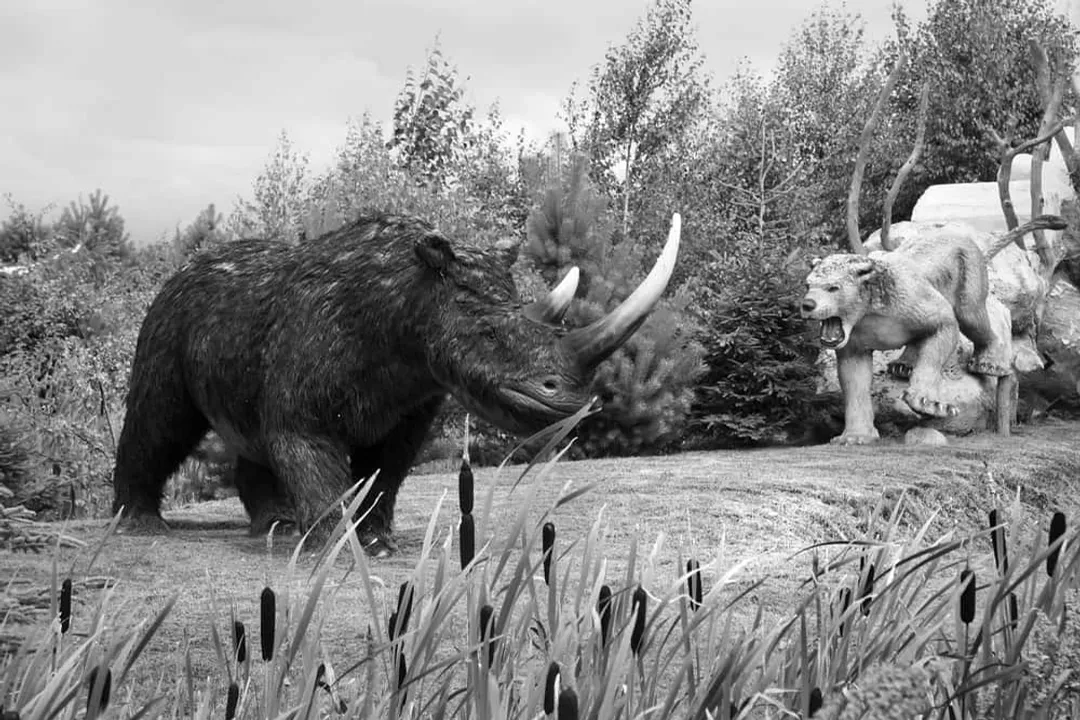
Perhaps the most visually striking feature of Coelodonta antiquitatis was its horn structure, which differed notably from contemporary or modern rhinos. [1] The Woolly Rhino possessed two horns, much like most living species, but the proportions were unique. [7] The front horn, situated on the nasal bones, was exceptionally long, often exceeding one meter (3 feet) in length. [1][5] This primary horn was flattened and pointed forward, sometimes possessing a gentle curve. [2][7]
In contrast, the second horn, located on the forehead, was considerably shorter. [2] One interesting observation noted by paleontologists studying numerous fossils is that the front horn often shows significant wear, damage, or blunting, suggesting it was used extensively for tasks beyond simple defense. [5][10] Considering its environment, it is highly probable that the rhino used this imposing frontal weapon as a kind of plow or snow shovel, sweeping aside deep drifts of snow to reach the underlying grasses and sedges necessary for its survival during the long winters. [5][10] Thinking about the sheer mechanical stress involved in repeatedly moving dense, icy snow with a keratinous structure nearly a meter long provides some perspective on the animal's strength and its commitment to a grazing lifestyle even in extreme conditions. [5]

# Eurasian Steppe
The geographical range occupied by the Woolly Rhinoceros was enormous, stretching across much of the northern hemisphere during the Ice Age. [1][6] Fossils and remains have been recovered across the entirety of Europe, from Spain and Britain all the way into eastern Siberia and northern China. [2][5][6] This vast distribution indicates that the species was highly adaptable, though its preferred biome remained relatively consistent: the cold, dry mammoth steppe ecosystem. [1][5]
This ecosystem was not the ice sheet itself, but rather the vast grassland and tundra regions flanking the glaciers. [6][10] It was a productive landscape, though characterized by cold temperatures and seasonal extremes. [5] The presence of the Woolly Rhino alongside the Woolly Mammoth, the Cave Lion, and other now-extinct megafauna paints a picture of a highly specialized megafaunal community adapted to cold-steppe conditions across a significant portion of the Old World. [1][6]
# Grazing Herbivore
The dietary requirements of such a large mammal dictated its behavior and physiology. [7] As a grazer, the Woolly Rhinoceros subsisted almost entirely on ground-level vegetation. [2][10] Analysis of fossilized teeth and isotopic signatures confirms that the diet was dominated by grasses, sedges, and other low-lying herbaceous plants. [5][10] This contrasts with some modern rhino species that browse (eating leaves and twigs from bushes and trees). [7]
Its digestive system would have required constant, high-volume intake to fuel its massive body, explaining the necessity of efficiently clearing snow cover in winter to maintain grazing access. [5] While direct behavioral data is scarce due to their extinction, skeletal evidence suggests they were likely solitary animals, perhaps only associating briefly for mating, similar to some modern rhinoceros species, though herd structures might have offered protection to calves. [5][7]
# Fossil Evidence
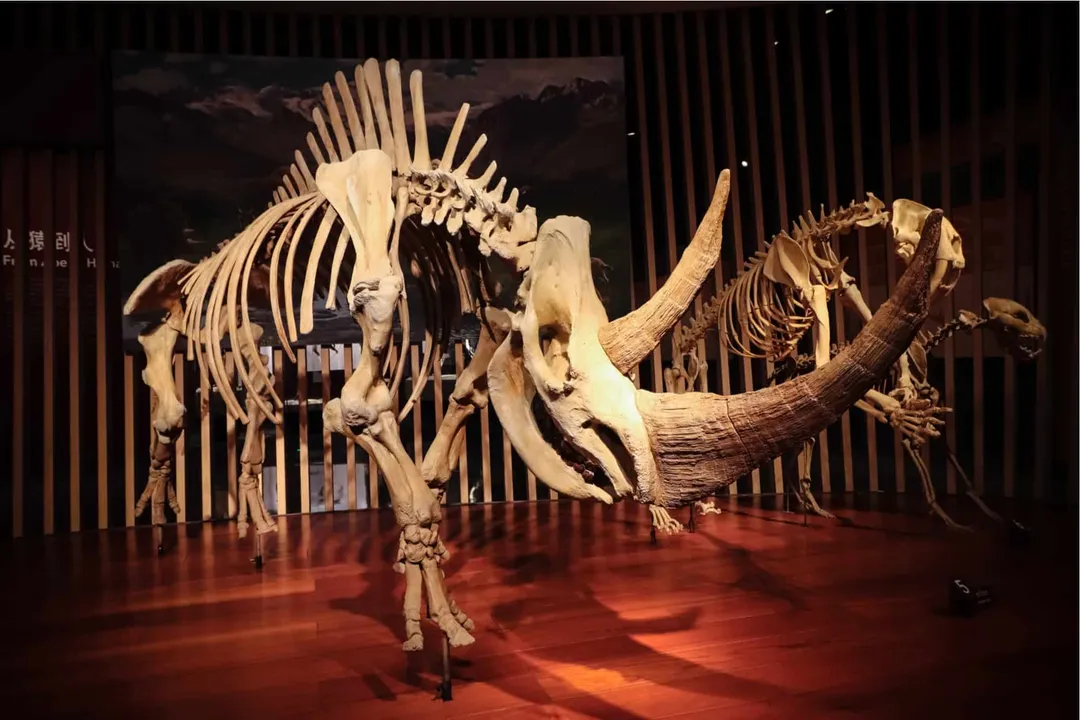
Our understanding of this magnificent animal is built upon a wealth of paleontological evidence spanning thousands of years. [2][9] Remains of the Woolly Rhinoceros are relatively common in Ice Age strata throughout Eurasia. [9] What makes this species particularly fascinating is the quality of preservation found in certain locations. [2][9] In some instances, complete specimens have been unearthed from permafrost regions, offering remarkably intact insights into their anatomy, including skin, hair, and internal organs. [2][9]
These perfectly preserved individuals, often found in Siberia or far northern Europe, serve as exceptional case studies, allowing researchers to directly observe traits like the density of their fur, the color of their hides, and even the contents of their last meals. [2][9] For instance, finds in caves, such as those sometimes studied by researchers examining Ice Age art contexts, confirm the presence of the species, providing a cultural link alongside the scientific one. [9] The study of these fossils helps establish precise timelines for their evolution and subsequent disappearance. [9]
# Vanishing Act
The end of the Woolly Rhinoceros coincided with the general retreat of the glaciers and the warming trend that marked the transition from the Pleistocene to the Holocene epoch, roughly concluding around 10,000 years ago. [1][5] However, the process was gradual, and extinction was likely not singular event but a drawn-out decline. [2][5]
Several factors are believed to have contributed to their ultimate disappearance. Primary among these is habitat change. [5] As the climate warmed, the vast, dry mammoth steppe—their specialized feeding ground—receded and was replaced by denser forests and wetlands less suited to their grazing habits. [1][5] This shrinking of their prime habitat would have placed immense pressure on the remaining populations. [6] Furthermore, the rise of anatomically modern humans (Homo sapiens) during this period introduced another significant pressure point: hunting. [5] While the extent of human impact versus climate change remains a topic of debate, it is generally accepted that increased predation, combined with dwindling resources, proved too much for the specialized megafauna to overcome. [5][6] While some populations lingered in isolated refugia—perhaps the very far northeast—the species as a widespread Eurasian entity faded from the world record. [2]
When we look at the survival timelines, it is interesting to note that while the majority vanished around 12,000 years ago, isolated pockets survived longer in some areas, clinging to the last remnants of the cold, open steppe. [2] This prolonged survival in limited zones suggests that while climate dictated the overall decline, local conditions and human presence determined the final tipping point for the last individuals of Coelodonta antiquitatis. [1] The loss of this species represents a significant reduction in the biomass adapted specifically for extreme cold within the northern megafaunal assemblage. [6]
Related Questions
#Citations
Woolly rhinoceros | Habitat, Extinction, & Facts - Britannica
Woolly rhinoceros - Wikipedia
Woolly Rhinoceros - Jacksonville Zoo
Woolly rhinoceros Facts for Kids
Woolly rhino Facts, Habitat, Pictures and Range - Extinct Animals
Coelodonta antiquitatis (Bronn, 1831) - GBIF
Woolly Rhinoceros - Coelodonta antiquitatis - A-Z Animals
Woolly Rhinoceros - Kirkby Teaching Resources
Woolly Rhinos: Characteristics, Origin and Diet
Ice Age Explorer: Woolly Rhino | Herefordshire Wildlife Trust