What environmental shift acts as a firm barrier preventing Crotalus atrox range expansion eastward in Oklahoma?
Answer
Shift to wetter, more heavily forested environments eastward
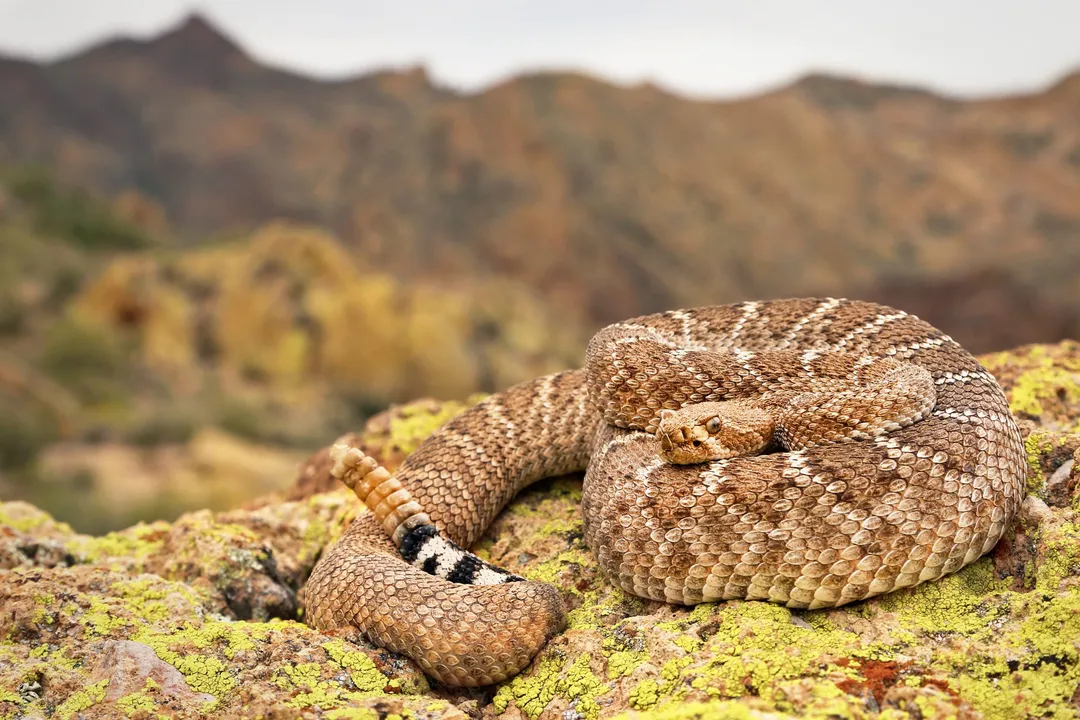
The eastern boundary of the Western Diamondback Rattlesnake's range in Oklahoma exhibits a sharp demarcation, with populations generally absent from the eastern third of the state. This absence is attributed to the ecological transition occurring there. Specifically, the shift into environments characterized as wetter and more heavily forested creates a firm barrier to further expansion. This suggests that the increased moisture levels and different vegetative cover found in these eastern regions do not suit the classic desert dweller, which favors drier conditions.
Related Questions
What is the scientific designation for the Western Diamondback Rattlesnake?Which five US states define the primary concentration area for Crotalus atrox?Which three major desert systems host the Crotalus atrox population concentration in the US?What geographic constraint limits the upward movement of Crotalus atrox in California?What environmental shift acts as a firm barrier preventing Crotalus atrox range expansion eastward in Oklahoma?Besides deserts, what other habitat types do Crotalus atrox inhabit comfortably?Where are Crotalus atrox commonly seeking shelter near human habitation in Phoenix, Arizona?In Southern Nevada, where are these rattlesnakes frequently observed utilizing natural topography?What does the line work on maps generally represent regarding the Western Diamondback distribution?What environmental limitation, related to ectothermy, shapes the exclusion of certain high-elevation areas?