In Southern Nevada, where are these rattlesnakes frequently observed utilizing natural topography?
Answer
Dry, rocky washes, canyons, and brushy desert areas
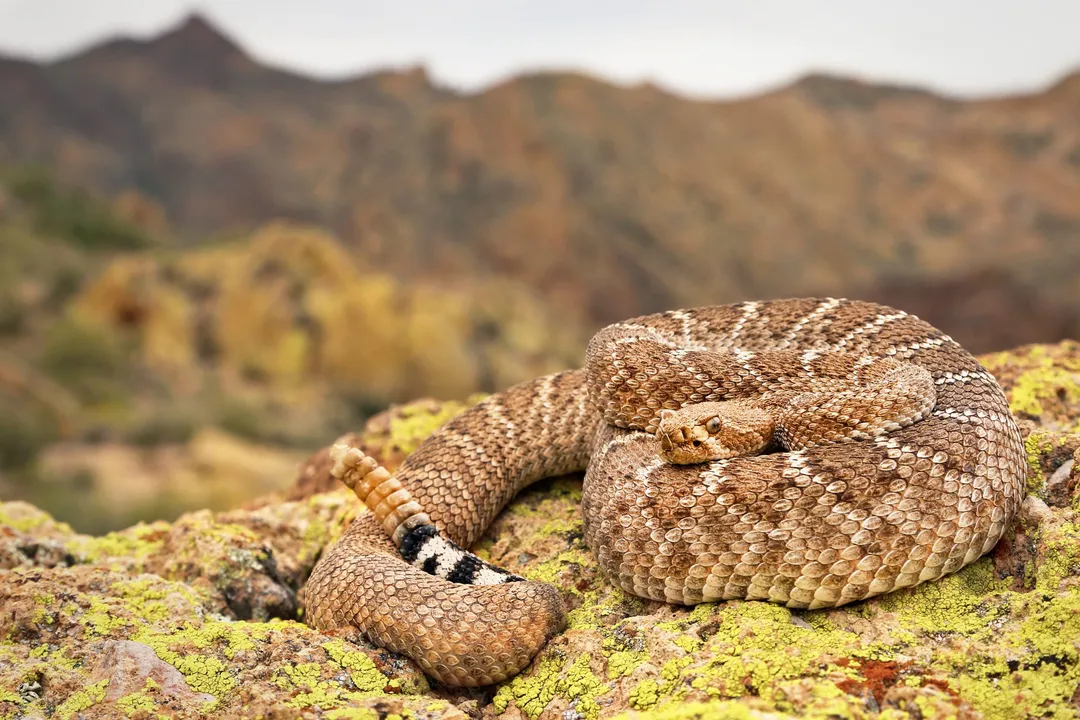
When observing the Western Diamondback Rattlesnake in the southern reaches of Nevada, their presence is tied to specific topographical features that aid in concealment and ambush hunting. They are regularly spotted utilizing dry, rocky washes, navigating through canyons, and making use of brushy sections within the desert landscape. This behavior demonstrates their skill in exploiting the natural topography to secure cover and effectively hide from both prey and potential threats, which is characteristic of their ambush predatory strategy.
Related Questions
What is the scientific designation for the Western Diamondback Rattlesnake?Which five US states define the primary concentration area for Crotalus atrox?Which three major desert systems host the Crotalus atrox population concentration in the US?What geographic constraint limits the upward movement of Crotalus atrox in California?What environmental shift acts as a firm barrier preventing Crotalus atrox range expansion eastward in Oklahoma?Besides deserts, what other habitat types do Crotalus atrox inhabit comfortably?Where are Crotalus atrox commonly seeking shelter near human habitation in Phoenix, Arizona?In Southern Nevada, where are these rattlesnakes frequently observed utilizing natural topography?What does the line work on maps generally represent regarding the Western Diamondback distribution?What environmental limitation, related to ectothermy, shapes the exclusion of certain high-elevation areas?