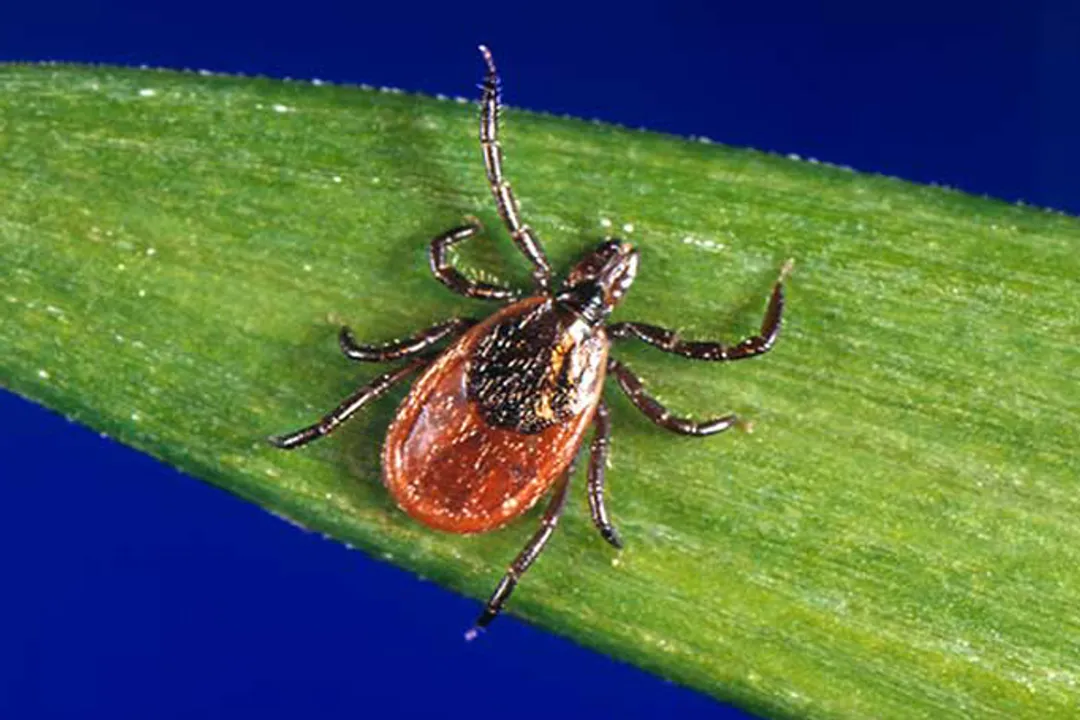
What ecological effect results from *Ixodes pacificus* larvae feeding heavily on lizards?
Pathogen load may be diluted before the nymphal stage.
When Western Blacklegged Tick larvae feed predominantly on lizards, which are ectotherms or cold-blooded hosts, it often leads to a dilution effect regarding human pathogens like those causing Lyme disease. Since many disease-causing agents struggle to survive or replicate effectively within the body temperature environment of a reptile, a successful first blood meal on a lizard means the larva is less likely to become infected or carry a high initial pathogen load. This outcome is ecologically significant because if the larva fails to acquire the pathogen from the lizard, it molts into a nymph that is not infectious. This contrasts with regions where larvae immediately feed on infected small mammals, leading to an infectious nymph population that poses an immediate risk to humans later on.