What substance is secreted by the tick's *capitulum* to prevent immediate host detection?
Answer
An anesthetic to dull the host's pain response.
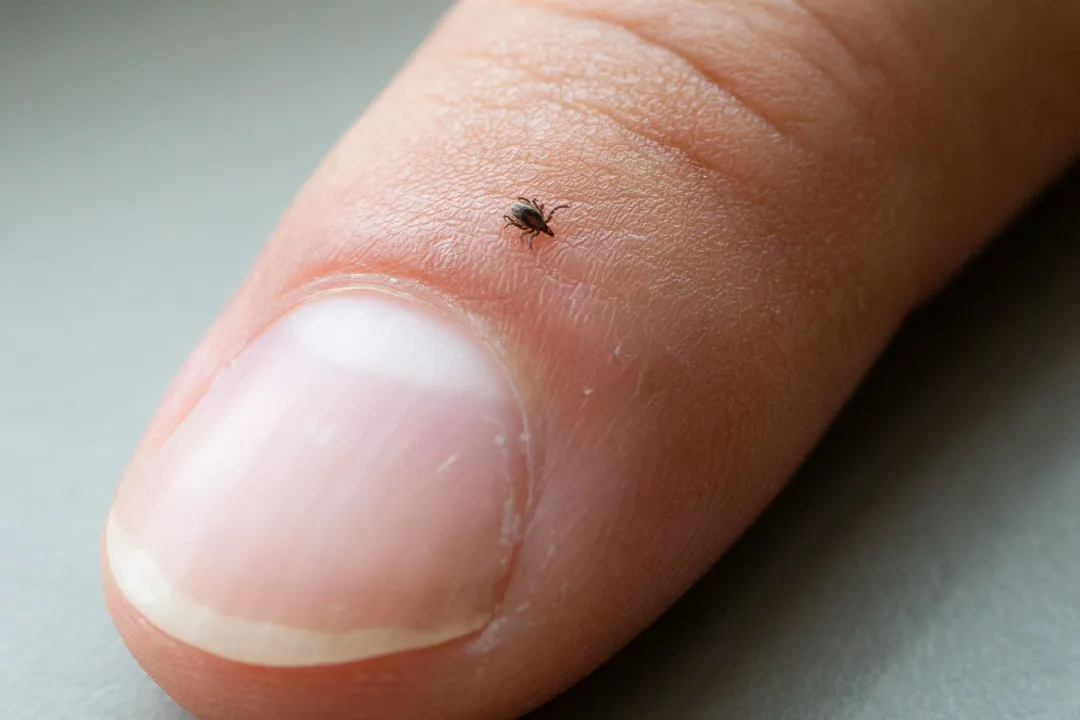
When a tick secures itself to a host using its mouthparts, known as the capitulum, it injects a complex chemical mixture via its saliva directly into the wound site. One critical component of this secretion is an anesthetic agent. The purpose of this anesthetic is to immediately numb the area where the tick has bored into the tissue, thereby mitigating the host's ability to instantly feel the intrusion and react by scratching or swatting the parasite away. Along with the anesthetic, an anticoagulant is also delivered to ensure the blood flow remains uninterrupted into the tick's digestive system during the feeding period.
Related Questions
What is the absolute dietary requirement for *Dermacentor* tick development?How does the adult male wood tick's blood meal requirement compare to the female's?What substance is secreted by the tick's *capitulum* to prevent immediate host detection?What small mammals are typical hosts for larvae and nymphs of *D. andersoni*?Which group of animals defines the common host preference for adult *D. variabilis*?When questing, how does a tick utilize its legs to sense potential passing hosts?What physical height range corresponds to the common questing posture of nymphs and adults?What happens after a tick ingests blood that prepares it for future pathogen injection?Which specific disease is transmitted by *D. andersoni* but not generally associated with *D. variabilis*?Why is the feeding dependency of *D. andersoni* larvae/nymphs on small mammals ecologically significant?