What complex reproductive strategy is characteristic of the genus *Lepidophyma*, creating boundaries between distinct evolutionary lineages?
Answer
Existence of facultative or obligate parthenogenesis alongside sexual reproduction
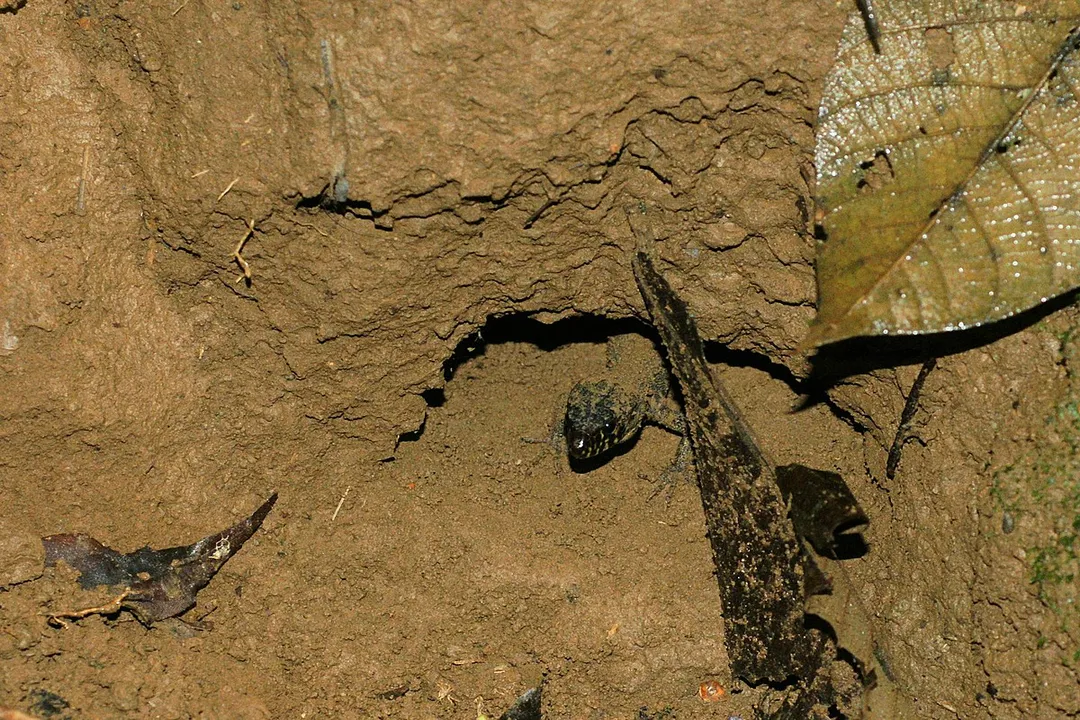
The evolutionary interest in the genus *Lepidophyma* centers heavily on its reproductive duality. Certain populations engage in standard sexual reproduction, while others utilize parthenogenesis, which is asexual reproduction where females reproduce without mating, sometimes being facultative (optional) or obligate (required). This reproductive plasticity is a potent mechanism for evolutionary divergence. When parthenogenetic lineages, often triploid, become reproductively isolated from sexual diploid relatives due to incompatibility in producing fertile hybrids, this duality directly enforces species boundaries.
Related Questions
Which family classification encompasses *Lepidophyma flavimaculatum*, commonly known as night lizards?If a sexual diploid female ($2n$) of *Lepidophyma flavimaculatum* is crossed with a male, what ploidy level characterizes the typical sexual offspring?The species name *flavimaculatum* in *Lepidophyma flavimaculatum* directly refers to which physical characteristic?What evolutionary advantage does sexual reproduction grant *Lepidophyma* populations compared to purely clonal lines regarding long-term adaptation?The geographic distribution of *Lepidophyma flavimaculatum* spans across which primary countries in Central America?What specialized habitat requirement highlights the vulnerability of *L. flavimaculatum* to desiccation and light exposure?In an environment characterized by stability, which reproductive strategy allows a clonal lineage of *Lepidophyma* to potentially dominate rapidly?What process, often involving geographic barriers like mountain ranges, leads to reproductive divergence, such as populations evolving different ploidy levels in *Lepidophyma*?What complex reproductive strategy is characteristic of the genus *Lepidophyma*, creating boundaries between distinct evolutionary lineages?While genetics offers deep insight, what observable morphological feature of *L. flavimaculatum* often holds clues about its diet and feeding mechanics?