What Latin roots form the specific epithet *flavimaculatum* of *Lepidophyma flavimaculatum*?
Answer
Flavus meaning yellow and maculatum meaning spotted
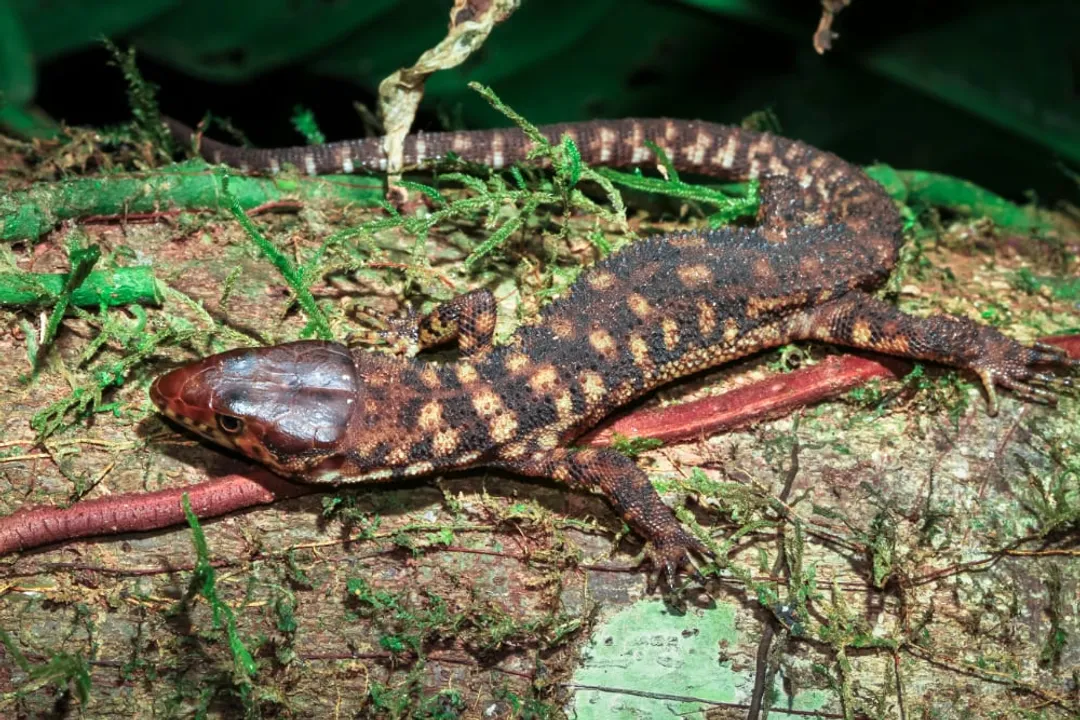
The specific epithet *flavimaculatum* is directly derived from two Latin roots that describe the lizard's appearance. The first part, *flavus*, translates to 'yellow.' The second part, *maculatum*, translates to 'spotted.' When combined, they literally reference the most recognizable external feature of this species: the distinct yellow spots displayed against its darker body coloration. This naming convention is common in binomial nomenclature when physical characteristics are highly diagnostic for identification in the field. This contrasts with the genus name, *Lepidophyma*, which draws upon Greek roots describing scale structure rather than coloration.
Related Questions
What Latin roots form the specific epithet *flavimaculatum* of *Lepidophyma flavimaculatum*?What do the Greek roots composing the genus name *Lepidophyma* translate to, referencing a physical trait?Which taxonomic Family unites *Lepidophyma flavimaculatum* with other live-bearing lizards?What reproductive strategy allows *L. flavimaculatum* populations to produce exclusively female offspring without fertilization?What common name is sometimes used by pet dealers for tropical night lizards like *Lepidophyma flavimaculatum*?According to the IUCN assessment, what is the current conservation status of *Lepidophyma flavimaculatum*?What taxonomic feature distinguishes the genus *Xantusia* from the genus *Lepidophyma* within the Xantusiidae family?Which reproductive trait do *L. flavimaculatum* and other members of the Family Xantusiidae share?What unusual physical data discrepancy highlights the difficulty in gathering standardized field data for *Lepidophyma flavimaculatum*?What mechanism is identified as the primary source of venom in *L. flavimaculatum*, despite fictional portrayals?Which authority established the binomial designation *A.H.A. Duméril, 1851* for the species *Lepidophyma flavimaculatum*?