What do the Greek roots composing the genus name *Lepidophyma* translate to, referencing a physical trait?
Answer
Scale and tumor, describing the enlarged tubercles
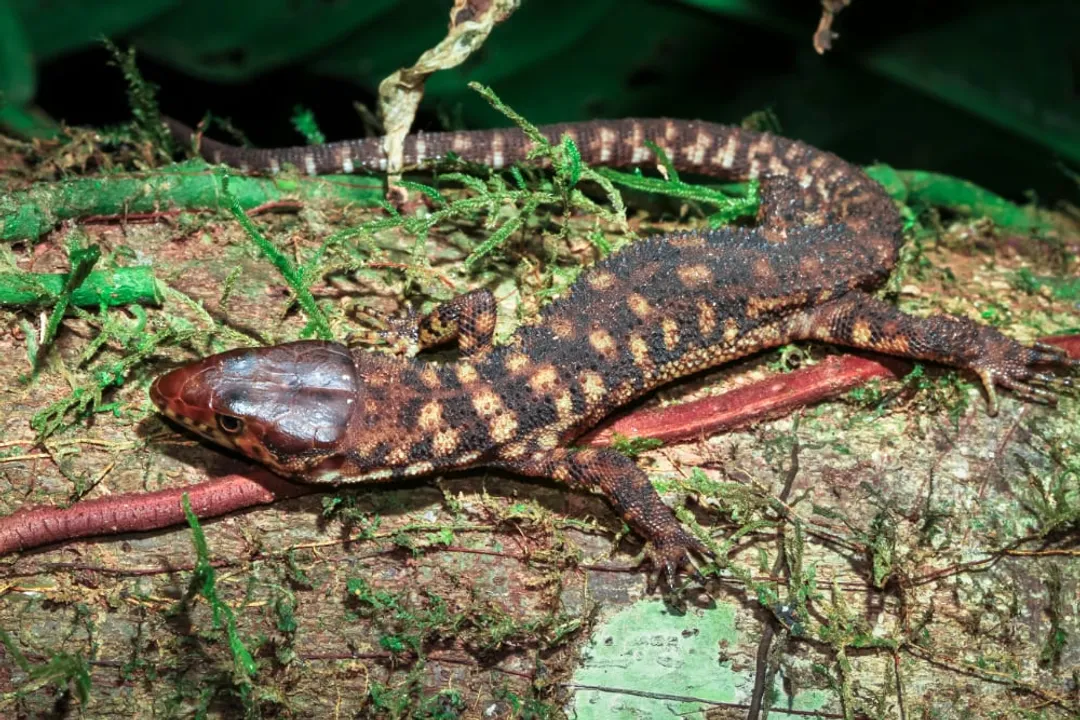
The genus name *Lepidophyma* is constructed from two distinct Greek components: *lepis*, which means 'scale,' and *phyma*, which means 'tumor.' This combination serves as a morphological descriptor, pointing specifically toward the presence of enlarged tubercles covering the lizard's body surface. These tuberculate scales are a key characteristic distinguishing members of this genus. This anatomical feature is hypothesized to provide physical defense and protection as the lizard moves through the rough, moist environment of decaying logs and detritus common in its specialized microhabitat within wet, tropical forests.
Related Questions
What Latin roots form the specific epithet *flavimaculatum* of *Lepidophyma flavimaculatum*?What do the Greek roots composing the genus name *Lepidophyma* translate to, referencing a physical trait?Which taxonomic Family unites *Lepidophyma flavimaculatum* with other live-bearing lizards?What reproductive strategy allows *L. flavimaculatum* populations to produce exclusively female offspring without fertilization?What common name is sometimes used by pet dealers for tropical night lizards like *Lepidophyma flavimaculatum*?According to the IUCN assessment, what is the current conservation status of *Lepidophyma flavimaculatum*?What taxonomic feature distinguishes the genus *Xantusia* from the genus *Lepidophyma* within the Xantusiidae family?Which reproductive trait do *L. flavimaculatum* and other members of the Family Xantusiidae share?What unusual physical data discrepancy highlights the difficulty in gathering standardized field data for *Lepidophyma flavimaculatum*?What mechanism is identified as the primary source of venom in *L. flavimaculatum*, despite fictional portrayals?Which authority established the binomial designation *A.H.A. Duméril, 1851* for the species *Lepidophyma flavimaculatum*?