Yellow Spotted Lizard Facts
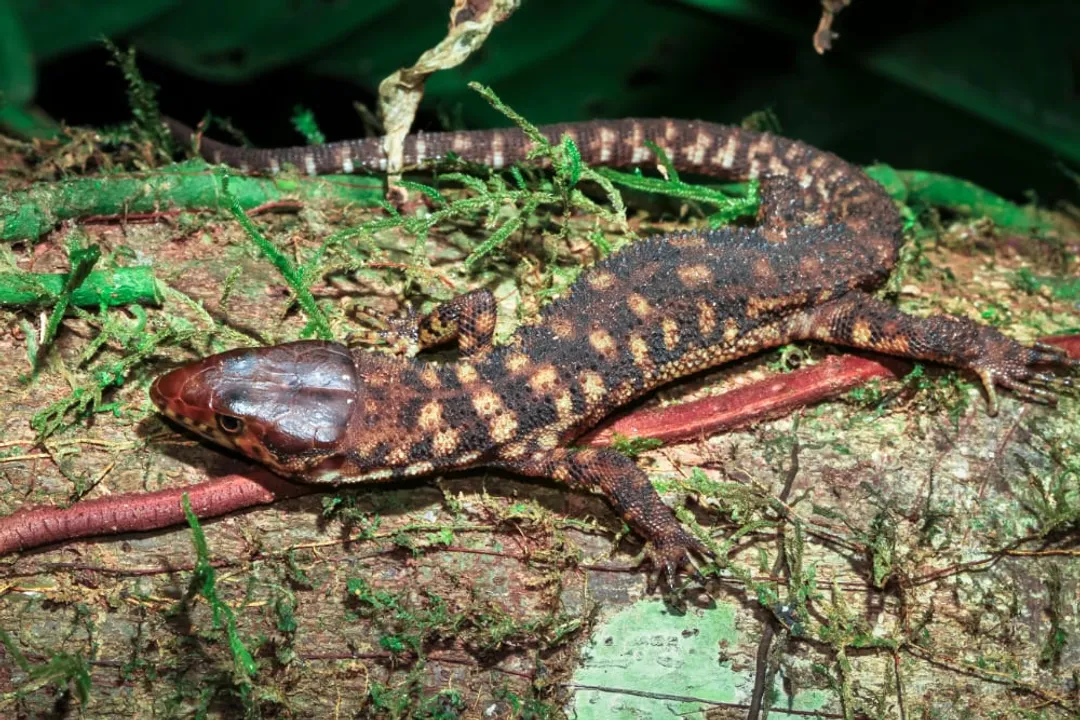
The creature often referred to simply as the Yellow Spotted Lizard is, in reality, most commonly identified in herpetological circles as the Yellow-spotted tropical night lizard, scientifically designated as Lepidophyma flavimaculatum. [1][4][9] This species belongs to the family Xantusiidae, which comprises the night lizards. [3][8] While media portrayals, particularly from the film adaptation of the novel Holes, have painted a picture of a terrifying, venomous desert demon—often using painted bearded dragons for the role—the real animal is a secretive, tropical inhabitant of Central America. [1][4][10] Understanding the true L. flavimaculatum requires looking past the Hollywood myth and delving into its specific biology and habitat needs. [4]
# Classification Range
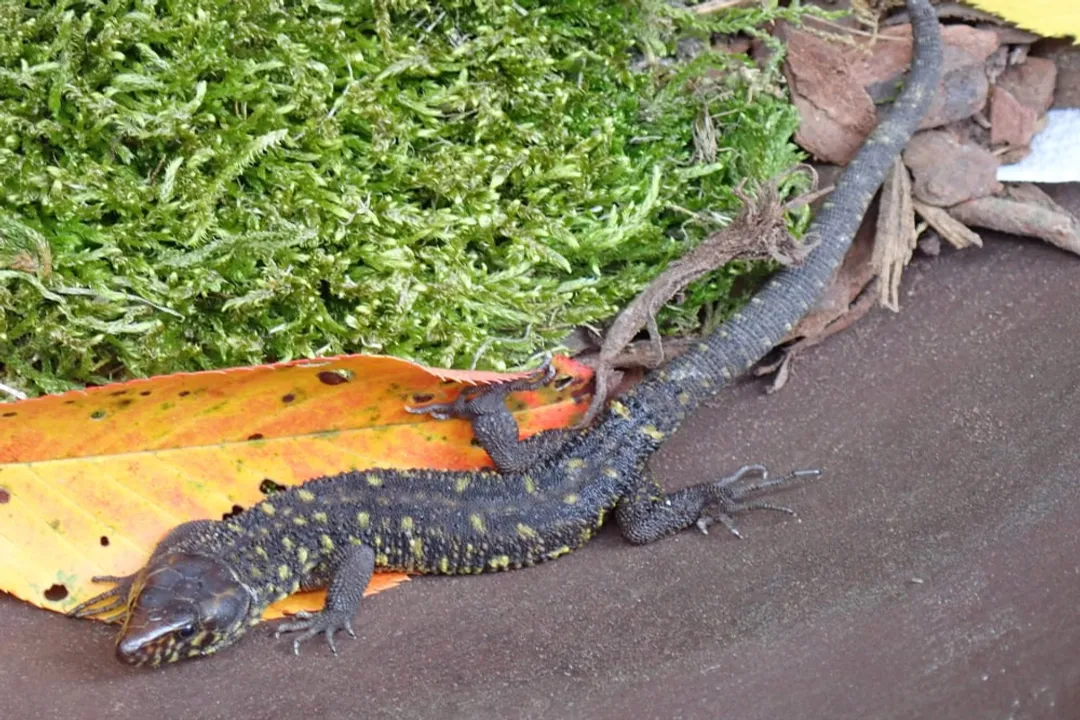
The distribution of Lepidophyma flavimaculatum is widespread throughout Central America, spanning from central Mexico down into Panama. [3][4] Specific areas within this range include Nicaragua, Costa Rica, Veracruz, and Oaxaca. [3][9] These lizards thrive in tropical wet and moist forest environments, often found at altitudes ranging from sea level up to 1,500 meters (nearly 4,900 feet). [4]
The genus Lepidophyma is part of the larger Xantusiidae family. While other genera in this family exist—such as Xantusia found in U.S. deserts and Cricosauria restricted to Cuba—it is L. flavimaculatum that shows up with any regularity in the United States reptile trade. [8] The species itself is currently recognized as comprising four subspecies, though care requirements are generally consistent across them: L. f. flavimaculatum, L. f. ophiophthalmum, L. f. tehuanae, and L. f. tenebrarum. These distinctions are mainly based on scale structure differences. [8] Despite their wide range, scientists find them elusive, though the IUCN currently lists the species as Least Concern. [3][4][7]
# Physical Characteristics
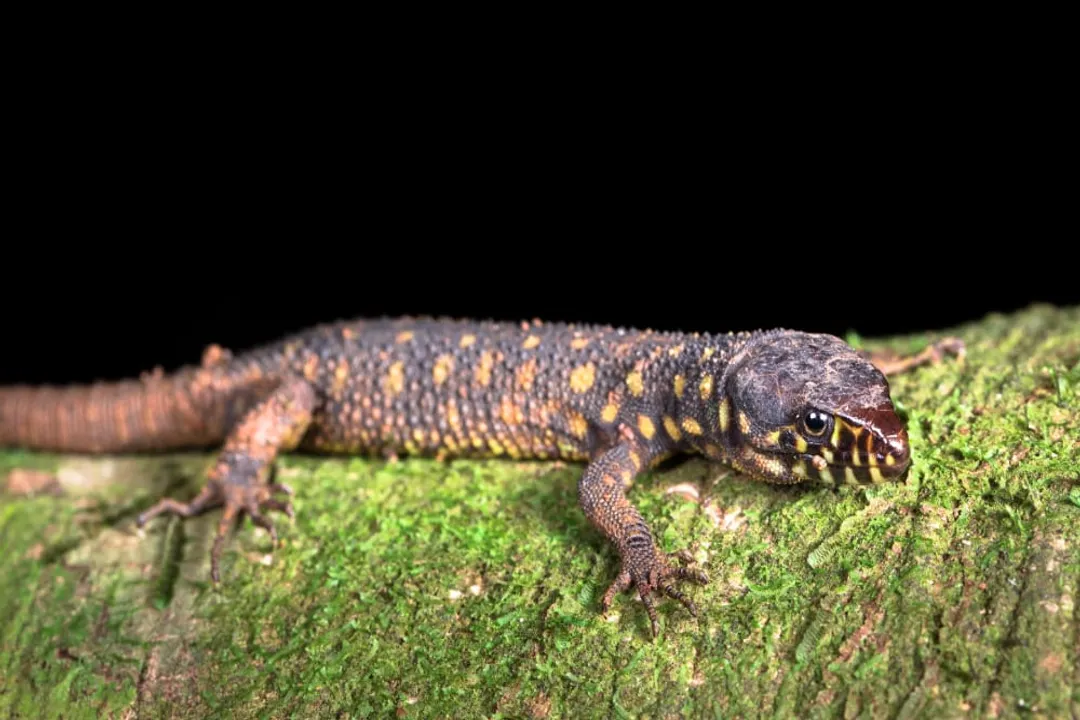
The namesake of the species is clearly visible in its coloration. The ground color is generally black, dark brown, or dark reddish-brown, heavily interspersed with distinct yellow spots or patches along the dorsum and flanks. [3][7][9] In contrast to the duller dorsal surface, the ventral side, or belly, is often a brighter, shinier subdued yellow or tan color. [2][8]
The texture of the skin is another defining characteristic. Unlike some lizards with uniformly smooth scales, the dorsum of the night lizard is covered in small, spine-like tubercles, giving it a rough, grainy feel described by one observer as similar to 80-grit sandpaper. [2][9] However, the head is notably different, appearing relatively large, narrow, and plated with a smooth, sleek texture reminiscent of a snake's head. [2][3][9] The tail features overlapping bands of sharp-looking scales. [2]
In terms of size, these lizards are small to moderate. They can reach snout-to-vent lengths (SVL) of around 4.0 to 6.0 inches, with total lengths sometimes reaching up to 10 inches. [8] However, other sources suggest an average total length closer to 4 inches or 20 centimeters (about 8 inches). [3][7] Neonates, when born live, are quite small, measuring only about 3 centimeters (just under 1.2 inches). [8]
# Lifestyle and Environment
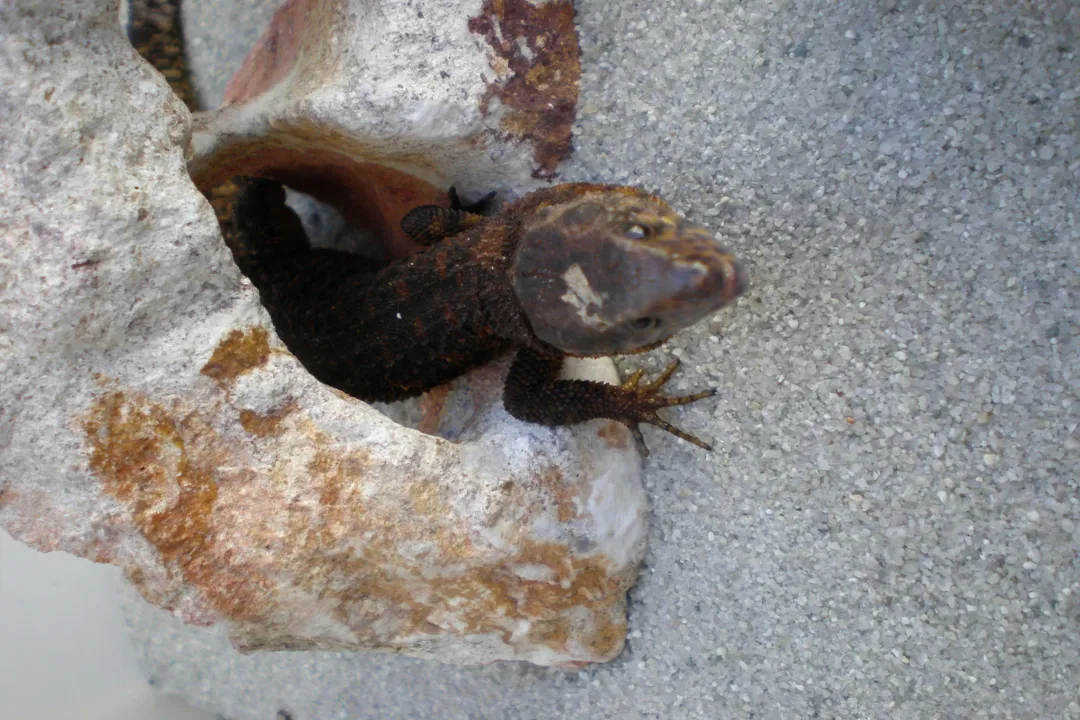
The Yellow-spotted night lizard lives up to its common name, being primarily nocturnal and highly secretive. [4][6][9] They spend their daylight hours concealed in their preferred microhabitat, which typically involves seeking refuge under leaf litter, rocks, or rotting logs on the forest floor. [4][8][9] While mostly terrestrial, they may occasionally climb low tree trunks or hide beneath loose bark. [4][9]
A critical aspect of their ecology is their tendency to be microhabitat specialists. [2][4][8] Field researchers have reported finding the same individual L. flavimaculatum under the exact same cover after several years, suggesting a preference for extremely restricted home ranges. [8] This highly localized existence is an interesting adaptation, especially when considering the conservation status of "Least Concern," as it means population density estimates are inherently challenging and reliant on undisturbed forest floor debris. [3][7] If keepers attempt to replicate this in captivity, providing substantial, deep substrate layers and plenty of cover is more vital than providing great height, as they are terrestrial creatures. [8]
They are generally considered solitary and territorial. [3][6] In fact, communal housing often results in harassment, attacks, and the loss of digits or tail tips, necessitating that even newborns be housed individually to prevent this aggression. [8]
# Diet and Predation
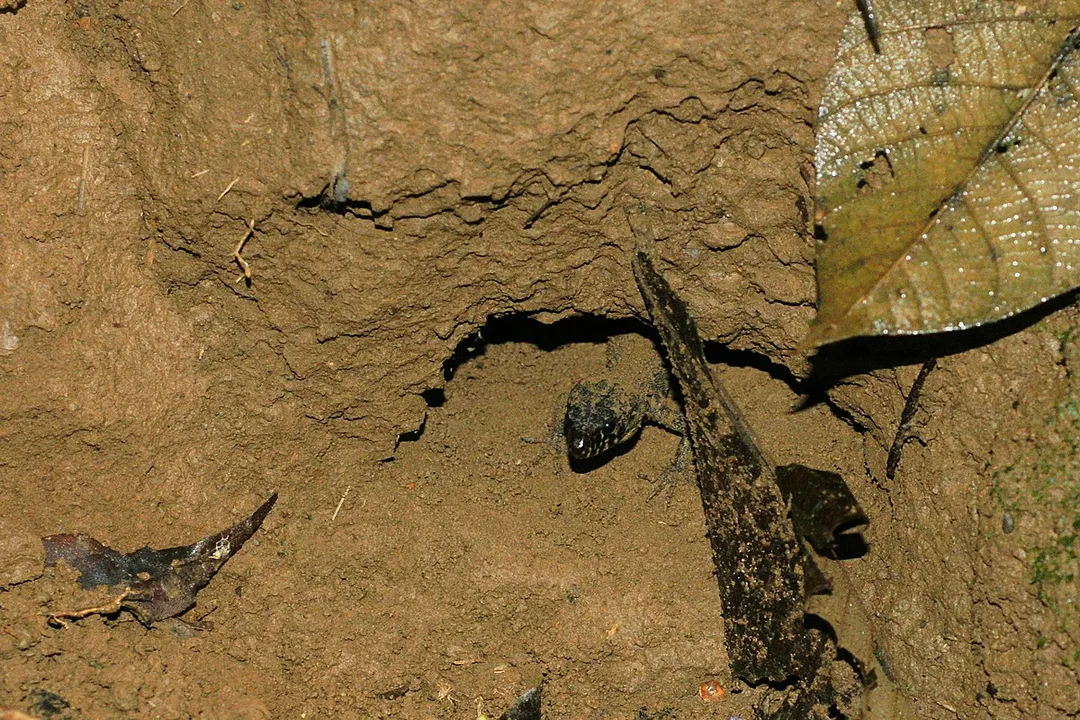
Lepidophyma flavimaculatum is an insectivore/carnivore. [3][7] In the wild, their diet consists primarily of small invertebrates found within their immediate environment, such as ants, spiders, scorpions, termites, millipedes, and centipedes. [2][3][7][9] While they are known to forage outside their immediate hiding spot, their microhabitat specialization suggests they consume most of their food within a very small radius. [2][8]
Despite their elusiveness, they do face natural predators. Snakes and even large centipedes are known to prey on them, and birds are a threat, particularly to the newly emerged young. [3][7]
The question of venom is complicated by the Holes narrative. While some popular sources claim the real lizard is venomous, even noting that the venom is potent and found on the tongue, other authoritative sources counter that the species is not aggressive or deadly as portrayed in fiction. [1][3][4] The consensus in modern husbandry literature suggests that while they possess a painful bite for such a small creature, they are not the deadly threat popularized by fiction, leading to the strong recommendation that handling should be avoided purely due to stress to the animal and the keeper's safety regarding defensive bites. [8][9]
# Fascinating Reproduction
One of the most unique biological traits of the Yellow-spotted night lizard is its reproductive flexibility. [9] The species can reproduce parthenogenetically, a form of asexual reproduction where an entire female population can produce clones of themselves without male fertilization. [2][4] In cases where fertilization does occur, male offspring can result. [3]
Furthermore, L. flavimaculatum is viviparous, meaning the female gives birth to fully developed, live young, rather than laying eggs—a feature uncommon among many lizard species. [3][4] Gestation lasts approximately 2.5 months, resulting in a litter size typically between five and eight neonates. [3] These babies look like miniature replicas of the adults and are capable of independent life immediately, though keepers are advised to separate them into individual enclosures right away due to the aggressive tendencies of the adults. [8] Lifespan in the wild is estimated around 11 years, but in captivity with proper care, they can potentially live 10 to 12 years or more. [3][8][9]
When considering the reproductive cycle, it is interesting to note that some keepers observe a brumation-like state coinciding with shorter days and cooler temperatures in the fall and winter, suggesting that environmental cues, even in captivity, influence their cycle. [2] This observation leads to a valuable consideration for advanced hobbyists: Because breeding success in captivity is rare, mimicking the natural environmental shifts—like a slight drop in ambient temperature and light duration—may be the key to prompting reproduction in captive pairs, assuming a mixed-sex group is being maintained. [2]
# Husbandry Considerations
Due to their secretive nature and specific microhabitat requirements, these lizards are generally considered suitable for intermediate to advanced keepers. [8][9] They are decidedly hands-off animals, as attempts to handle them usually result in stress, squirming, and defensive biting. [2][8]
# Enclosure Setup
Floor space is paramount over height because of their terrestrial nature. [8] A standard 20-gallon long aquarium (approximately 30" x 12" footprint) is often suggested as sufficient for an adult or a pair, though more space is always better for any active species. [2][8] The enclosure must be escape-proof. [9]
The substrate choice directly relates to their natural environment—moist, tropical forest floor. A mixture that retains humidity but does not stay soggy is ideal. [2] Substrates made of coconut fiber, sphagnum moss, or chemical-free potting soil mixes are appropriate. [8][9] Crucially, a moisture gradient must be established, keeping one end of the tank moist (where they may drink or soak) and the other end drier, often achieved by placing hides and misting only one side. [2][8]
Décor should prioritize function: ample cover such as cork bark flats, cork tubes, or artificial hides are essential for security. [2][8] While some keepers successfully integrate live, vivarium-safe plants (like Pothos or Dracaena species) to aid humidity and provide a naturalistic display, rockwork should be avoided due to the risk of injury if shifting occurs. [2][8]
# Temperature and Light Gradients
While they hail from warm, humid regions, L. flavimaculatum does not require excessive heat in captivity. [8] Many keepers maintain them successfully at standard room temperatures, around 72°F (22.2°C), with nighttime drops into the upper 60s°F being acceptable. [8] If room temperatures drop consistently, supplemental heating must be applied to create a thermal gradient—a warm side and a cool side—allowing the lizard to regulate its own temperature. [8][9] This is best achieved using a ceramic heat emitter or an under-tank heater, as red heat bulbs are now known to disturb nocturnal animals, since reptiles can perceive the red wavelengths of light. [2] Measuring basking spot temperatures with a digital temperature gun is strongly recommended over relying on adhesive thermometers, which only read ambient air temperature. [2]
The need for UVB light is an area where direct observation contrasts with common assumptions about nocturnal species. [2] While many sources state UVB is unnecessary because they are night dwellers, at least one dedicated keeper observed their lizard actively basking under a low-output (5%) UVB fluorescent bulb. [2] This suggests that, like many tropical animals living under a dense canopy, they require some level of UV exposure, perhaps less intense than desert species (which often use 8% output or higher). [2]
# Hydration Needs
Water access is another area where captive observation highlights unique behavior. Clean, shallow water should always be available, deep enough for the lizard to fully soak if desired. [2][8] It has been noted that they frequently soak daily for extended periods. [2] Furthermore, they appear to readily drink droplets during heavy misting sessions, often emerging from their hides to lick water off the glass, preferring this method over static standing water. [2]
For keepers maintaining bioactive setups, the use of isopods is a beneficial addition. These small crustaceans help manage waste and decaying organic matter, contributing to the enclosure's "cleanup crew," and can also offer an occasional supplemental food source. [8] This ecological integration mimics the natural decomposition processes occurring in their forest floor habitat.
#Videos
Are the Yellow Spotted Lizards from Holes REAL? - YouTube
Yellow-spotted Lizard Facts - Animal a Day XYZ Week - YouTube
Related Questions
#Citations
Yellow-spotted tropical night lizard - Wikipedia
Yellow Spotted Lizard - Lepidophyma flavimaculatum - A-Z Animals
[PDF] Yellow Spotted Lizard – The Demon of the Desert
Yellow Spotted Lizards are REAL! - Reptile Apartment
Yellow Spotted Lizard - Reptipedia | Fandom
Yellow Spotted Lizard Facts & Photos - Wowzerful
Yellow-Spotted Night Lizard Information and Care - Reptiles Magazine
Are the Yellow Spotted Lizards from Holes REAL? - YouTube
[PDF] Yellow Spotted Night Lizard (Lepidophyma flavimaculatum)