Yellow Spotted Lizard Physical Characteristics

The appearance of the lizard commonly known as the Yellow Spotted Lizard—more precisely identified as the Yellow-spotted Tropical Night Lizard (Lepidophyma flavimaculatum)—is striking, yet often overshadowed by its fictional counterpart. [1][2] To understand this reptile, we must focus on the actual physical traits that allow it to thrive in the shaded, humid forests from Central Mexico down to Panama. [1][2][1] This species belongs to the Xantusiidae family, grouping it with other night lizards. [2][3]
# Naming Distinctions
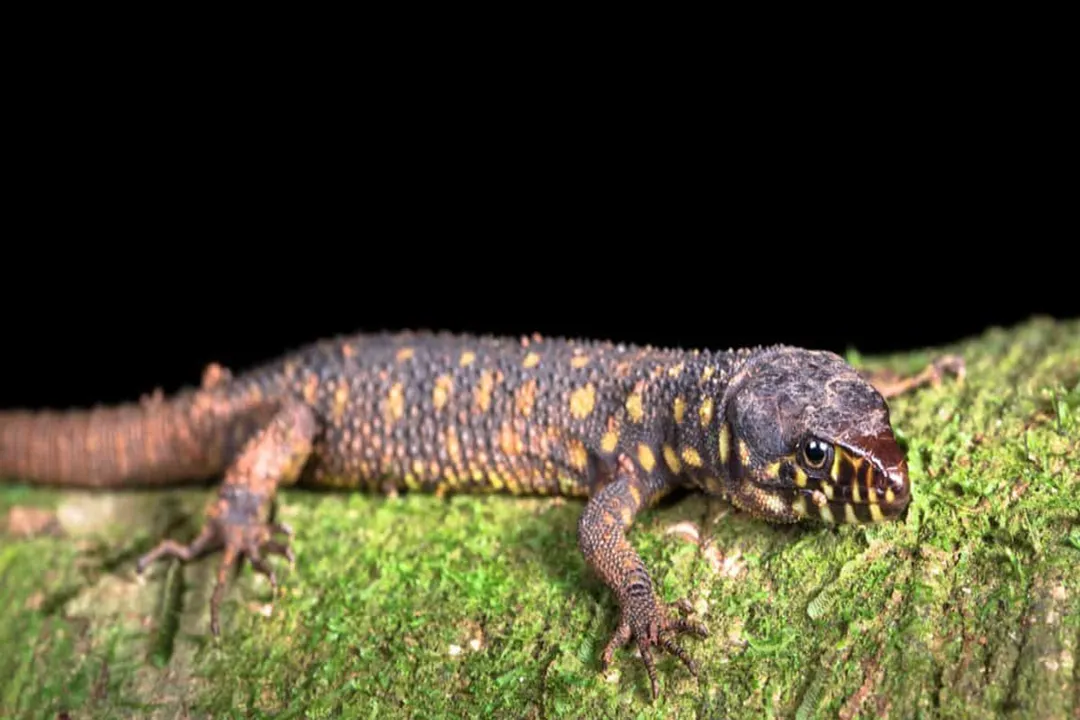
The common name frequently used for this animal can cause confusion, as the lizard popularized in fiction possesses traits drastically different from the real Lepidophyma flavimaculatum. [1][2] While the fictional creature is often cited as having exactly eleven spots, a deadly venom, and an aggressive nature, the real species is not known to be inherently murderous toward humans. [2][4] In fact, filmmakers creating the movie adaptation of the novel Holes used painted Bearded Dragons, not actual Yellow-spotted Night Lizards, to portray the fictional menace. [2][4] The actual lizard’s venom is described as painful when experienced by handlers, but the narrative of instant, deadly consequence appears unfounded based on hobbyist accounts. [2][3] Furthermore, its distribution is restricted to specific tropical zones, not the arid wasteland associated with the fictional camp. [1]
# Overall Size
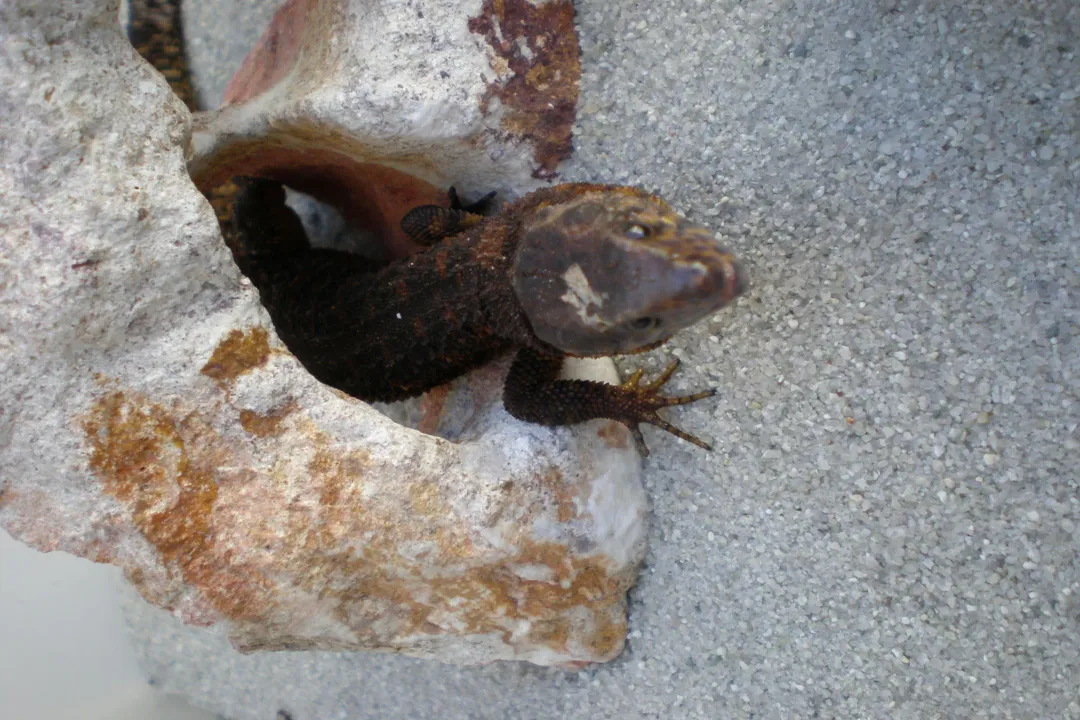
Establishing a definitive size for L. flavimaculatum proves challenging based on current documentation, with figures varying across field reports and keeper observations. Some sources note a general maximum length of around 4 to 5 inches. [1] However, other detailed accounts suggest a more substantial overall structure. These lizards can reach an average snout-to-vent length (SVL) of about 5 inches (12.7 cm), which, when combined with a tail measuring an additional 5 to 6 inches, puts the total potential length closer to 10 or 11 inches. [1][3] Another report suggests an average total length of about 8 inches (20 centimeters). [3] This range in reported measurements—from under 5 inches to nearly 11 inches total length—highlights the difficulty scientists face in studying these reclusive animals. [1] It is worth noting that upon hatching, the neonates are notably small, measuring only about 3 centimeters in length. [1][3]
When considering these size reports, it is interesting to pause and analyze the context of the measurements. The figure of 3.2 lbs mentioned in one source seems inconsistent with a lizard that is typically only 5 inches at the snout-to-vent measurement; this is likely an anomalous data entry, as a lizard of that size would be biologically implausible weighing that much. [1] The difference between a 4-inch maximum and a potential 10-inch length may reflect the variability across the two recognized subspecies, L. f. flavimaculatum and L. f. ophiophthalmum, or perhaps simply reflect variances in hydration, gut content, or measurement technique between observers. [2] The fact that they are the largest of the Xantusia group (though they belong to Lepidophyma) indicates they are substantial for night lizards. [2]

# Coloration and Pattern

The "yellow-spotted" moniker is certainly earned, as the primary visual characteristic is the contrast against a dark background. The base coloration across the dorsum (back) and flanks is typically described as black or dark brown. [1][2] Scattered across this dark canvas are the eponymous yellow spots or patches, the number and intensity of which vary individually. [1][2]
The lower surfaces and ventral area present a different aspect. Here, the color is often a subdued yellow, which can range in hue from a cream color to a shade resembling mustard. [2] This underside tends to appear brighter and shinier compared to the duller dorsal surfaces. [2] Further contrast is provided by faint or thin yellow bands that run along the tail and rear flanks, setting them apart from the main body pattern. [1] These lizards generally maintain this coloration throughout their lives, as they are not known to change color for camouflage, instead wearing their spots proudly. [3]
# Integument and Head Structure
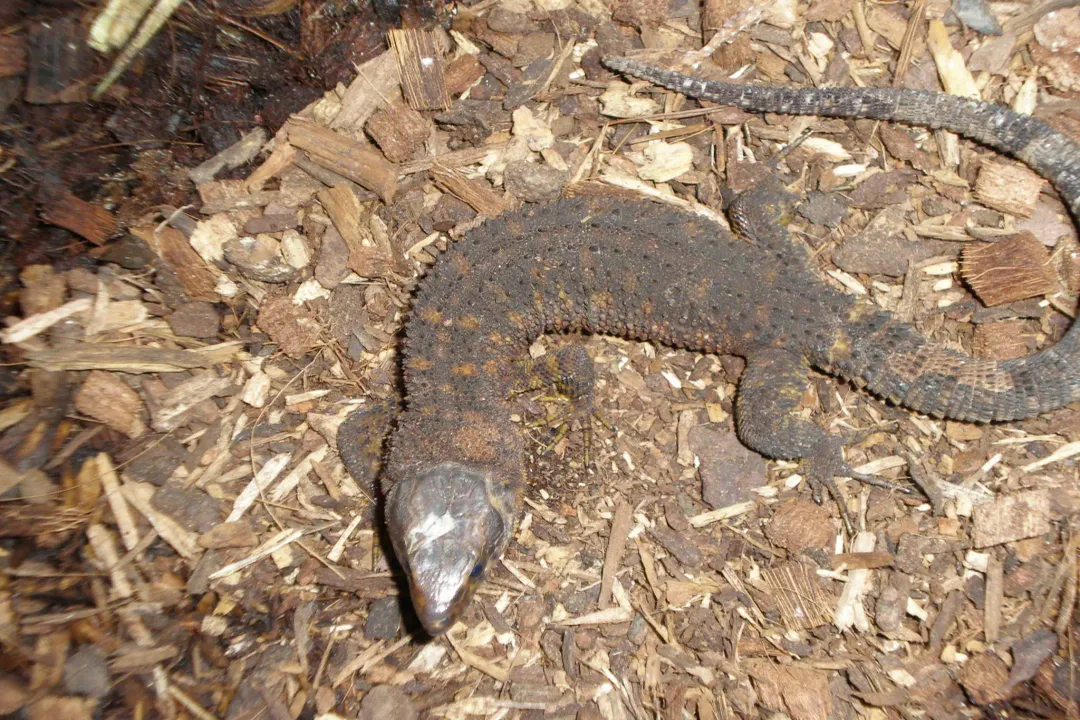
The texture of the Lepidophyma flavimaculatum is complex, featuring distinct differences between the head and the body. [1] While the body is covered in scales, the texture is not uniform. One key feature described is that the body possesses enlarged tubercles. [2][3] These structures can create a texture compared to rough sandpaper, giving the dorsal surface a distinct feel. [2]
Conversely, the head is often described as smooth and sleek, sometimes likened to that of a snake. [1] However, this smoothness is complicated by another observation: the dorsal surface of the head features enlarged plates that contribute to a "beak-like appearance". [2] A particularly intriguing characteristic noted by some observers is that their unique scales might reflect light like tiny mirrors, causing the lizard to sparkle when exposed to sunbeams piercing the forest canopy. [3] This combination of rough, tuberculate body texture, sleek head plates, and light-reflecting qualities creates a highly specialized skin structure. An added physical detail is that their teeth are black. [1]
A significant physical adaptation shared by members of the Xantusiidae family, including this species, is the lack of a true eyelid. [1] Instead of being able to blink, they protect their eyes using a transparent scale, known as a brille, which functions similarly to the spectacle found on snakes and certain geckos, preventing desiccation and injury. [1]
# Activity and Defense Morphology
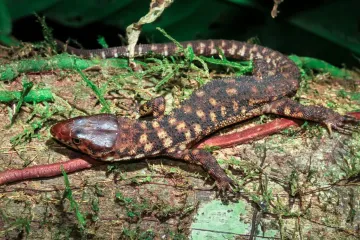
While named "Night Lizard," their activity pattern is more nuanced than strictly nocturnal, often being described as crepuscular, meaning they are most active during the twilight hours of dawn and dusk. [1] However, keepers have noted individuals basking regularly, suggesting they utilize available light when safe to do so. [2]
When threatened, a common physical defense mechanism employed by this small reptile is autotomy, or dropping its tail. [3] This tail can regenerate over time, offering a chance for the lizard to escape a predator’s grasp. [3]
# Venomous Apparatus
The mouthparts and tongue hold a unique, if perhaps exaggerated, status in the literature. One account claims the lizard possesses one of the most toxic substances in the natural world, with the milky white tongue being the main source of the venom, capable of causing death without immediate antivenom treatment. [1] This sensational description contrasts sharply with the experience of reptile keepers, who report the bite is indeed painful for a lizard of its stature but may not even draw blood in some instances. [2][3] This disparity suggests that the extreme danger associated with the fictional version—which is potent enough to kill instantly—is conflated with the real lizard’s defensive, yet less overtly lethal, bite. [2][4] The intensity of the venom's effect, therefore, remains a point of divergence between sensationalized accounts and practical reptile husbandry reports. [1][2]

# Parthenogenesis and Physical Expression
Though not a constant physical trait of every individual, the method of reproduction has a direct bearing on the sex ratios observed in wild populations and the subsequent physical appearance of the colony. In regions like Costa Rica and Panama, the population is composed exclusively of females that reproduce through parthenogenesis—creating clones of themselves without male fertilization. [1][3] These females are ovoviviparous, meaning the embryos develop internally within thin-walled eggs until fully formed, at which point the female gives birth to live young. [1][3]
When fertilization does occur, resulting in the presence of males, the physical trait of sex determination is established. The offspring are miniature replicas of the parents at birth, roughly 3 cm long. [1] The fact that some populations are entirely female clones means that the physical characteristics—spotting, size, and scale texture—will be highly uniform within those specific groups, dictated entirely by the maternal genetics. [1][3] This is an exceptional biological characteristic for a reptile, making the physical expression of the species less about sexual dimorphism in appearance and more about reproductive strategy. [1]
# Summary of Key Physical Features
The Yellow-spotted Tropical Night Lizard presents a unique profile within the Xantusiidae family, marked by specific physical adaptations for its shaded, humid environment:
| Characteristic | Detail / Range Observed | Citation(s) |
|---|---|---|
| Base Color | Black to dark brown | [1][2] |
| Spots/Markings | Interspersed yellow spots/patches; thin yellow bands on tail/flanks | [1][2] |
| Head Feature | Smooth skin, but with dorsal plates giving a beak-like appearance | [1][2] |
| Body Texture | Covered in tiny, rough, spine-like tubercles (like sandpaper) | [2] |
| Scales | Unique scales sometimes noted to reflect light | [3] |
| Eyes | Lack a traditional eyelid; protected by a transparent scale (brille) | [1] |
| Total Length | Highly variable; reported from 2.5 inches up to 5 inches SVL plus a 5-6 inch tail (approx. 10-11 inches total) | [1][3] |
| Defense | Tail autotomy capability | [3] |
If one were to encounter this reptile, the most immediate and reliable identifiers would be the dark body punctuated by bright yellow spots, the absence of a true eyelid, and the distinctly textured, tuberculate scales across its back, all under the umbrella of a secretive, relatively small Central American forest dweller. [1][2][3]
Related Questions
#Citations
Yellow Spotted Lizard - Lepidophyma flavimaculatum - A-Z Animals
Yellow-spotted tropical night lizard - Wikipedia
Yellow Spotted Lizard - Holes Wiki - Fandom
Yellow Spotted Lizard Facts & Photos - Wowzerful
Yellow Spotted Lizards are REAL! - Reptile Apartment
Yellow-spotted Night Lizard - Asheville Wildside