Yellow Spotted Lizard Scientific Classification
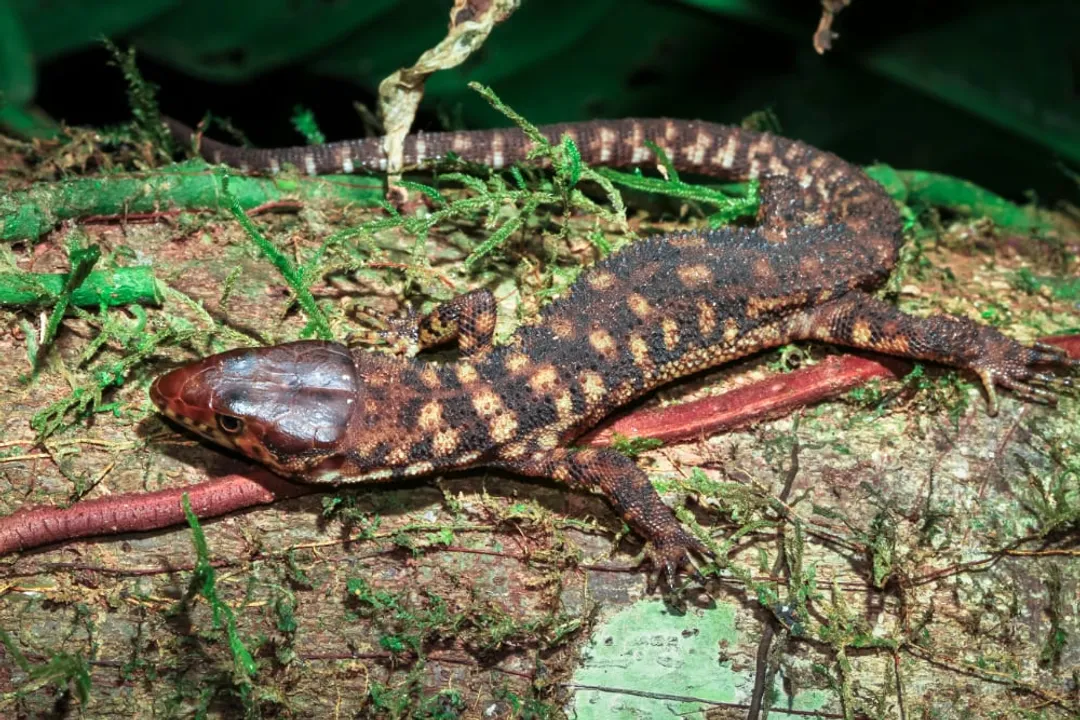
When we look at the formal identification of the Yellow-spotted Lizard, we are immediately introduced to a creature whose classification tells a story of geography, scale texture, and reproductive uniqueness. This animal is perhaps more widely known by its descriptive moniker, the Yellow-spotted Night Lizard, which shares the scientific epithet Lepidophyma flavimaculatum. This name combination itself hints at the challenges in studying such a secretive, nocturnal reptile that calls the humid forests from central Mexico south into Panama home.
# Names
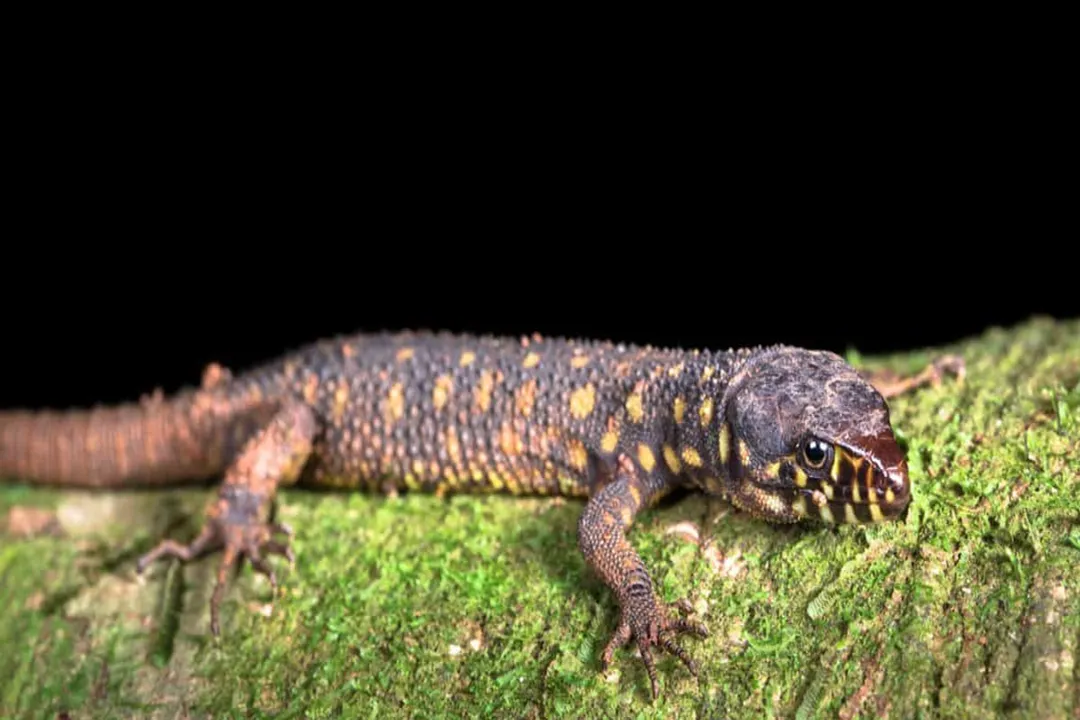
The specific name, flavimaculatum, is quite literal, derived from the Latin words flavus meaning "yellow" and maculatum meaning "spotted". This directly references the most visible field characteristic—the yellow spotting against a dark background. The genus name, Lepidophyma, draws from Greek roots: lepis translates to "scale," and phyma means "tumor," a description pointing toward the enlarged tubercles covering its body. While its common name is frequently used, recognizing its scientific designation, Lepidophyma flavimaculatum, places it correctly within the taxonomic structure established by A.H.A. Duméril in 1851.
# Hierarchy Overview
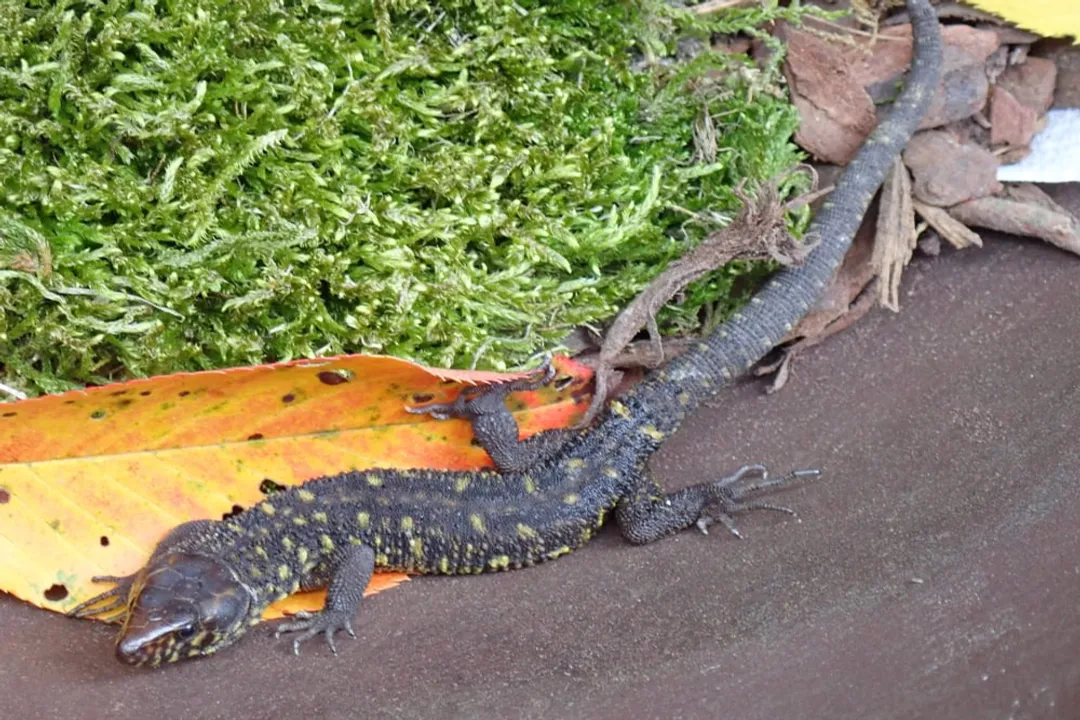
Placing Lepidophyma flavimaculatum within the Linnaean system reveals its close relatives and its place among all life forms. As with nearly all reptiles, it falls into the Kingdom Animalia. From there, its classification progresses through Phylum Chordata, indicating it possesses a notochord at some stage of development, and into Class Reptilia. The Order is Squamata, the massive group encompassing all lizards and snakes. The following rank, Family, places it specifically within the Xantusiidae, known commonly as the night lizards. This family grouping is significant because it unites species that share certain key traits, such as being viviparous, or live-bearing.
The structure of this classification, as outlined by various biological data repositories, is remarkably consistent across major sources for these higher ranks:
| Taxonomic Rank | Classification |
|---|---|
| Kingdom | Animalia |
| Phylum | Chordata |
| Class | Reptilia |
| Order | Squamata |
| Family | Xantusiidae |
| Genus | Lepidophyma |
| Species | Lepidophyma flavimaculatum |
# Genus Placement
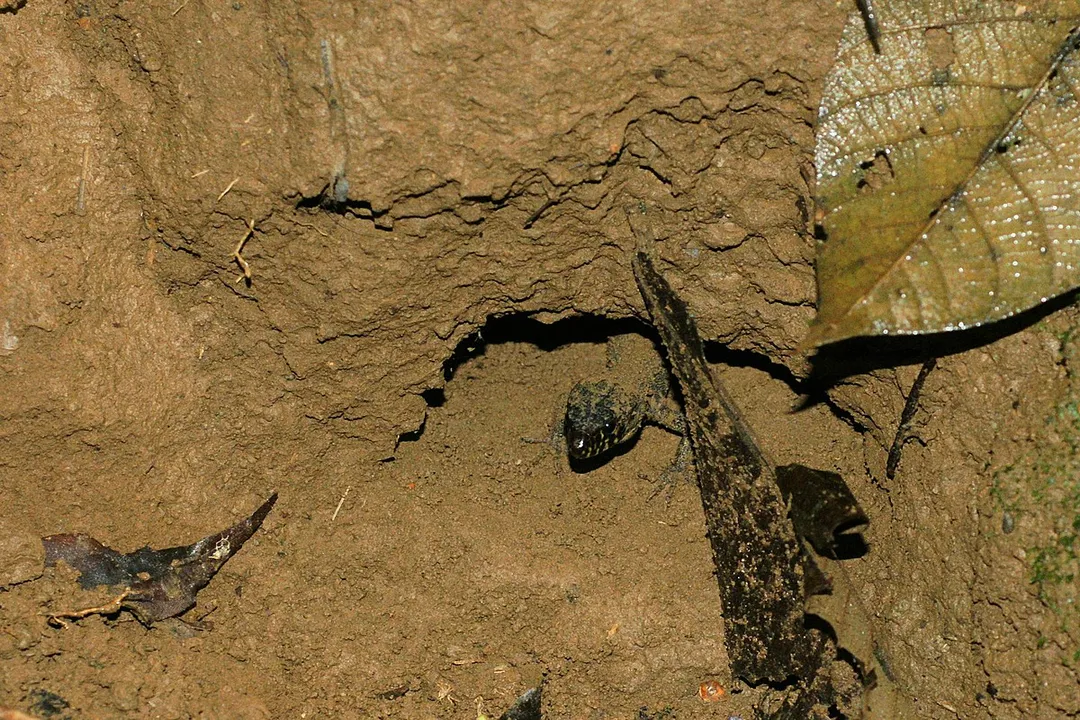
The genus Lepidophyma is where things begin to narrow down, defining the group of lizards specifically inhabiting the tropical regions of Central America, ranging from Mexico down to Panama. Lepidophyma is recognized as the most populous genus within the Xantusiidae family, containing numerous species. The Xantusiidae family itself is small, comprising only three recognized genera. Comparing Lepidophyma to its relatives provides important context for its classification. The genus Xantusia is endemic to the deserts of the United States, while Cricosaura contains just one species found in Cuba. This distribution pattern suggests that Lepidophyma represents the tropical component of the night lizard lineage. It is worth noting that pet dealers sometimes refer to these tropical night lizards, including the yellow-spotted species, as "Central American bark lizards".
Thinking about the literal translation of the genus name—"warty scales"—one can connect this characteristic to its ecological niche. This species thrives in decaying logs in wet climates. It seems quite plausible that these enlarged, tuberculate scales, which give the genus its name, offer physical protection while the lizard navigates the rough, moist detritus of its specialized microhabitat, an ecological hallmark of the family.
# Species Detail
The species Lepidophyma flavimaculatum is defined by its binomial authority, A.H.A. Duméril, 1851. Its geographic scope is broad for a lizard species, spanning from southern Mexico through Central America to Panama. The U.S. Fish and Wildlife Service lists its classification down to the species level. The species is currently assessed by the IUCN as Least Concern, despite its secretive nature often leading to assumptions of rarity.
Physically, it is distinguished by a dark or black body covered in yellow spotting. The head often appears smooth, contrasting with the scaled body. While many sources confirm its nocturnal and reclusive habits, which make it hard to study, there is some variation in descriptive data. For instance, one source suggests a maximum weight of about 3.2 lbs for an adult, which seems exceptionally high compared to another report stating an adult weight of only 11.3 grams. This significant discrepancy in adult weight—grams versus pounds—highlights the difficulty in gathering standardized field data for such elusive animals, requiring researchers to cross-reference data from captivity and wild observations carefully.
# Subspecies Variation
The specific structure of L. flavimaculatum is further broken down into recognized subspecies, though the exact count can vary slightly depending on the authority consulted. Sources commonly recognize two valid subspecies: the nominotypical subspecies, Lepidophyma flavimaculatum flavimaculatum, and Lepidophyma flavimaculatum ophiophthalmum.
However, other classifications suggest the species comprises four subspecies, adding Lepidophyma flavimaculatum tehuanae and L. flavimaculatum tenebrarum to the list. The Reptile Database indicates that Lepidophyma flavimaculatum reticulatum and Lepidophyma flavimaculatum lineri have since been elevated to full species status, explaining why different sources might present different counts of extant subspecies. Differences between these forms are chiefly recognized by variations in scale structure. For practical purposes, such as captive care, these subspecies differences are often disregarded as the husbandry requirements remain the same across the recognized variations. This divergence in subspecific recognition underscores the fluid nature of taxonomy, particularly when dealing with widespread species where morphological differences may or may not correlate with reproductive isolation across the range.
# Reproductive Oddity
One of the most fascinating aspects of L. flavimaculatum classification ties into its reproductive biology, which adds layers of complexity to species identification and distribution patterns. This lizard is known to reproduce through parthenogenesis in certain populations, meaning females can produce offspring without fertilization. When this asexual reproduction occurs, the resulting young are exclusively female. Conversely, the presence of males in other populations implies sexual reproduction is also common.
Furthermore, these lizards are viviparous, giving birth to live, fully developed young rather than laying eggs, a characteristic shared across the Xantusiidae family. Litter sizes typically range from five to eight babies, each about 3 cm long at birth. For populations that reproduce sexually, males are necessary to produce male offspring. This dual reproductive strategy—parthenogenetic (asexual) and bisexual (sexual)—within the same species is highly unusual, with some parthenogenetic Lepidophyma populations possibly being unique among vertebrates for being of non-hybrid origin. This biological flexibility likely aids the species' dispersal and survival across its varied habitats.
# Danger Assessment
While the scientific classification focuses on lineage and structure, the common perception of this lizard often revolves around its potential danger, frequently fueled by fictional portrayals, such as in the novel Holes. In reality, the species is classified as venomous, with one account noting that the milky white tongue is the main source of venom, capable of causing intense pain or death without antivenom. Other accounts, however, highlight that the bite is painful "for such a small lizard". It's important to clearly distinguish the reality from fiction, as the book's depiction of aggressive, deadly lizards does not align with the actual L. flavimaculatum or the bearded dragons used in the film adaptation. The fact that they are secretive and terrestrial, often found under cover or in decaying logs, suggests that human encounters are rare, which further contributes to the uncertainty surrounding their full biological profile.
Related Questions
#Citations
Yellow-spotted tropical night lizard - Wikipedia
Lepidophyma - Explore the Taxonomic Tree | FWS.gov
AnAge entry for Lepidophyma flavimaculatum
Lepidophyma flavimaculatum DUMÉRIL, 1851 - The Reptile Database
Yellow Spotted Lizard - Lepidophyma flavimaculatum - A-Z Animals
Lepidophyma flavimaculatum (Yellow-spotted Night Lizard)
Yellow-Spotted Night Lizard Information and Care - Reptiles Magazine