What characteristic of established woolly aphid colonies poses a specific hurdle for topical spray control methods?
Answer
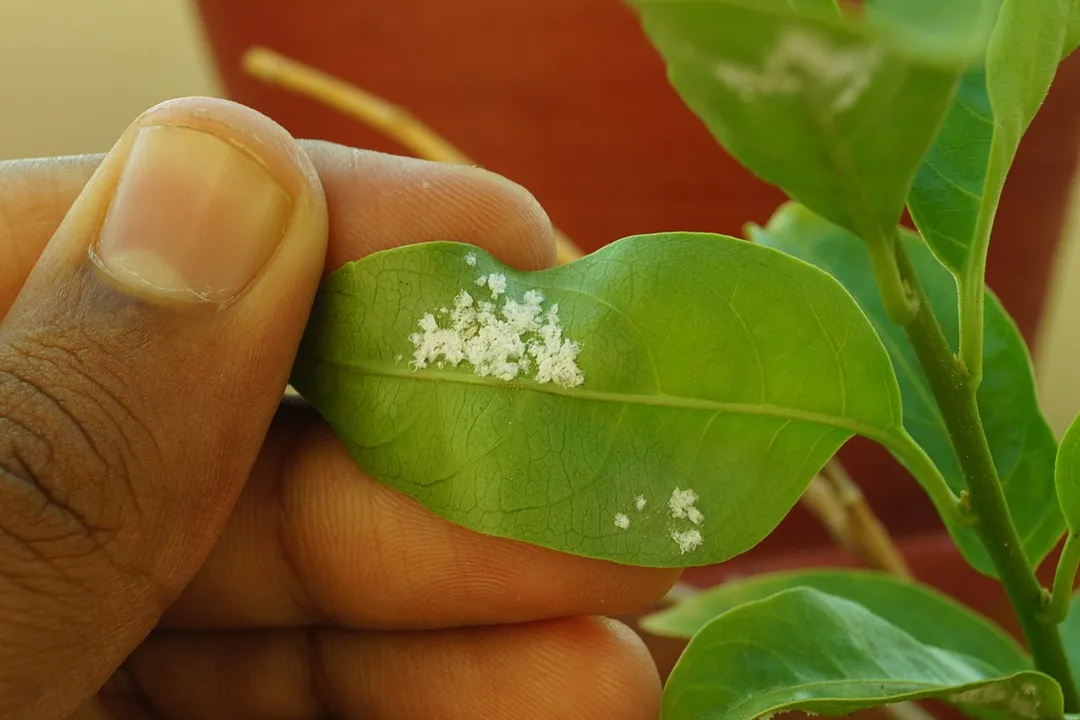
Their waxy secretions prevent most topical sprays from reaching the soft-bodied insect.
The foremost challenge in chemically managing established woolly aphid colonies is the physical protection offered by their dense, white, waxy secretions. This thick coating acts as a formidable barrier that prevents direct contact between the applied pesticide—even many standard topical sprays—and the actual soft-bodied insect underneath. Effective control often necessitates circumventing this defense, perhaps through systemic application or by targeting the aphid at a stage before the wax fully develops.
Related Questions
What characteristic feature gives woolly aphids their name?What dual purpose does the white, waxy filament serve for woolly aphids?How do woolly aphid populations typically increase rapidly during the growing season?What characterizes the holocyclic life cycle of the woolly apple aphid?What is a visible result of woolly aphid feeding on the aerial parts of plants?What secondary issue arises on leaves coated in the honeydew excreted by woolly aphids?What specific damage symptom is associated with root-feeding woolly apple aphid forms below ground?What distinctive structure is induced on oak leaves by the feeding activity of the woolly oak aphid?What characteristic of established woolly aphid colonies poses a specific hurdle for topical spray control methods?When is the efficacy of chemical intervention improved by targeting newly hatched crawlers or stem mothers?