Where do woolly aphids come from?
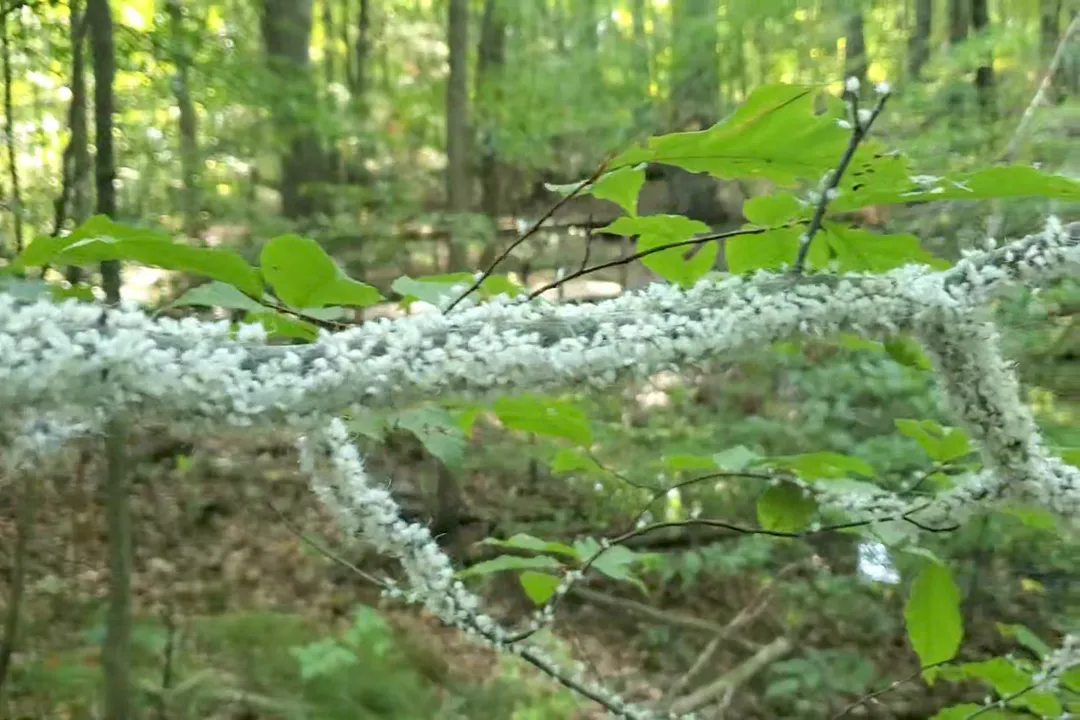
The appearance of those fuzzy, white specks on plants, often startling gardeners who discover them clustered on stems and branches, is the visible sign of the woolly aphid life cycle reaching its mobile phase. These insects belong to the subfamily Eriosomatinae, [2] a group known for creating galls or woolly distortions on their host plants. [2] While the term "woolly aphid" can apply to several species, much of the direct observation and inquiry focuses specifically on the Woolly Apple Aphid (Eriosoma lanigerum). [3][7] Understanding where they "come from" requires tracing their movement through the seasons, as their presence is not random but the result of a highly specific reproductive strategy involving several distinct forms throughout the year. [1]
# Subfamily Grouping
Woolly aphids are part of a larger classification system, resting within the Eriosomatinae subfamily. [2] This group shares a characteristic tendency to induce plant tissue to grow around them in protective, often distorted ways, which manifests as the waxy, wool-like secretion that gives them their common name. [2] The sheer abundance of the fluffy material on a branch is what often alerts observers to their presence, which can lead to issues like gall formation on apple trees. [4]
# Primary Host
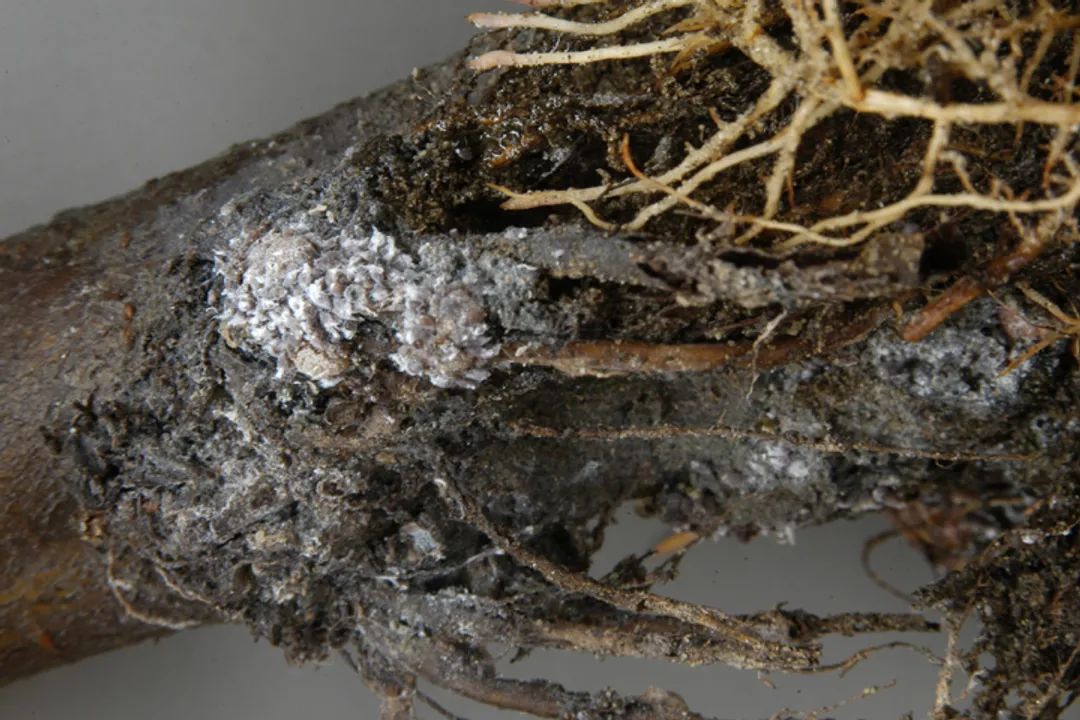
For many gardeners and orchardists, the primary concern revolves around the Woolly Apple Aphid, Eriosoma lanigerum. [3][7] This species is notorious because it attacks apple trees, [7] where colonies feed on the roots, twigs, and branches, sometimes causing swollen areas or galls to form on the wood. [4][3] Their origin, in the context of an infestation taking hold in a specific orchard or garden, is intrinsically linked to the movement of specific life stages from one host to another. [3]
# Winter Nests
The starting point for an infestation that becomes visible in the spring or summer is often microscopic, hidden away during the colder months. Woolly aphids do not simply appear out of thin air; they overwinter in protected locations. [1] For Eriosoma lanigerum, the population survives winter primarily in two forms: as eggs deposited in bark crevices or as wingless, stem-nesting females that are already alive and capable of reproduction. [3][7] These overwintering stem-nesting females are viviparous, meaning they give birth to live young. [3][7] This means that when temperatures rise and sap starts flowing, the primary source of the initial, non-flying population is already established right there on the host plant, sometimes directly in the cracks and fissures of the bark, ready to begin feeding and reproducing asexually. [1] If you are assessing an area in late winter or early spring, knowing to closely inspect these sheltered bark crevices for these small, stationary colonies reveals the direct source of the season's initial build-up, long before any white fuzz becomes apparent across the canopy. [1][3]
# Winged Dispersal
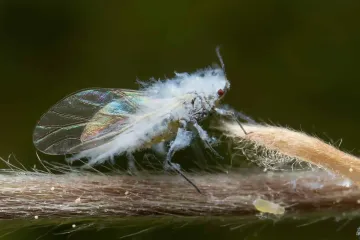
The characteristic masses of woolly aphids that people notice flying around in mid-to-late summer and into the fall are the alates, or winged dispersal forms. [1][5] These are specialized individuals produced by the overwintering stem-nesting females when conditions are right. [1][3] The shift in reproductive strategy, producing winged offspring instead of more stem-nesting females, is the mechanism by which the aphid population spreads geographically, moving to new apple trees or, importantly, to new secondary host plants, such as pear rootstock. [3][7]
These winged aphids are the answer to how the insects suddenly appear in a new area or on a previously clean tree in the garden. They are carried by the wind, sometimes over significant distances, allowing them to colonize fresh growth. [4][5] The appearance of these flying forms is a seasonal signal, often noted in late summer or early fall, indicating the population is prioritizing dispersal over local population density increase. [1][6] The timing of these flights can be influenced by local weather patterns; for instance, a period of hot, dry weather can sometimes accelerate the production of winged forms as the current colony reaches peak stress. [1] This means that monitoring the timing of these mass flights gives an indication of how successful the species was in spreading its genes that particular year, setting the stage for potential overwintering success in new locations. [6]
# Waxy Shell
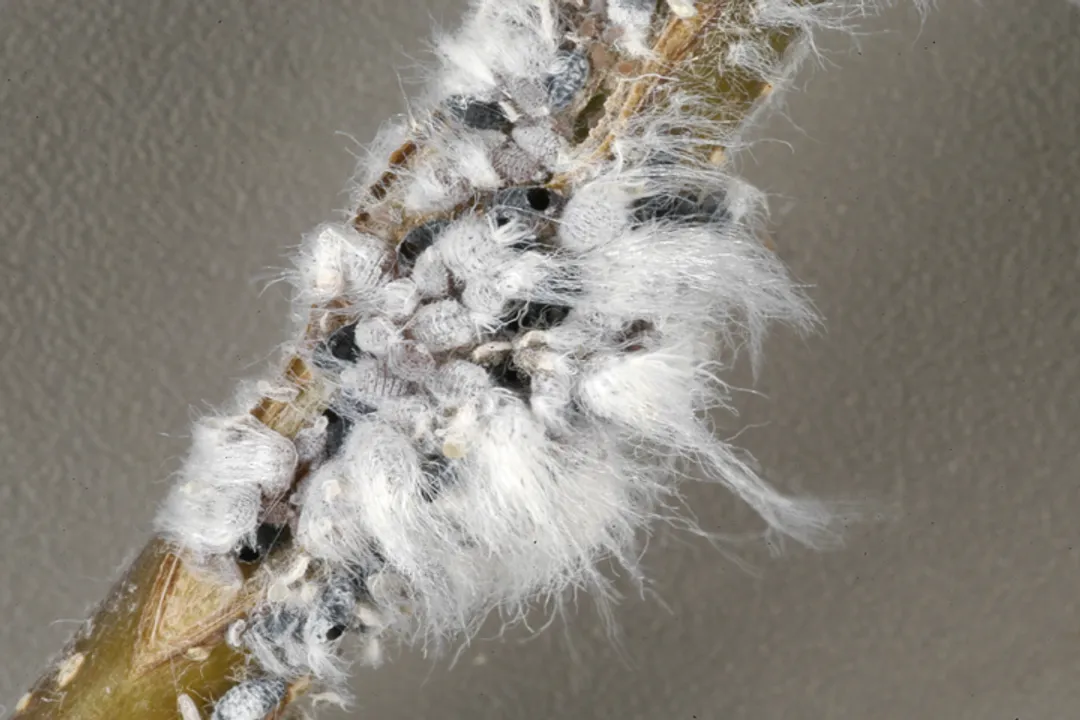
The "woolly" appearance itself is central to their survival and how they persist once they have moved. The protection they carry is a waxy, white filamentous coating secreted by glands on their bodies. [5] This covering serves multiple protective functions: it acts as a physical barrier against natural enemies, such as parasitic wasps, and helps shield them from environmental stresses like direct sun or heavy rain. [5] When the winged forms take flight, this waxy fluff can also catch the air currents, aiding their travel. [4] In essence, the very structure that makes them noticeable also provides a portable, self-contained defense system that travels with the colony after the initial arrival from an overwintering site or long-distance flight. [5]
# Cycle Variations
While the life cycle described above centers around the Woolly Apple Aphid and its association with fruit trees, the sources note that the subfamily Eriosomatinae can exhibit varied and complex life histories. [2] Aphids that undergo yearly cycles involving both an asexual phase on a primary host (like apple) and a sexual phase on a secondary host are described as heteroecious. [2] Conversely, some aphids complete their entire life cycle on a single host species or plant type without migrating, which is referred to as an anolocyclic phase. [2] The specific behavior of Eriosoma lanigerum—overwintering as stem-nesting females or eggs on apple, and then producing winged forms that may move to pear rootstock—illustrates a movement between hosts that is characteristic of these complex cycles. [3][7] Recognizing that the origin of an aphid infestation depends on whether the species requires multiple hosts or completes its entire reproduction on one tree dictates how one approaches long-term management.
If a particular aphid you observe is strictly anolocyclic, then its origin point for the season is likely within a few feet of where it is found, potentially having overwintered as a stem-nesting adult right under the bark you are inspecting. [2] If it is heteroecious, the winged generation you see flying in the fall might be originating from a completely different species of tree miles away, using the apple tree only as a temporary summer nursery before migrating to a different primary host for sexual reproduction later in the season. [2][3] The "where they come from" question, therefore, depends entirely on the specific, underlying annual blueprint of the species in question. [2]
Related Questions
#Citations
Why are woolly apple aphids flying around everywhere?
Eriosomatinae - Wikipedia
Trees and Shrubs: Invertebrates: Woolly Aphids—UC IPM
Woolly Apple Aphid - Flora Fauna STL
Wooly Aphids – Watch Out, They're Here! - About Eating
What are wooly aphids and their significance in the ecosystem?
Woolly aphid: Identification, Care & Tips | RHS Advice
Woolly Apple Aphid | WSU Tree Fruit | Washington State University