Woolly Aphids Evolution
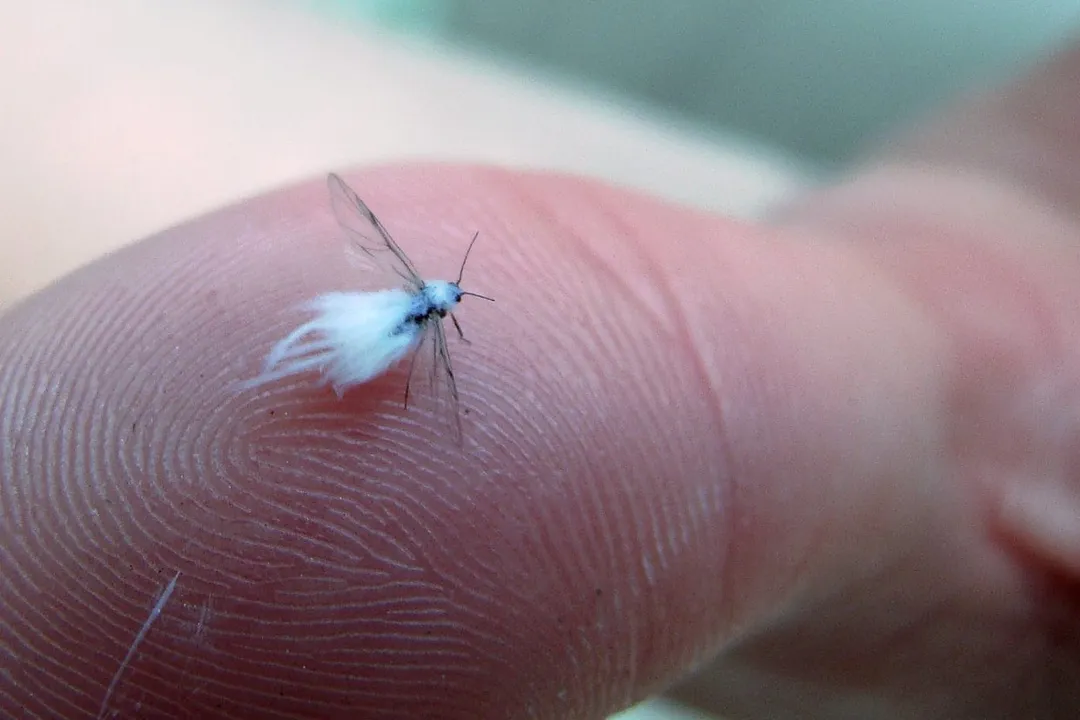
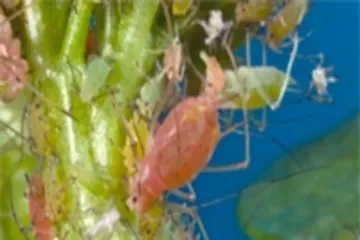
The white, fuzzy coating adorning certain trees in late summer and fall is often the first sign that woolly aphids are present. These insects, part of the Aphidoidea superfamily, are not a single entity but a collection of species that share this distinctive, powdery appearance, primarily due to the wax they secrete. [2][7] The fuzz itself is composed of fine filaments of wax that the insects exude from pores on their bodies, offering a visual cue to their presence and serving critical functions for survival. [1][7] While their appearance can be startling, understanding their biology reveals complex evolutionary pathways that have allowed them to thrive across diverse habitats, from apple orchards to forest stands. [1][6]
# Fuzzy Appearance
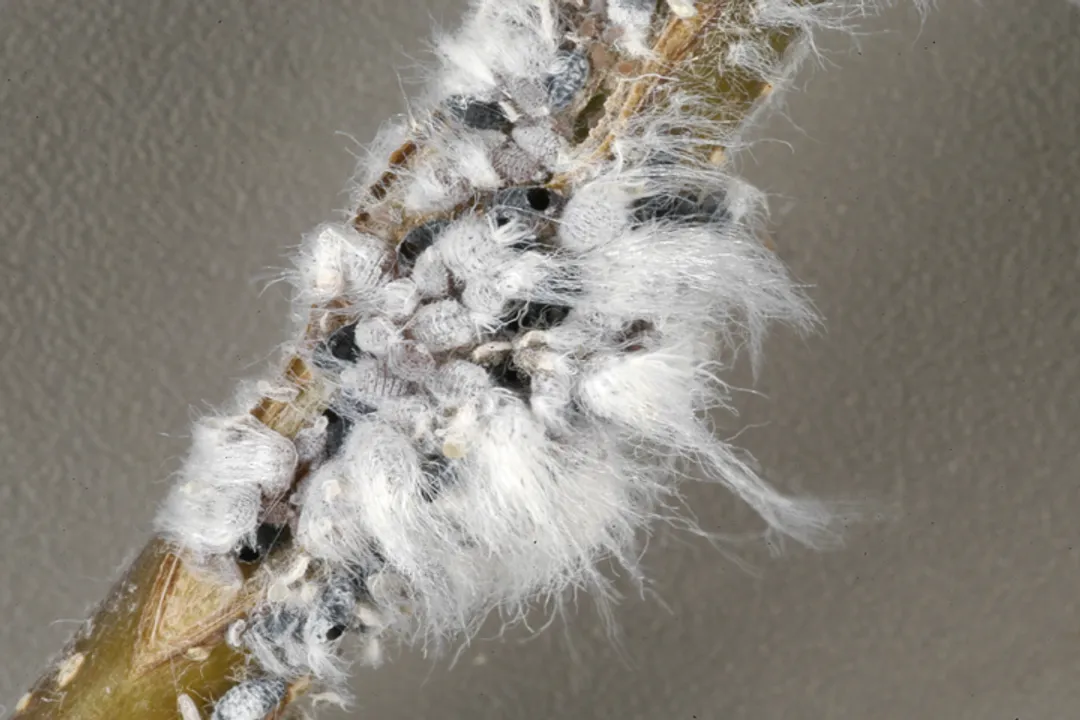
The term "woolly aphid" typically refers to species within the Eriosoma genus, such as the notorious Woolly Apple Aphid (Eriosoma lanigerum), or related insects like the Woolly Alder Aphid (Prociphilus tessellatus). [1][2] Regardless of the specific species, the visual hallmark is the protective flocculent wax covering. [7] This wax acts as a physical barrier, helping to repel water and protect the soft-bodied insect from desiccation or environmental stressors. [7] In the case of the Woolly Apple Aphid, these colonies often gather on twigs, branches, and even roots, leading to visible swellings or galls on the plant tissue where they feed. [1][6] Conversely, the Woolly Alder Aphid, frequently noticed as a "winged, fuzzy sign of fall," often forms dense colonies on the bark of alder trees before a mass migration event. [2][8] Even though they look somewhat alike and both produce this characteristic fuzz, their host dependencies and life cycle progression can differ significantly, pointing to specialized evolutionary divergence. [2][6]
# Aphid Life Cycles
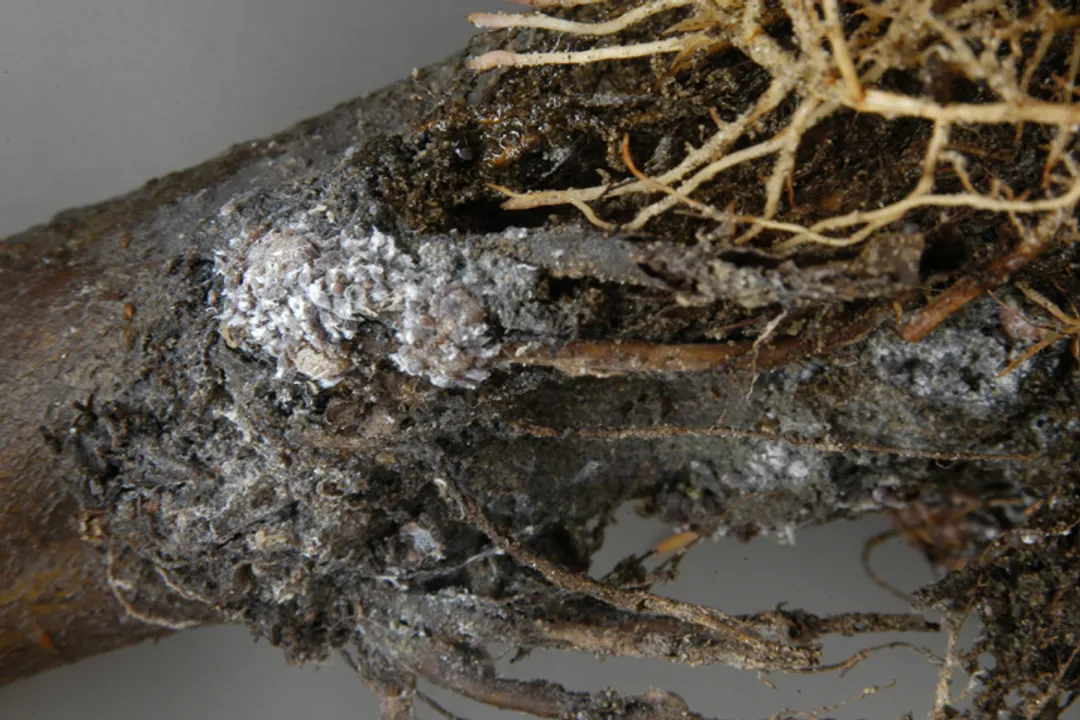
Aphids, in general, are masters of reproductive plasticity, a trait essential to their evolutionary success. [4] The core of this success lies in their capacity to switch between two primary life cycle strategies: holocyclic and anholocyclic. [4] A holocyclic cycle involves both asexual reproduction during the growing season and a sexual phase, usually in the fall, which produces overwintering eggs. [2][4] The anholocyclic cycle, in contrast, omits the sexual phase entirely, relying solely on asexual reproduction year-round. [4]
The Woolly Apple Aphid demonstrates this flexibility based on local climate conditions. [6] In cooler regions, the aphid population typically undergoes a complete holocyclic cycle, overwintering as eggs laid after the sexual phase, often near the base of the tree or on the roots. [1][6] However, in warmer climates, the species can maintain itself year-round through continuous asexual reproduction, often sheltering on the roots where conditions remain stable. [1][6] This environmental tuning allows the species to maximize population growth when conditions are favorable while retaining the genetic robustness of sexual recombination to survive harsh periods. [3]
The Woolly Alder Aphid presents a classic example of obligate host alternation within the holocyclic cycle. [2] During the spring and summer, colonies thrive on alder trees, feeding until late summer or early fall. [2] At this point, winged forms develop that migrate to a secondary host, which for the alder aphid is typically a maple species, to complete their sexual cycle and deposit the hardy eggs that will overwinter. [2] This complex ballet between two distinct plant hosts is an evolutionary strategy that reduces resource competition and possibly aids in escaping specialized predators associated with a single host plant.
# Reproduction Strategies
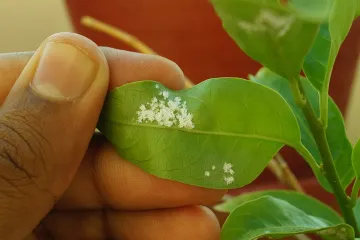
The foundation of rapid population expansion in woolly aphids, particularly during the active feeding seasons, is asexual reproduction via parthenogenesis. [6] This process involves the female producing genetically identical offspring without fertilization. [4] Furthermore, most aphids exhibit viviparity, meaning they give birth to live, already developing nymphs rather than laying eggs during the growing season. [4] A female can thus begin reproducing almost immediately upon reaching maturity, leading to exponential growth within a single season. [6]
This reproductive mode is extraordinarily efficient for exploiting a newly available resource, like a fresh flush of apple growth. [1] Because the offspring are clones of the mother, all emerging nymphs are immediately adapted to the current host plant and environmental conditions. It is only when environmental cues, such as shortening daylight hours or temperature drops, signal impending hardship that the switch to sexual reproduction is triggered. [3] This carefully timed shift ensures that while the population explodes asexually when resources are abundant, the species survives the winter with the genetically diverse, durable egg stage produced sexually. [2][4]
# Wax Function
The dense, white, filamentous wax coating is more than just a visual characteristic; it is a crucial evolutionary adaptation related to physical defense and physiology. [7] While the general purpose is protection, the specific benefits can be analyzed in terms of physical engineering. For an aphid that secretes sticky honeydew, the wax might physically prevent the honeydew from adhering to its own body or trapping the insect against the leaf surface, which is a constant risk for sessile feeders. [2]
Considering the Woolly Apple Aphid's habit of clustering in root systems, where humidity is high but airflow is low, the waxy covering may also help regulate internal moisture balance by minimizing direct contact with soil moisture or mitigating the growth of superficial fungal or bacterial films. [1][7] An interesting evolutionary trade-off emerges here: producing and maintaining this specialized wax requires metabolic energy. The fact that populations dedicate significant resources to this coating across varying moisture regimes suggests that the benefits—predator deterrence, water management, and perhaps even camouflage against birds—significantly outweigh the energetic cost of its production. [9] This continuous investment points to the wax being a highly successful, long-standing evolutionary solution for aphid survival in challenging microclimates.
# Climate Influence
The differing overwintering strategies directly reflect the evolutionary pressures imposed by local climate variability. [6] In areas experiencing consistently mild winters, maintaining an anholocyclic cycle focused on sheltered spots like root crowns or bark crevices becomes viable. [1] The evolutionary path here favors individuals with the highest reproductive rate under benign conditions, relying on sheer numbers to persist through any minor cold snaps. [4]
However, in regions where winter temperatures regularly drop below the tolerance limits for live nymphs, the pressure for a robust sexual/egg stage is intense. [6] The evolution of the migratory phase, where winged aphids disperse to a secondary host in the fall to produce eggs, is a direct response to this severe environmental bottleneck. [2][8] The eggs, encased in a tough chorion, are far more resistant to freezing than the nymphs or even the overwintering adults found on the roots in warmer zones. If one were to map aphid distribution globally, one might observe a clear gradient: increasing reliance on the sexual, egg-laying cycle corresponding to increased annual temperature variance, rather than just minimum winter temperature, reflecting the species' ability to adapt its reproductive timing to local environmental volatility. [3] This plasticity, allowing the same species to employ two distinct survival modes based on geography, is arguably the most significant aspect of its evolutionary history.
Related Questions
#Citations
Woolly Apple Aphid - Flora Fauna STL
That Fuzzy White Stuff: Woolly Alder Aphids - Adirondack Almanack
Evolutionary ecology of the interactions between aphids and their ...
Aphid - Wikipedia
Woolly Aphids : r/Chattanooga - Reddit
Woolly Apple Aphid | WSU Tree Fruit | Washington State University
A comparative genomic analysis at the chromosomal-level reveals ...
A winged, fuzzy sign of fall is upon us | PostIndependent.com
[PDF] Evolutionary and genetic aspects of aphid biology: A review
Boogie Woogie Aphids - Carnegie Museum of Natural History