What reproductive terms describe A. nerii's method of rapid colony growth?
Answer
Parthenogenetic and viviparous
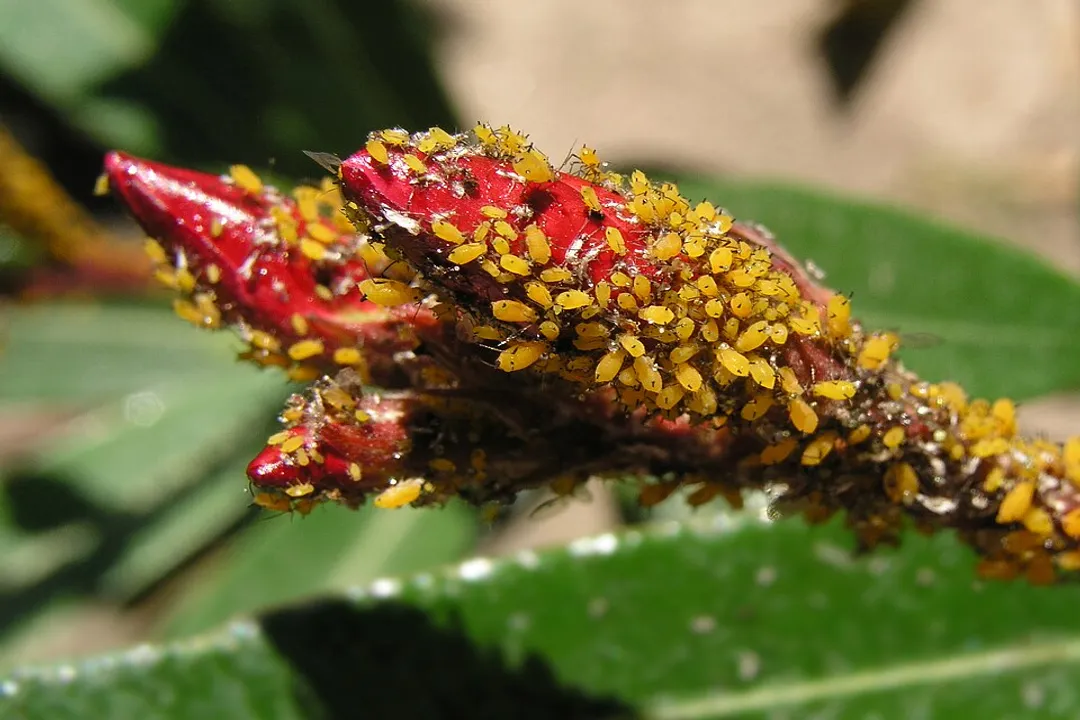
The rapid build-up of massive colonies by the Oleander aphid, *A. nerii*, is facilitated by its specific reproductive strategy which involves both parthenogenesis and viviparity. Parthenogenesis signifies reproduction without fertilization, meaning all individuals found actively populating colonies in the field are female. Viviparous reproduction means these females give birth directly to live young (nymphs) rather than expending energy laying eggs first. This dual mechanism allows a single founding female to establish and rapidly sustain an entire, growing population very quickly, contributing significantly to their persistence, especially in warm climates where they can reproduce year-round.
Related Questions
What color are the legs, antennae, and siphunculi of wingless Aphis nerii?Which characteristic distinguishes the yellow pecan aphid (Monelliopsis pecanis) from Aphis nerii?What reproductive terms describe A. nerii's method of rapid colony growth?What type of potent defensive compounds do Oleander aphids incorporate from oleander and milkweeds?What visible consequence results from the aphids excreting excess honeydew on leaves?What is the result when the parasitic wasp Lysiphlebus testaceipes targets an immature A. nerii?Where does the black margined aphid (M. caryella) primarily feed on pecan leaves?Which two primary plant families show a strong host preference for the Oleander aphid, Aphis nerii?What color markings characterize the head and thorax of winged A. nerii adults (alatae)?Why must pecan growers rotate insecticides according to Mode-of-Action Group Numbers?What term describes the bright yellow coloration of A. nerii when used as a warning signal to predators?