Why do recently tilled vegetable rows, though worm-rich, pose a navigation challenge for worm snakes?
Answer
The soil is often too disturbed and lacks the necessary softness initially
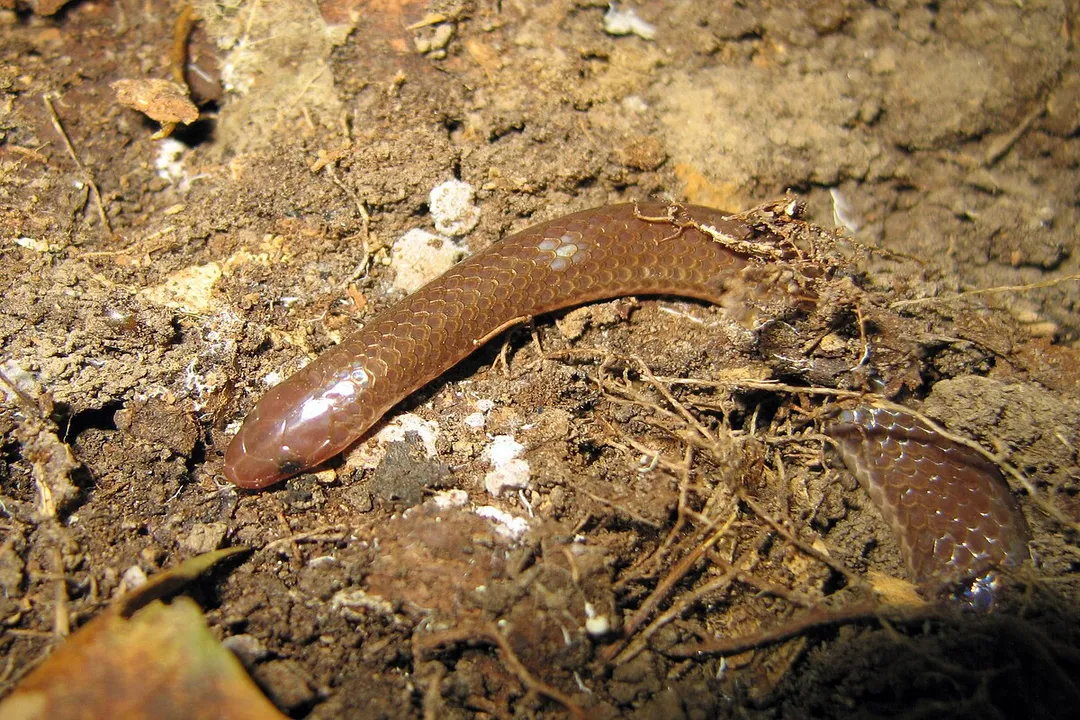
Worm snakes rely heavily on soft substrate for both easy tunneling and efficient prey pursuit. Recently tilled vegetable rows, while potentially containing many earthworms near the surface, often result in soil that is overly agitated or loosely piled rather than settled into the deep, moist, loamy earth the snakes require for navigation. The text indicates that until the soil settles and softens following disturbance, it is harder for the snake to maneuver and establish secure burrows, even if the food source is technically present.
Related Questions
What physical feature identifies worm snakes as masters of disappearing underground?What habitat requirement defines a worm snake as 'fossorial'?Where is the Western Worm Snake (*Carphophis vermis*) distribution primarily centered?What regions characterize the broad distribution of the Eastern Worm Snake (*C. amoenus*)?Which soil compositions are worm snakes explicitly noted as *not* inhabiting?What primary food sources are easily accessible in moist, loamy earth for worm snakes?Where do worm snakes move to when ground temperatures drop in late fall for hibernation?Which cover objects are dependable indicators of a worm snake's presence due to moisture trapping?Why do recently tilled vegetable rows, though worm-rich, pose a navigation challenge for worm snakes?In New York, where are Eastern Worm Snakes (*C. amoenus*) typically confined?