Which soil compositions are worm snakes explicitly noted as *not* inhabiting?
Answer
Hard clay, compacted soil, or dry sand
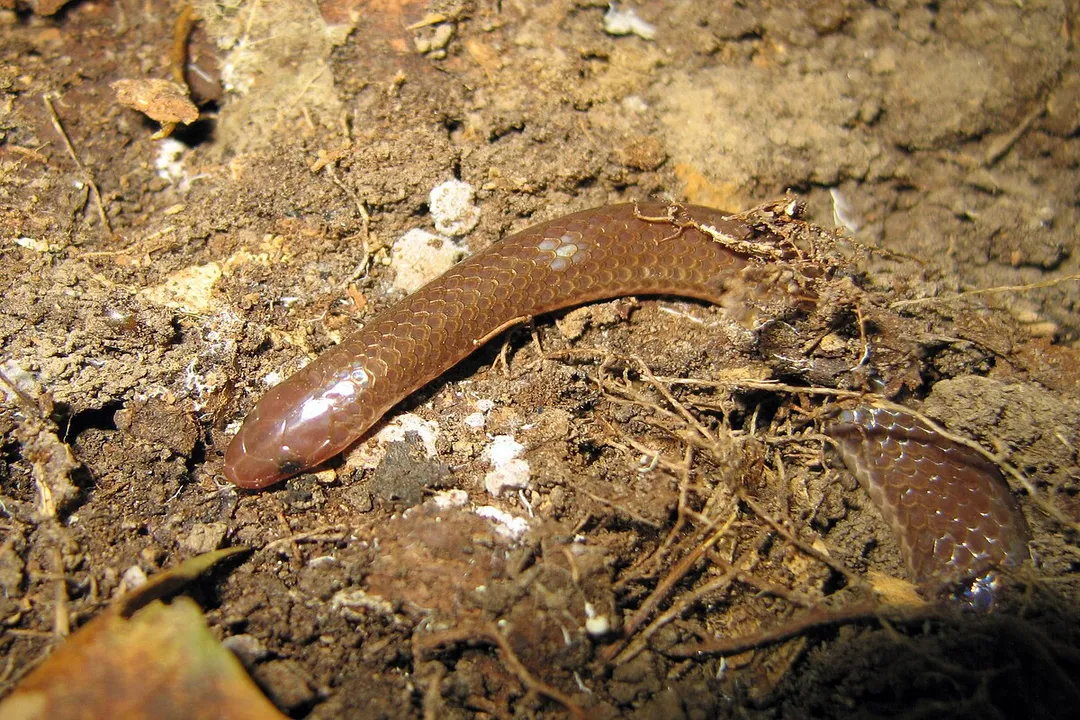
The ability of the worm snake to survive and thrive is directly tied to the physical composition of the ground, as their fossorial nature requires easy tunneling access. The text explicitly states they are not found in substrates that are too restrictive or lack necessary moisture retention qualities. Hard clay compacts easily, preventing movement and burrow creation. Compacted soil presents the same physical barrier. Dry sand, conversely, lacks the necessary moisture and structure to support the moist environment needed for both the snakes and their invertebrate prey base. They seek loose, friable soil instead.
Related Questions
What physical feature identifies worm snakes as masters of disappearing underground?What habitat requirement defines a worm snake as 'fossorial'?Where is the Western Worm Snake (*Carphophis vermis*) distribution primarily centered?What regions characterize the broad distribution of the Eastern Worm Snake (*C. amoenus*)?Which soil compositions are worm snakes explicitly noted as *not* inhabiting?What primary food sources are easily accessible in moist, loamy earth for worm snakes?Where do worm snakes move to when ground temperatures drop in late fall for hibernation?Which cover objects are dependable indicators of a worm snake's presence due to moisture trapping?Why do recently tilled vegetable rows, though worm-rich, pose a navigation challenge for worm snakes?In New York, where are Eastern Worm Snakes (*C. amoenus*) typically confined?