Which cover objects are dependable indicators of a worm snake's presence due to moisture trapping?
Answer
Decaying logs, rotting wood, and flat stones
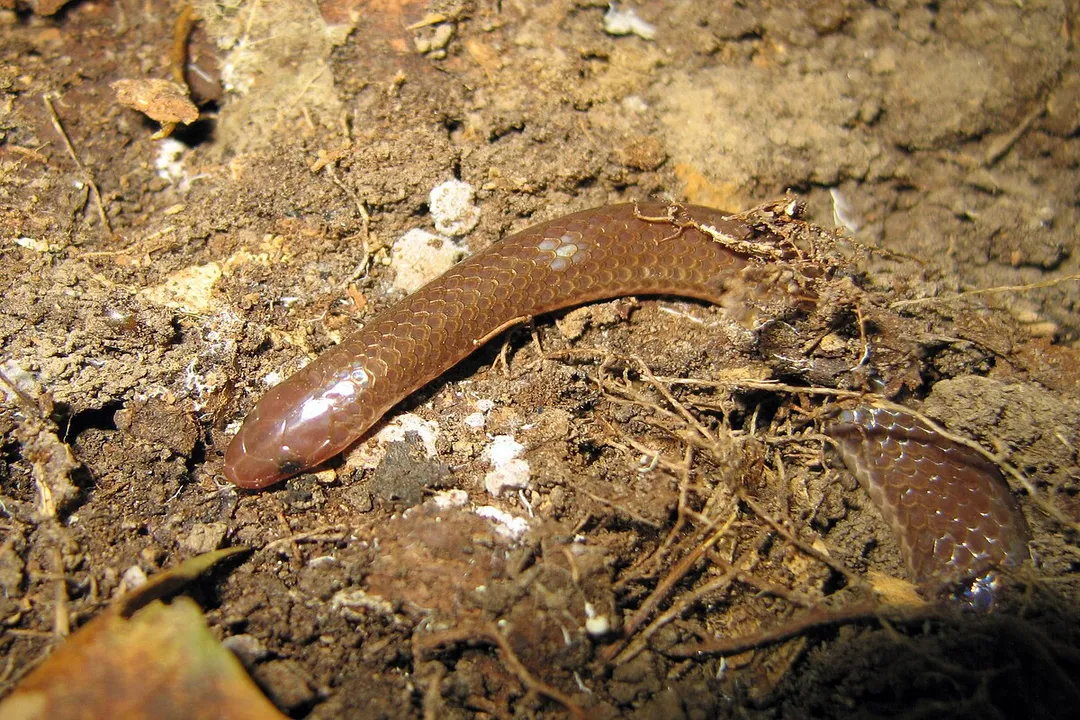
The presence of certain objects on the ground surface serves as a strong clue to locating worm snakes because these items help maintain the necessary microclimate. Decaying logs and rotting wood provide dual benefits: they decompose to create the loose substrate preferred for tunneling, and they effectively trap and retain ground moisture. Similarly, large, flat stones that have rested on the ground for a long time create a consistently cool and damp environment underneath, offering both shelter from desiccation and proximity to their primary prey items, which favor these conditions.
Related Questions
What physical feature identifies worm snakes as masters of disappearing underground?What habitat requirement defines a worm snake as 'fossorial'?Where is the Western Worm Snake (*Carphophis vermis*) distribution primarily centered?What regions characterize the broad distribution of the Eastern Worm Snake (*C. amoenus*)?Which soil compositions are worm snakes explicitly noted as *not* inhabiting?What primary food sources are easily accessible in moist, loamy earth for worm snakes?Where do worm snakes move to when ground temperatures drop in late fall for hibernation?Which cover objects are dependable indicators of a worm snake's presence due to moisture trapping?Why do recently tilled vegetable rows, though worm-rich, pose a navigation challenge for worm snakes?In New York, where are Eastern Worm Snakes (*C. amoenus*) typically confined?