Worm Snake Facts

The sight of a small, dark, shiny serpent inching across damp soil can easily cause momentary confusion, especially if you mistake it for the very creature it hunts: an earthworm. These are the worm snakes, belonging primarily to the Carphophis genus, renowned for their secretive, subterranean existence across eastern and midwestern North America. Despite their commonality in many locales, encountering one requires patience and a keen eye, as they dedicate the vast majority of their lives beneath the surface, or hidden under cover objects.
# Appearance
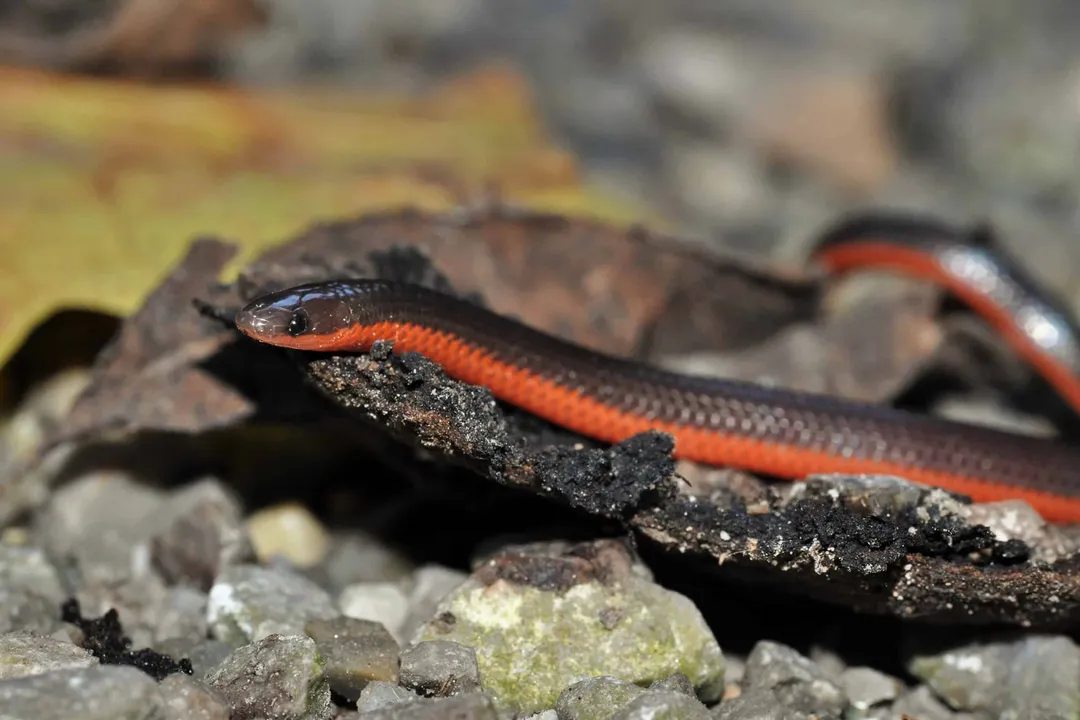
Worm snakes are decidedly small, which contributes significantly to their earthworm resemblance. Adults of the Eastern Worm Snake (Carphophis amoenus) typically measure between 19 and 28 centimeters (about 7.5 to 11 inches) in total length, although records exist slightly longer. The Western Worm Snake (Carphophis vermis) shares this diminutive stature, rarely exceeding 12 inches, with some specimens growing up to about 15 inches. Their bodies are slender, and their scales are notably smooth and possess a glossy or iridescent sheen, which helps them glide easily through the soil.
Dorsally, the coloration is generally muted—shades of brown, dark brown, black, or even purplish-black—while the belly is starkly different, colored pink, reddish-pink, or salmon-pink. This pinkish ventral pigment often creeps up onto the lower one or two dorsal scale rows.
A key feature distinguishing them from actual worms, beyond the presence of scales, is the structure of their head and tail. Their heads are small, conical, and scarcely wider than their neck, an obvious adaptation for burrowing. Eyes are reduced to tiny black beads, suited for low-light environments. Perhaps the most definitive characteristic of the genus is the tail, which terminates in a hard, spine-like scale. While this spine is present, it is too blunt to pierce human skin, though the snake may use it defensively by probing. In terms of sexual dimorphism, females of the Eastern species are often longer than males, though their tails are proportionately shorter. A subtle feature distinguishing the Eastern Worm Snake from its Western counterpart is the presence of two separated prefrontal/internasal scales on the head of the Eastern species, unlike the fused scales found in the Midwestern subspecies.
# Range Split
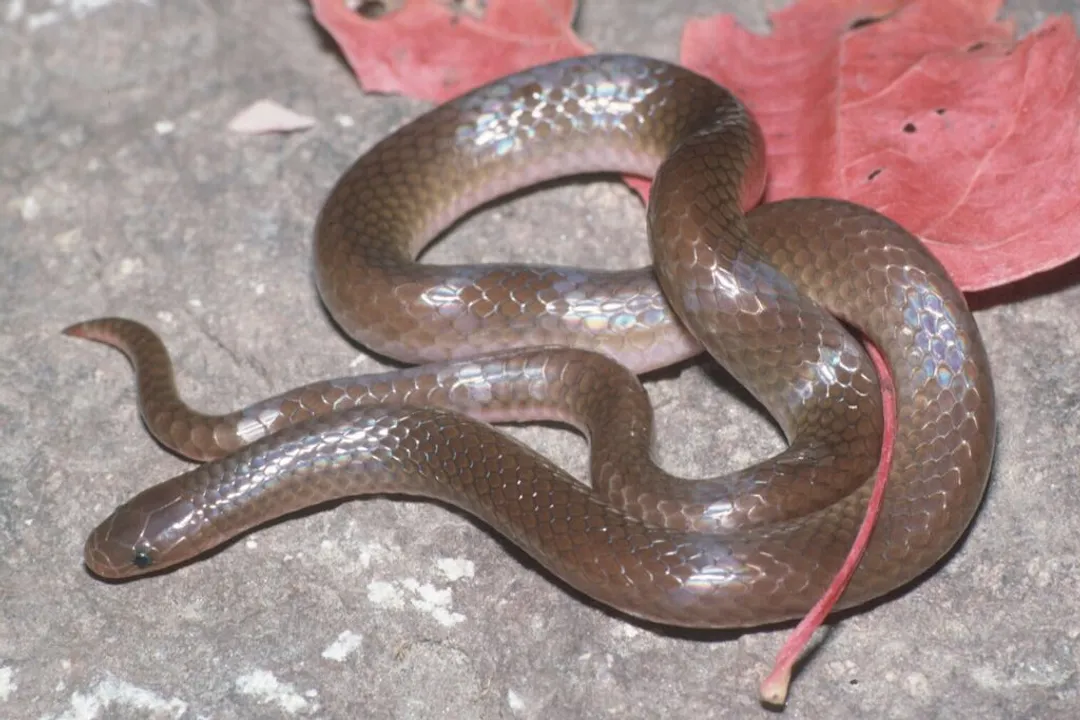
The distribution of worm snakes across the continent highlights two distinct, though related, groups: the Eastern and the Western. The species complex is endemic to the Eastern Woodlands region of North America.
The Eastern Worm Snake (C. a. amoenus) has a broad range extending from the extreme northeast—including southwestern Massachusetts and southeastern New York—southward down through the Appalachians to South Carolina, northern Georgia, and central Alabama. In some northern areas, like Massachusetts, their presence marks the extreme northeast edge of the species’ overall range, where they are listed as a threatened species. They prefer mesic hardwood forests, often in upland areas, but can also be found near isolated wetlands.
The Western Worm Snake (C. vermis), however, occupies a different swath of territory, generally being found west of the Eastern species’ distribution. In Missouri, for instance, the Western Wormsnake is found statewide, except for the extreme southeastern corner. Their habitat preferences echo the Eastern species, favoring wooded areas, rocky hillsides, and forest edges where moist conditions are maintained. It is crucial to note that C. vermis has no recognized subspecies, simplifying its identification across its range compared to the Eastern species which has recognized subspecies.
# Subspecies Scale
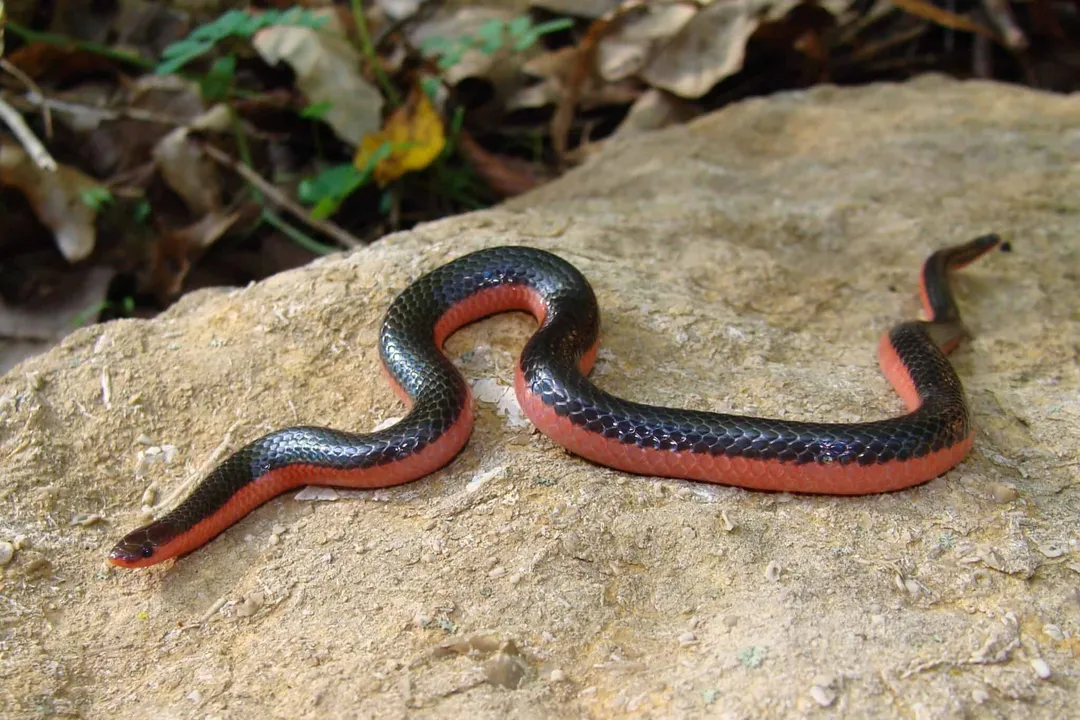
The Eastern Worm Snake itself is further categorized into subspecies, which can cause confusion even among those familiar with the general description. The main split within Carphophis amoenus involves C. a. amoenus (the Eastern) and C. a. helenae (the Midwestern Wormsnake).
The key scientific difference used to separate these two lies in the scale arrangement on the front of the head: the prefrontal and internasal scales are unfused in C. a. amoenus, but they are fused in C. a. helenae. Another reported difference is size; C. a. helenae rarely exceeds about 9.8 inches, suggesting it is generally smaller than the Eastern subspecies, C. a. amoenus, which reaches closer to 11 inches as a standard adult length.
When trying to identify a specimen, recognizing the subtle differences between the Carphophis species and other similarly small, brown snakes is important for observers, especially in areas where ranges might abut or overlap. For example, Earth Snakes (genus Virginia) and Red-bellied Snakes (Storeria occipitomaculata) possess keeled dorsal scales—meaning they have a ridge down the center—whereas worm snakes have entirely smooth scales. Similarly, the Southeastern Crowned Snake (Tantilla coronata) can be ruled out by the presence of 15 midbody scale rows and a distinct dark collar, both features absent in Carphophis species.
If you are in an area where Western (C. vermis) and Eastern (C. a. amoenus) ranges meet, look closely at the ventral color. The Western species is often described as having a more vibrant, distinct color contrast, being black or purple dorsally with a striking salmon-pink or red belly.
# Burrow Life
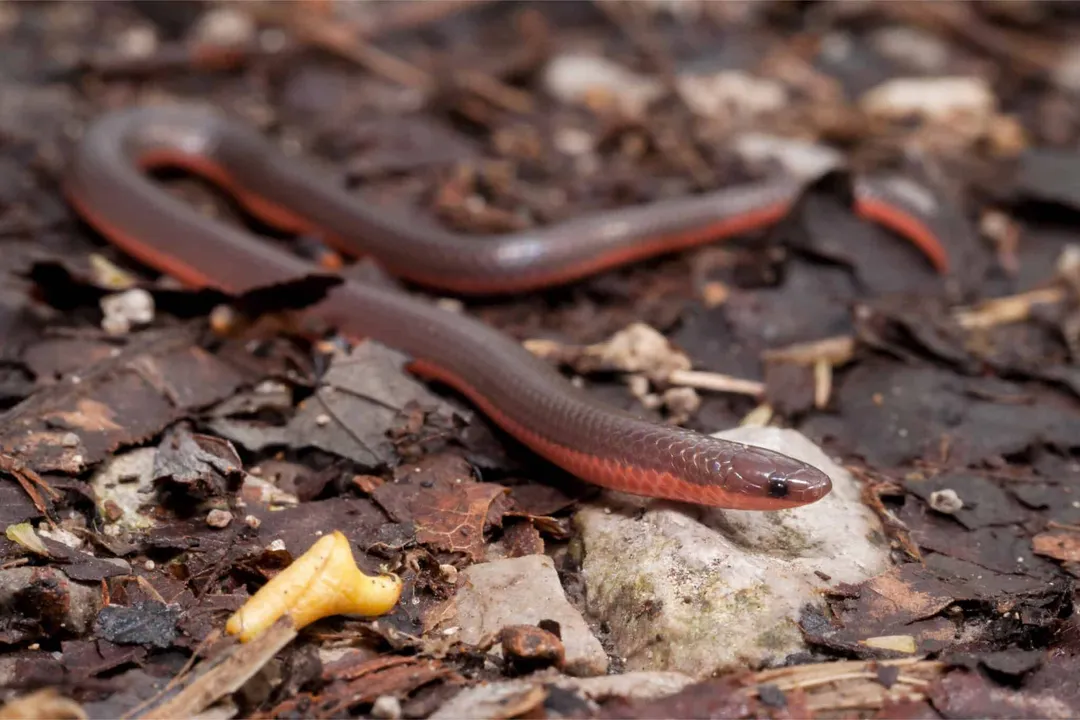
The term fossorial is essential to understanding the worm snake’s ecology; it means they are adapted for living underground. This behavior is a survival mechanism, helping them avoid overheating and desiccation, particularly during the hotter summer months. They utilize their narrow, pointed heads to actively push into cracks, crevices, and loose soils.
When they are not actively burrowing, they seek refuge under cover objects, such as large rocks, logs, and thick leaf litter. In regions like Massachusetts, they seek loose, sandy, damp soils, moving vertically within the soil column based on moisture availability. During wet periods, they may be found closer to the surface under stones; conversely, during drought, they disappear deeper underground.
Their movement patterns are characteristic of their lifestyle. Studies on the Eastern species suggest they do not possess strong homing abilities and maintain a relatively small home range. One observation indicated that snakes did not travel more than 125 meters throughout their home range on average. Most surface activity is brief, usually initiated in the late afternoon or early evening and rarely lasting more than 12 hours. This minimal movement pattern implies that finding multiple individuals in a small area suggests a very stable, established local population, as they do not often travel far from their preferred microhabitat.
An interesting ecological consideration is how their burrowing benefits the wider environment. By creating these subterranean channels, worm snakes help aerate the soil, allowing water and surface nutrients to penetrate more effectively, thereby contributing positively to overall soil health and plant life in their wooded habitats.
# Diet Specialization
The worm snake’s entire morphology seems geared toward its highly specialized diet. They are carnivores, but their menu is overwhelmingly dominated by soft-bodied invertebrates. Earthworms form the staple, often constituting the near-exclusive food source in many areas. They are well-equipped to hunt these prey items in the tight confines of the soil, using their pointed snouts to follow scents underground.
While earthworms are primary, they are opportunistic feeders when the chance arises. They will readily consume slugs, snails, and soft-bodied insect larvae, such as beetle grubs. Some sources note they may even consume small salamanders or, occasionally, spiders and beetles. The ease of access to their primary food source, compared to snakes requiring more active pursuit of vertebrates, may contribute to their non-aggressive nature.
# Mating Cycle
Reproductive details for worm snakes are less known due to their extremely secretive nature, but observations point toward seasonal activity peaks that suggest breeding occurs during both spring and fall, though spring is considered the likely primary time for courtship and mating. In North Carolina, elevated activity in September and October hints at fall breeding events.
Females deposit eggs during the warmer months, typically from early June to mid-July across their range. Clutch size is small, ranging from just one to about eight eggs, though some larger females may lay up to 12. The eggs are laid in small chambers or depressions found under rocks, inside cavities within rotting logs, or within old sawdust piles. Females are sometimes found nearby or guarding the eggs shortly after laying them, perhaps using the retained heat in objects like sun-warmed rocks to aid embryonic development.
The eggs themselves are elongated, smooth, and usually range from 16 to 25 mm in length. Hatching typically occurs in late summer or early September. The hatchlings are notably darker than the adults—sometimes appearing purplish-black with an orange-red venter—and emerge small, measuring around 3 to 4 inches in length. These young are immediately independent, taking up the same fossorial existence as their parents. While Eastern species have a documented lifespan of up to 4 years, Western Worm Snakes have been documented living for up to 10 years.
# Handling Defense
Worm snakes pose no threat to humans; they are nonvenomous and have never been known to bite defensively. When disturbed or captured, their primary defense mechanism is escape through subtle physical actions rather than aggression.
Because of their smooth scales and slender bodies, they are notoriously difficult to hold onto, as they attempt to rapidly burrow between the captor’s fingers. They will also employ the spine-tipped tail as a defensive probe, pushing it against the skin in a characteristic "poke, poke, poke" motion, though it causes no injury. If extremely stressed, they might also release a foul-smelling musk from their cloaca or defecate. Recognizing that these defensive behaviors are purely attempts to escape confinement helps foster a non-confrontational approach when encountering one of these shy reptiles.
If you live in an area inhabited by these snakes, fostering a healthy ecosystem is the most direct way to support them, which can be as simple as modifying yard maintenance practices. Instead of meticulously clearing all deadfall, leaving small piles of moist, decaying hardwood logs in a shaded corner of your property can provide excellent, undisturbed habitat that meets their precise needs for moisture, cover, and hunting grounds. This small allowance for natural decomposition can sustain a thriving, hidden population that contributes to local soil health and invertebrate control.
# Interspecies Comparison
To bring the differences into clearer focus, comparing the two primary snakes helps observers make accurate identifications in the field:
| Feature | Eastern Worm Snake (C. a. amoenus) | Western Worm Snake (C. vermis) |
|---|---|---|
| Dorsal Color | Brown to dark brown, sometimes appearing iridescent | Purple brown to black |
| Ventral Color | Reddish to pale pink belly | Unmarked salmon-pink |
| Scale Keys | Prefrontal/internasal scales are unfused | N/A (Distinct due to color contrast) |
| Max Adult Size | Typically up to 11 inches | Can reach 15.5 inches; generally larger than Eastern subspecies |
| Subspecies | Has subspecies (C. a. helenae) | No known subspecies |
Understanding the geography—Eastern species east of the Mississippi and West extending into Missouri and surrounding areas—is perhaps the easiest starting point, though specific state boundaries often dictate which species or subspecies is present.
Related Questions
#Citations
Learn about eastern wormsnakes | Mass.gov
Eastern worm snake - Wikipedia
Worm Snake - A-Z Animals
Worm Snake - Amphibians and Reptiles of North Carolina
Western Wormsnake - Missouri Department of Conservation
Worm Snake (Carphophis amoenus) - SREL herpetology
It's Easy to Mistake a Worm Snake for an Earthworm | HowStuffWorks
Eastern Wormsnake - TN.gov