Worm Snake Physical Characteristics
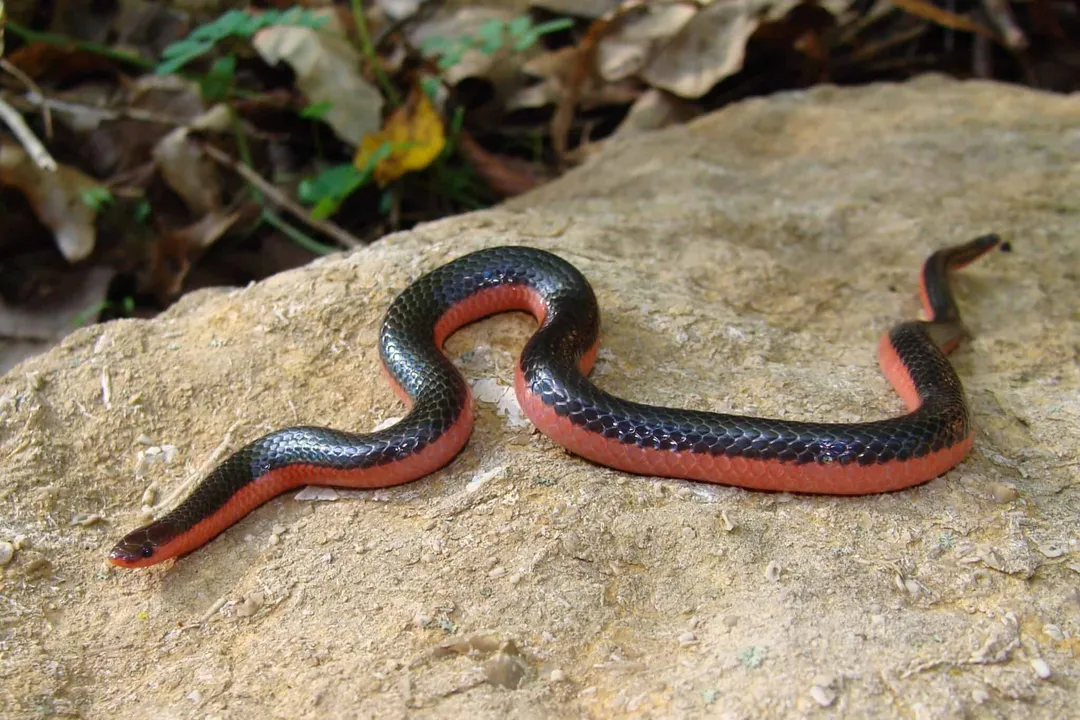
The Worm Snake, often mistaken for an earthworm due to its diminutive size and subterranean lifestyle, possesses a set of physical characteristics perfectly adapted to its secretive, soil-dwelling existence. [1][5][9] While general descriptions of this snake apply across several species, such as the Eastern Worm Snake (Carphophis amoenus) or the Western Wormsnake, they all share fundamental traits that distinguish them from other small, fossorial reptiles. [2][6] These snakes are masters of disguise, blending in with the organic matter they inhabit beneath leaf litter and loose soil. [7]
# Slender Dimensions
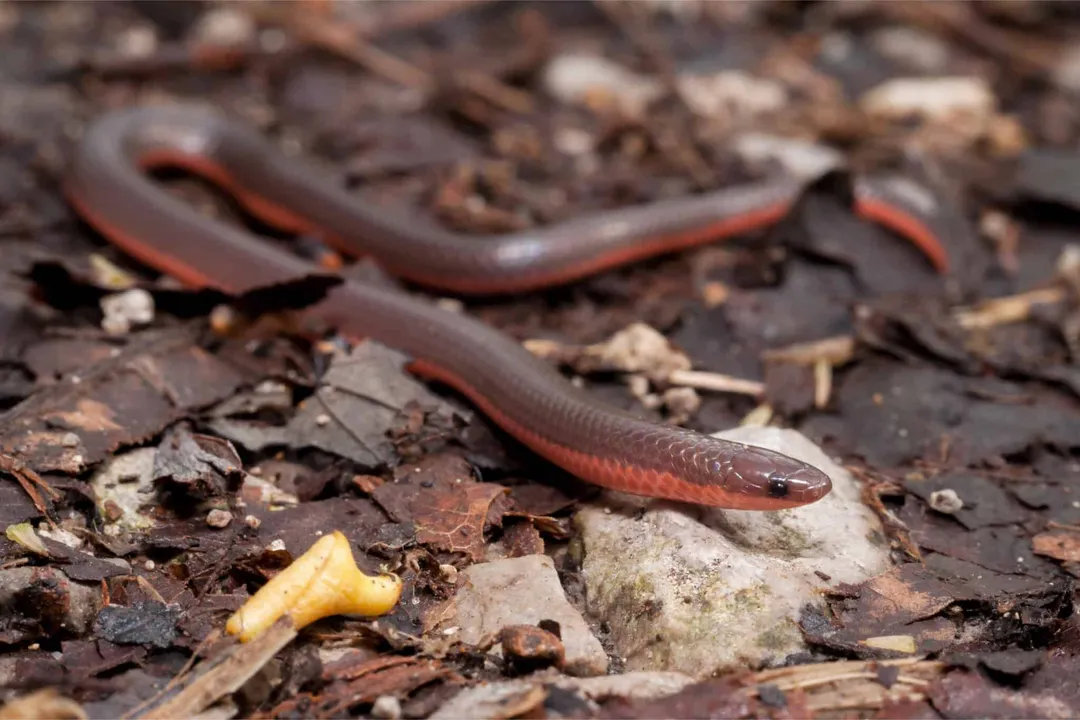
The most immediate and defining physical trait of the Worm Snake is its overall small stature. [1][5] These snakes are consistently described as small and slender. [2][7] The typical adult length for an Eastern Worm Snake often falls between 7 and 11 inches. [1][5][9] While this range is common, some sources note that they can occasionally reach lengths up to about 14 inches. [7]
This size places them among the smaller snakes found throughout their ranges. [5] Their girth is correspondingly narrow, adding to their worm-like appearance, which aids in navigating tight spaces within the soil. [1][4] The consistency in size reports across various regional guides suggests that while growth variability exists, reaching the upper limit of 14 inches is relatively rare for the species. [7]
# Distinct Coloration
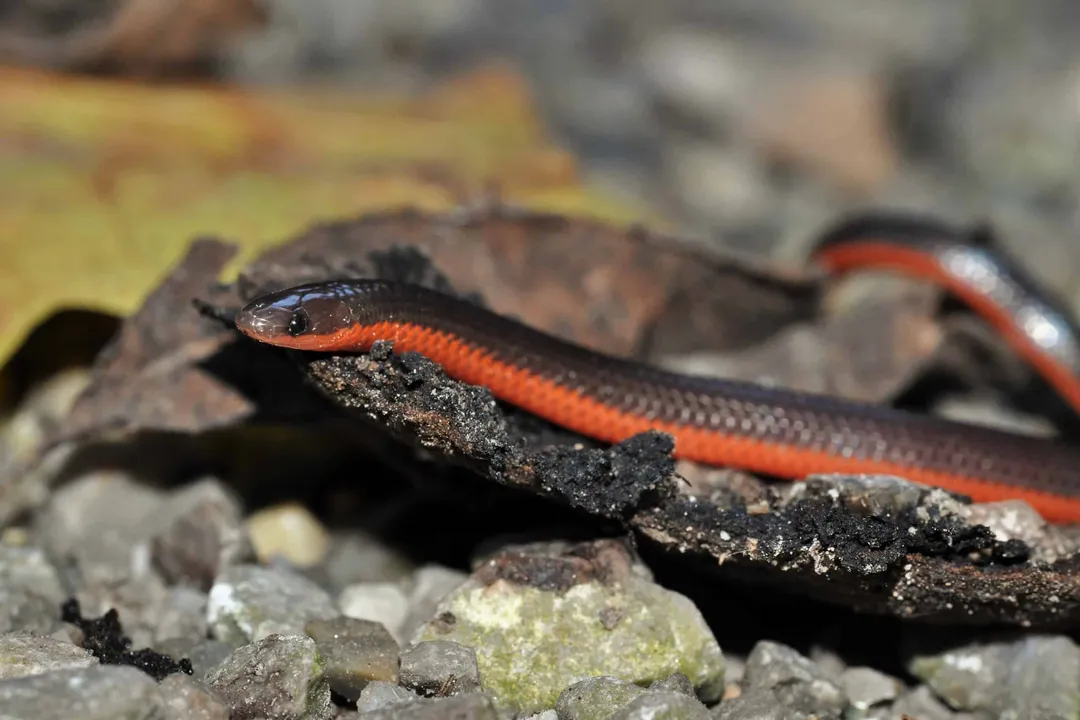
Worm Snakes exhibit a noticeable two-tone appearance, though the exact shades can vary depending on the specific species and geographic location. [1][6] The dorsal surface—the snake’s back—is typically characterized by a darker hue. [2][5] Most descriptions converge on colors like dark brown, reddish-brown, or even purplish-brown. [1][7][9] This dark coloring likely helps them absorb warmth efficiently when they occasionally bask or move near the surface, though they spend the vast majority of their time hidden. [5]
In contrast, the ventral side, or belly, presents a stark difference, usually being a much lighter shade. [2] This underside is often described as yellowish or pinkish/whitish. [1][7][9] In some cases, this lighter coloring is not strictly confined to the belly but rather extends up the lower sides of the snake’s body. [2]
If you are observing a specimen, note the transition between these two colors. For the Eastern Worm Snake, the dorsal coloration is often described as appearing uniform along the back, contrasting sharply with the lighter belly. [1] Understanding these color boundaries can be helpful when trying to distinguish a Worm Snake from other small, dark snakes, although direct observation is often difficult given their habits. [5][7]
# Head Features
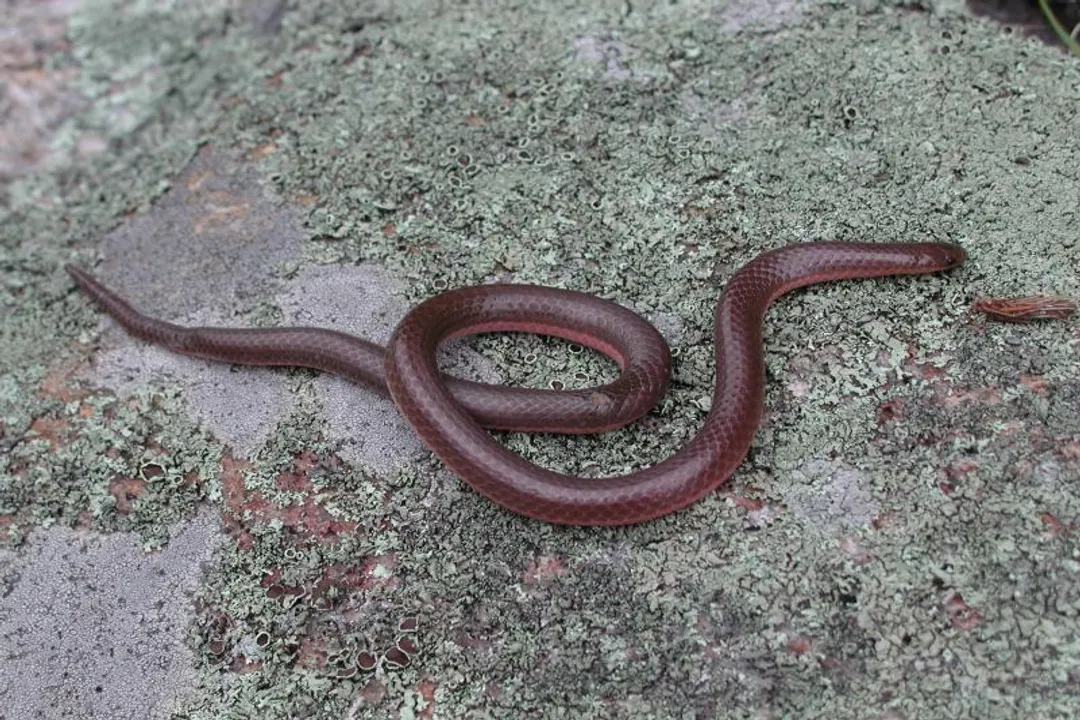
The head structure of the Worm Snake is perhaps its most specialized characteristic for its lifestyle. [1][7] It is small and appears somewhat pointed when viewed from above. [1][7] This shape is not merely aesthetic; it serves a crucial functional purpose. The snout itself is often described as being pale or yellowish, sometimes contrasting slightly with the darker scales of the head proper. [2][7]
The forward-most part of the snout is remarkably hard and pointed, acting almost like a specialized tool. [1][7][9] This rigid, shovel-like tip allows the snake to effectively push through soil and soft substrate as it burrows. [1][9] This adaptation highlights an evolutionary trade-off: a small, blunt head would be safer for surface life but disastrous for a creature that spends most of its time tunneling beneath ground. [7]
When distinguishing between the Eastern and Western species, subtle differences might arise, but the burrowing adaptation of a pointed head is a constant feature for both fossorial Carphophis species. [1][6]
# Scale Configuration
Snake identification often hinges on scale characteristics, and the Worm Snake is no exception, although its small size makes scale counting a fine detail. [5] A key characteristic shared across these species is that their scales are smooth. [1][2][5] Unlike keeled scales, which have a ridge down the center, smooth scales allow the snake to move through soil with minimal friction, assisting in its subterranean movement. [9]
For those interested in herpetological specifics, most sources agree that Worm Snakes possess 13 rows of smooth scales around their midbody. [5][9] This specific count is a reliable diagnostic feature. While some snakes may have 15 or more scale rows, maintaining a consistent 13 provides structural integrity without adding bulk unnecessary for a narrow burrower. [5]
# Tail Apex
The tail structure also offers a final clue to identification. The tail itself is generally short. [7] More importantly, the very tip of the tail often terminates in a tiny, spine-like point. [7] Similar to the hardened snout, this tail tip is not venomous but is instead used to help the snake wedge itself into tight crevices or as an anchor when pushing through soil. [7] This seemingly insignificant detail reinforces the snake’s specialization for navigating confined spaces. [1]
# Comparisons and Species Nuances
While the general physical description—small, dark above, light below, smooth scales, pointed head—applies broadly to the Worm Snake group, it is important to recognize that the term covers more than one species. [1][6]
The Eastern Worm Snake (Carphophis amoenus) is documented across several northeastern and southeastern states. [2][7][9] Its features align with the general description: dark brown/purplish back, yellowish belly, and 13 smooth scale rows. [9]
The Western Wormsnake (Carphophis vermis or similar western relative, based on source [6]), while sharing the same general morphology, might present slight variations in the specific shade of brown or the extent to which the lighter ventral color extends up the sides. [6] For example, while Eastern Worm Snakes are frequently cited with purple or reddish-brown dorsal colors, the Western species might lean more distinctly toward brown or bronze tones, though this color variation is often fluid within a species as well. [1][6]
A helpful way to synthesize the characteristics is to compare them against the characteristics of a similarly small, dark burrowing snake, such as a young Black Racer or a Ring-necked Snake that has lost its neck ring. The key differentiator will always be the smooth scales (Racers are keeled) and the extremely small, pointed head designed for tunneling (Ring-necks have a more distinct head shape and usually have a visible neck ring, though color can fade). [1][7]
If you find a specimen that perfectly matches the description of 13 smooth midbody scale rows, a dark back, a pale yellow belly, and a distinctly hardened, pointed snout, you are very likely looking at a member of the Carphophis genus, perfectly engineered for life underground. [1][5][9]
# Integrating Form and Function
The Worm Snake's physical attributes are a masterclass in minimizing surface area and maximizing burrowing efficiency. Think about the environment they inhabit—beneath logs, stones, and in loose, moist soil. [7] A snake with rough or heavily keeled scales would constantly fight drag and abrasion as it pushes forward, wasting vital energy. [5] The smooth, slick scales are the primary physical attribute supporting their fossorial life, allowing them to glide through the substrate. [9]
Furthermore, consider the head structure in a practical context. When an Eastern Worm Snake is discovered, it is often found near or partially buried under a flat rock or piece of wood where moisture retention is highest. [7] Imagine the force required to wedge oneself under a log that has settled slightly into the soil. The pointed, rigid snout acts as a pressure point and an anchor, allowing the snake to drive its body forward where a rounded snout would simply slip or become damaged. [1][7] This physical feature is directly linked to their feeding behavior, as they often follow subterranean prey, such as earthworms, into their own tunnels, requiring constant movement through dense material. [1]
# A Note on Size Consistency
It is interesting to observe how consistent the size measurements are across reports from different regions. [1][7][9] In a group of reptiles where many species show high size dimorphism or wide variances based on local food availability, the Worm Snake maintains a remarkably tight size range, rarely exceeding 11 inches for most encounters. [5] This suggests strong selective pressure favoring a size that balances the ability to access tight soil crevices while still being large enough to overpower typical prey like soft-bodied earthworms. [1] If you encounter a snake that is 18 inches long and exhibits the coloration, it is almost certainly not a Worm Snake, regardless of how dark it appears. [7]
# Key Identifiers Summary
To solidify identification, particularly for those new to observing these secretive reptiles, focusing on a quick checklist of physical traits proves beneficial. While you won't often get time for a detailed scale count in the field, the other characteristics are immediately observable, even in dim light or when the snake is partially obscured. [7]
| Feature | Typical Description | Primary Significance |
|---|---|---|
| Length | 7–11 inches (rarely up to 14 inches) | Indicates small, non-threatening size [1][7] |
| Dorsal Color | Dark brown, reddish-brown, or purplish | Camouflage in dark soil/leaf litter [1][9] |
| Ventral Color | Yellowish or pinkish/whitish | Distinct contrast with the back [2][7] |
| Scales | Smooth, 13 rows at midbody | Reduced friction for burrowing [5][9] |
| Snout Tip | Hard, pointed, often pale | Essential tool for soil penetration [1][7] |
This compact size and specialized morphology mean that the Worm Snake has a very narrow ecological niche, being highly dependent on soil conditions and prey availability in specific habitats. [7][9] Their entire physical package is built around being the ultimate small, subsurface predator within their range. [1]
Related Questions
#Citations
Worm Snake (Carphophis amoenus) - SREL herpetology
Common Wormsnake (Carphophis amoenus) - Indiana Herp Atlas
Carphophis amoenus - Reptiles of North Carolina
Worm Snake - A-Z Animals
Common Wormsnake (Carphophis ameonus)
Western Wormsnake | Oklahoma Department of Wildlife Conservation
Eastern Wormsnake - CT.gov
Common Wormsnake | Louisiana Department of Wildlife and Fisheries
Eastern Wormsnake Guide - New York Natural Heritage Program