Do sunbeam snakes eat other snakes?
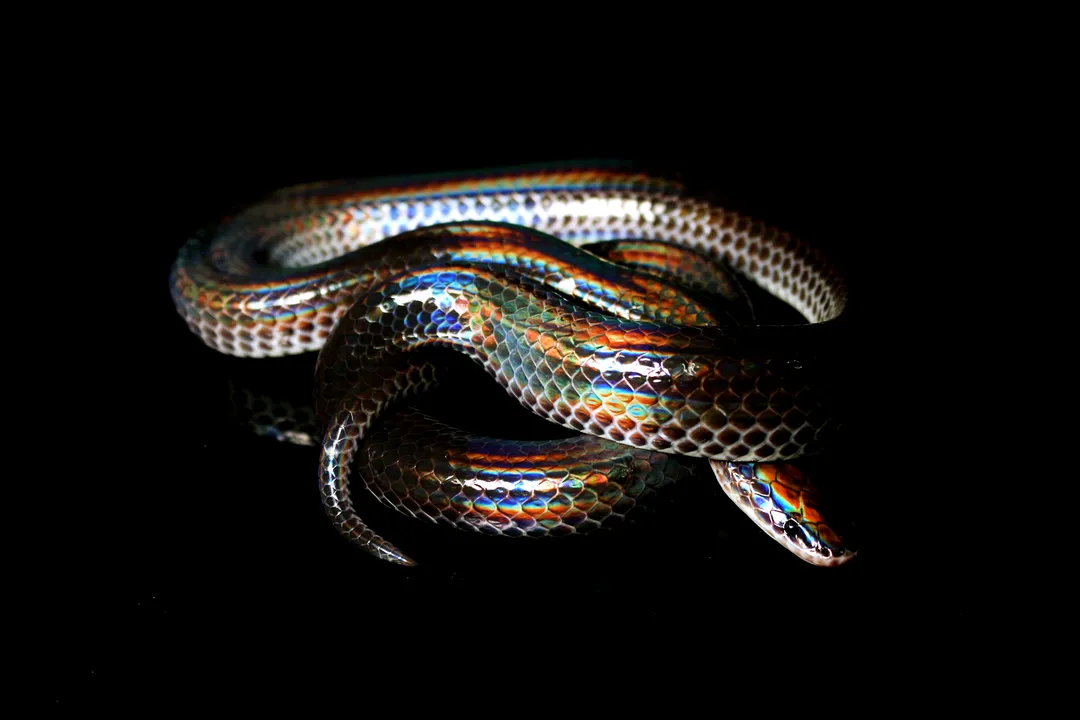
This is the initial query regarding the diet of the Xenopeltis unicolor, commonly known as the Sunbeam Snake, and whether it includes other snakes in its menu. The information gathered from several husbandry guides indicates that the answer is indeed yes, though perhaps surprisingly given their usual captive diet. These fascinating snakes, native to Southeast Asia and some Indonesian regions, are renowned for the spectacular, rainbow-like iridescence of their scales, a feature that makes them highly sought after in the pet trade. [2][4]
# Actual Prey Profile
Sunbeam snakes are strictly carnivores, and their diet in the wild is quite varied, reflecting their subterranean lifestyle. They spend the majority of their time burrowing through soil and mud, particularly in swampy areas like rice paddies, to hunt for their next meal. [1][2] This fossorial nature means they encounter a range of creatures beneath the surface and in the damp topsoil.
The typical diet for a wild Sunbeam Snake includes amphibians, lizards, small mammals, and, importantly, other snakes. [2][4] In essence, they are opportunistic feeders who consume whatever small, ground-dwelling vertebrates they can overpower. [1] This contrasts slightly with the reported diet from one source, which lists rodents and amphibians alongside snakes, [1] while another source specifically notes amphibians, lizards, small mammals, and other snakes. [2] It is clear that while rodents and frogs are staples, the inclusion of reptiles, including conspecifics or other small snakes, forms a part of their natural feeding ecology. [2][4]
# Ophiophagy Inquiry
The direct question of whether Sunbeam Snakes consume other snakes is answered affirmatively by some experts, confirming they engage in ophiophagy "every so often". [3] This behavior is not unique to Xenopeltis unicolor; certain other snake species also practice cannibalism or eat other snakes, even large ones like rattlesnakes in some specialized cases, though the Sunbeam Snake’s behavior is likely focused on smaller reptiles given its size.
What is particularly notable is how quickly the Sunbeam Snake deals with its prey. Anecdotal observations from keepers suggest that sunbeams constrict their prey and subdue it with exceptional speed—some even claim they are the fastest eaters they have ever seen, rapidly swallowing their meal compared to other species. [4] This swiftness might be an evolutionary adaptation that minimizes the time they spend exposed above ground, making them vulnerable to predators while feeding. [4] When kept in captivity, however, this complex dietary need seems to simplify considerably.

# Captive Feeding Regime
In the pet trade, the feeding requirements of the Sunbeam Snake are often simplified, which is fortunate given the difficulty in simulating their natural, messy environment. [3][4] A major misconception about their care is that they are difficult eaters, perhaps due to their specialized needs for humidity and burrowing space. [1]
For captive specimens, the primary food item recommended is mice. [1][3] Many keepers start new imports on live mice but report that the snakes are usually very easy to switch over to frozen/thawed meals, often accepting them without any trouble on the next scheduled feeding day. [1][3]
Meal size is dependent on the snake's size:
- A subadult around 2 feet long may consume two or three fuzzy mice at one time. [1]
- A larger adult, approaching 3 feet, will typically require two or three hopper mice per feeding. [1]
Feeding frequency should also be adjusted as the snake matures. Juveniles and subadults are generally fed weekly, while larger adults can be fed every two weeks to slow their metabolism down slightly. [1] A practical tip when feeding these snakes, especially if they are new or shy, is to remember their powerful feeding response—keepers are cautioned to watch their fingers, as they strike and grasp prey with incredible speed. [4]
If we consider the natural diet (amphibians, lizards, snakes) versus the captive diet (mice), an interesting pattern emerges. Captive care sheets tend to gravitate toward readily available, uniform prey like mice, which are often easier to handle and offer a complete nutritional profile for snakes that are not actively hunting live, varied prey in the wild. [1][3] The fact that they can be sustained on mice suggests that while they will eat other snakes naturally, it is likely opportunistic rather than an obligate requirement for survival in captivity.
# Essential Husbandry Context
Understanding why a Sunbeam Snake eats what it eats requires appreciating its habitat. These snakes hail from regions characterized by wetlands, marshes, and rice paddies, meaning they exist in extremely damp, humid conditions. [2][4] They are highly fossorial, needing deep, moist substrate—like coconut coir or a peat moss/sand mix—to burrow in. [1][3]
One critical aspect of their care that directly impacts feeding success, and thus their very health, is managing humidity. They require high humidity, often kept around 75% or even higher, up to 100%. [3][4] If kept too dry, they can develop blisters, which is often mistaken for a humidity-related disease when it is actually a bacterial infection exacerbated by stress and improper conditions. [4] A stressed, unhealthy snake will refuse food, leading keepers to worry about their diet when the underlying issue is environmental stress. Therefore, achieving the correct, high-humidity burrowing medium is the prerequisite for consistent feeding, whether the prey is a mouse or, hypothetically, a smaller snake encountered underground. [4]
# Morphology and Hunting Style
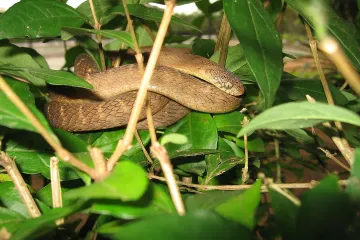
The snake's physical structure is perfectly suited to its hunting grounds. They have a wedge-shaped, narrow head with very little distinction at the neck, which allows them to push through soil and mud with relative ease. [2][4] This specialized morphology supports a lifestyle where surprise attacks on slow-moving or burrowing prey are the norm. [4]
While they are terrestrial and fossorial, they do possess a defense mechanism that involves vibrating their tail in a manner similar to a rattlesnake when feeling threatened. [2] Although they handle well and rarely bite—with some keepers claiming to have never been bitten in years of handling thousands of specimens—they can produce a particularly noxious musk if highly agitated. [1][4] This tendency to musk heavily when stressed reinforces the advice that keeping them solitary and minimizing handling is best for their well-being and, consequently, their appetite. [4]
For those setting up a habitat, the focus should be on creating that necessary damp environment. One advanced setup technique involves placing an object under one end of the enclosure to create a slight slant. Water added to the substrate will naturally pool and create the necessary very damp spot at the lower end, with a gradient leading to a merely damp area at the raised, drier end. [3] This gradient allows the snake to self-regulate its exposure to moisture levels, which is key for maintaining the health needed to accept meals. [3] This careful environmental management is far more important than the specific type of prey item, provided the captive diet consists of appropriately sized, nutrient-rich substitutes like mice. [4]
# Rarity and Conservation Status
It is also important to note that the vast majority of Sunbeam Snakes available in the U.S. pet trade are wild-caught imports, primarily from China. [3][4] Captive breeding is rare, though not impossible, as keepers like Petra Spiess have successfully produced clutches. [4] The focus on establishing successful captive breeding programs is crucial because habitat loss due to human construction is cited as the real primary threat to the species in the wild. [1]
While they are classified as Least Concern (LC) by the IUCN Red List because they remain common across their range, the reliance on imports means that new specimens often arrive stressed, dehydrated, and covered in parasites or blisters. [2][3] A newly acquired Sunbeam Snake, regardless of its potential to eat other snakes in the wild, requires immediate quarantine, veterinary treatment for worms, and strict adherence to high-humidity protocols to recover and begin feeding on mice reliably. [3] A healthy snake, one that is plump and feels "strong" during handling, is far more likely to exhibit the robust feeding response necessary to thrive than a stressed import. [1]
In summary, while the Sunbeam Snake is an occasional predator of other snakes in its native, subterranean environment in Southeast Asia, its captive diet centers around appropriately sized rodents. [2][3] Success in keeping these beautiful, iridescent snakes hinges less on mimicking their carnivorous variety and more on accurately recreating the high-humidity, burrow-friendly conditions of their swampy home. [4]
Related Questions
#Citations
Sunbeam Snake
Sunbeam Snake - Facts, Diet, Habitat & Pictures on ...
Captive Husbandry of the Sunbeam Snake (Xenopeltis ...
Sunbeam Snake Care Guide