Yellow-Bellied Sea Snake Locations
The Yellow-Bellied Sea Snake, scientifically known as Hydrophis platurus or formerly Pelamis platurus, [1][3] is one of the most widely distributed snakes on Earth, making its various locations a subject of broad interest across multiple oceans. This highly specialized reptile spends almost its entire life in the open ocean, a pelagic existence that dictates where observers might find it. [1][4] Its distribution spans the tropical and subtropical waters of the world’s oceans, stretching across vast areas of the Pacific and Indian Oceans. [1][5]
The snake's range is extensive, generally extending from the east coast of Africa across to the western coasts of the Americas, though its presence in specific coastal zones varies dramatically based on historical records, ocean currents, and contemporary observation efforts. [1][5] It thrives in warm waters, usually sticking close to the surface layer where it hunts and basks. [4] The very nature of its life at sea means that its location is often dictated by the currents that carry it, leading to appearances in areas far from traditional coastal habitats. [5]
# Oceanic Spread
The sheer breadth of the Yellow-Bellied Sea Snake’s historical range is impressive. It has been documented from the coast of Africa, moving through the warm waters surrounding Southeast Asia and into the massive expanse of the Pacific Ocean. [1] On the American side of the Pacific, its distribution includes waters off South America and reaching up toward North America. [1]
One significant factor governing its widespread distribution is its reliance on major oceanic systems. For instance, the Kuroshio Current, a warm current flowing near Japan, is noted as a habitat zone for these snakes. [1] This indicates that temperature is a primary limiter; where the water stays consistently warm, the snake can persist. [1] The ability to utilize these major currents effectively allows individuals to travel thousands of miles from established breeding or feeding grounds. [5]
# Regional Sightings
While the snake inhabits massive ocean areas, specific regional contexts highlight the differences between established populations and transient visitors.
In the Hawaiian Islands, the Yellow-Bellied Sea Snake is considered native. [9] In this archipelago, they are found both in nearshore environments and farther out in coastal waters. [9] Sightings are common enough that local authorities issue advisories regarding their presence, particularly after storms when they may wash ashore. [9]
Contrast this with the situation along the coast of California. Records indicate that H. platurus was historically present in the Southern California Bight, sometimes even getting stranded. [4] However, observations have become exceedingly rare, leading experts to suggest that the species may be locally extirpated, or at least highly unlikely to be encountered there now. [4] This difference—being native and present in Hawaii versus being historically present but likely absent in California—is a critical distinction for anyone interested in tracking this species. It implies that the environmental conditions supporting a stable population are met in Hawaii but not maintained consistently further north along the North American coast. [4]
Ecuadorian waters off the Pacific coast also confirm the snake’s presence along the South American continental shelf. [6] Moving toward the South Pacific, New Zealand’s waters are generally too cool for sustained populations, meaning any snake found there is categorized as a vagrant—an individual blown far outside its normal distribution limits by unusual weather or currents. [7] These rare sightings underscore the snake’s capacity for long-distance dispersal, even if it cannot survive long-term in cooler regions. [7]
# Drifting Life
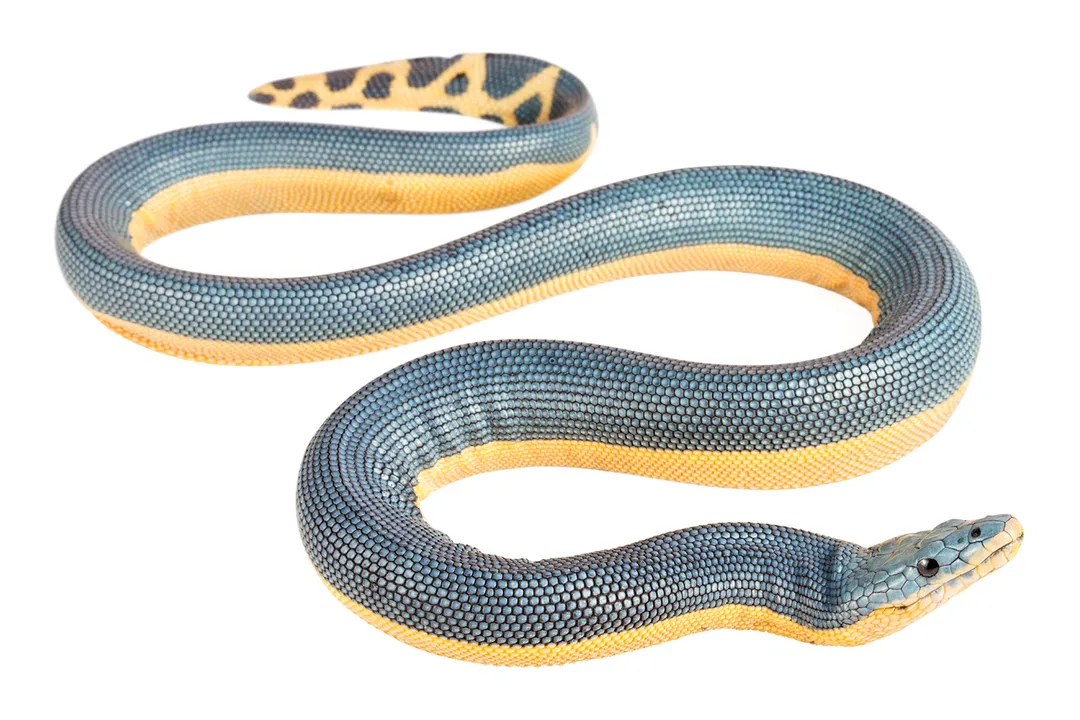
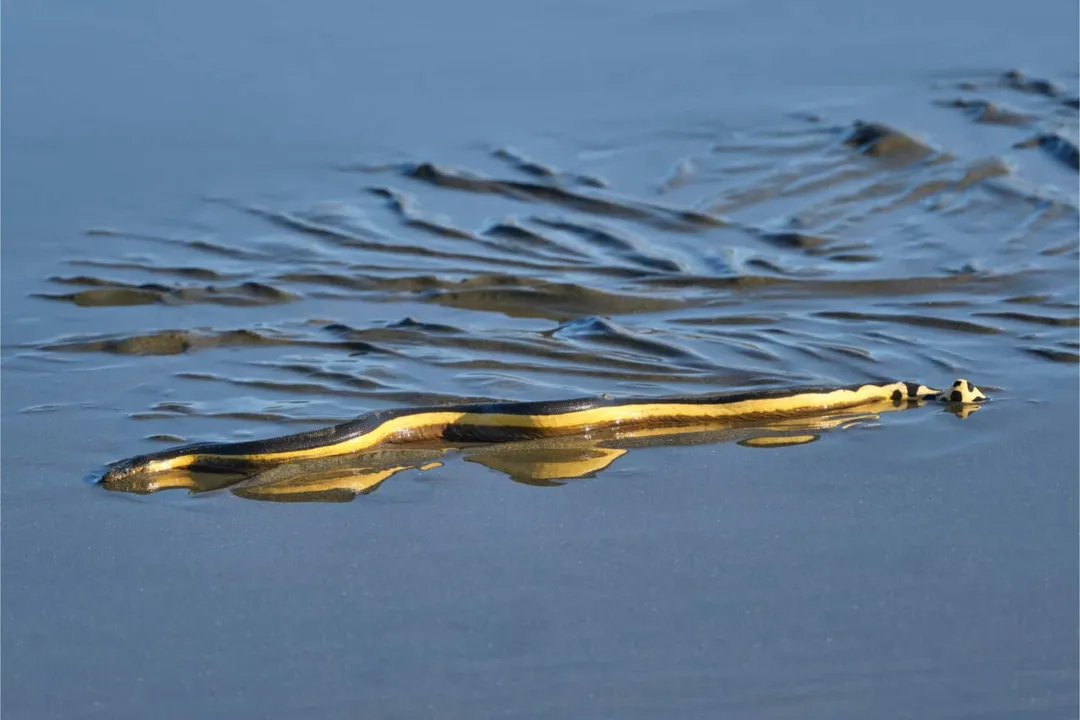
The snake's entire mode of life is centered around being adrift. It is truly pelagic, meaning it lives in the open ocean rather than near the bottom or in nearshore reefs. [4] They primarily inhabit the water column near the surface. [4] A fascinating aspect of their location strategy is their buoyancy; they generally float horizontally or slightly angled at the surface. [4] They have been observed gathering in large numbers in areas of convergence, suggesting they might use these slicks or masses of floating debris as areas to rest or perhaps as feeding hot spots. [1]
The appearance of these sea snakes on land is almost always accidental, triggered by external forces. Severe storms or powerful wave action can drive them onto beaches where they become temporarily stranded. [9][5] Because they are so adapted to water, being on land is a precarious situation for them. [1]
# Surface Dwellers
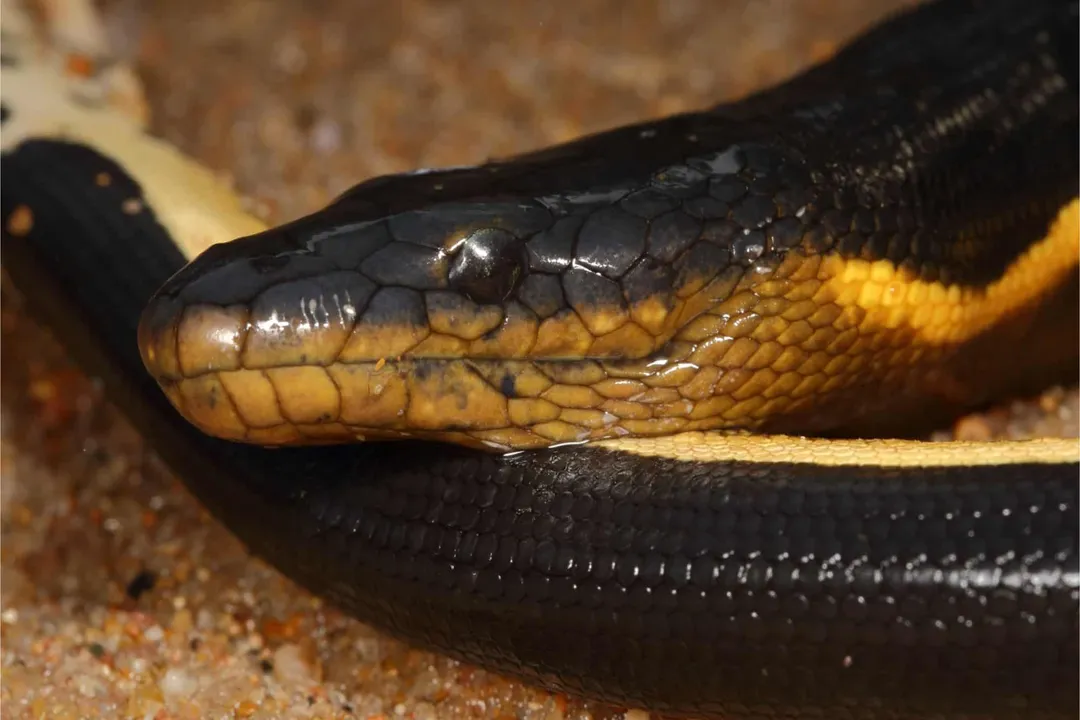
Understanding the snake’s physical adaptations helps explain why it is found floating at the surface and why it is so vulnerable when washed ashore. Unlike many terrestrial snakes, the Yellow-Bellied Sea Snake lacks the broad, single row of ventral scales that terrestrial snakes use for gripping the ground and moving efficiently. [1] Instead, it possesses a small, single row of belly scales. [1]
This anatomical feature means that terrestrial locomotion is extremely difficult, if not impossible, for them. [1] They are built for paddling and drifting, not for crawling across sand or rock. This reliance on the marine environment is absolute; a stranded snake is effectively immobilized and highly exposed. [1] If you ever encounter one washed up, recognizing this helplessness dictates the correct response, which is to leave it undisturbed or contact local wildlife authorities, rather than attempting to move it manually, as its natural defense mechanism might involve a strong bite if cornered. [9][2]
When considering the established populations, such as those in Hawaii, the observation that they frequently wash ashore after rough weather suggests a pattern: strong offshore winds or high swells push individuals near the coast into the intertidal zone. [9] This is not a preferred habitat; it is an environmental consequence of their pelagic lifestyle being disrupted by weather systems. [9]
# Status Shifts
Tracking the locations of the Yellow-Bellied Sea Snake is not just a static exercise; it involves noting shifts in its habitable range over time. The historical documentation showing presence in places like Southern California, compared to the current lack of confirmed sightings, demonstrates how easily a population edge can recede when environmental conditions change. [4] While warmer currents might facilitate expansion into previously cooler areas, sustained changes, such as slight, long-term cooling or increased storm frequency in marginal areas, can lead to local extinction. [4]
One interesting consideration for long-term ecological monitoring involves linking these snake sightings to broader climate indices. If warming trends continue in the eastern Pacific, areas that have historically been too cool for sustained settlement, like central or northern California, might once again become viable marginal habitats. Monitoring the frequency of vagrant sightings in locations like New Zealand versus the density in native areas like Hawaii could serve as a subtle biological indicator for changes in equatorial current patterns, providing data points that parallel satellite-derived sea surface temperature records. [7] Therefore, a well-documented stranding far outside the typical range carries more weight than just a curious anomaly; it's a flag indicating significant oceanic movement.
Related Questions
#Citations
Yellow-bellied sea snake - Wikipedia
Yellow-Bellied Sea Snake - Waikiki Aquarium
Pelamis platura (Yellowbelly Sea Snake ... - Animal Diversity Web
Yellow-bellied Seasnake - Hydrophis platurus - California Herps
Yellow-Bellied Sea Snake - Hydrophis platurus - A-Z Animals
Yellow-bellied Sea-Snake (Hydrophis platurus) - Reptiles of Ecuador
Yellow-bellied sea snake - New Zealand Herpetological Society
The Yellow-bellied Sea Snake Slithers in the Open Ocean
[PDF] Yellow-bellied sea snake