Which gender of *B. jararaca* exhibits greater potency regarding hemorrhagic and hyaluronidasic venom activities?
Answer
Females
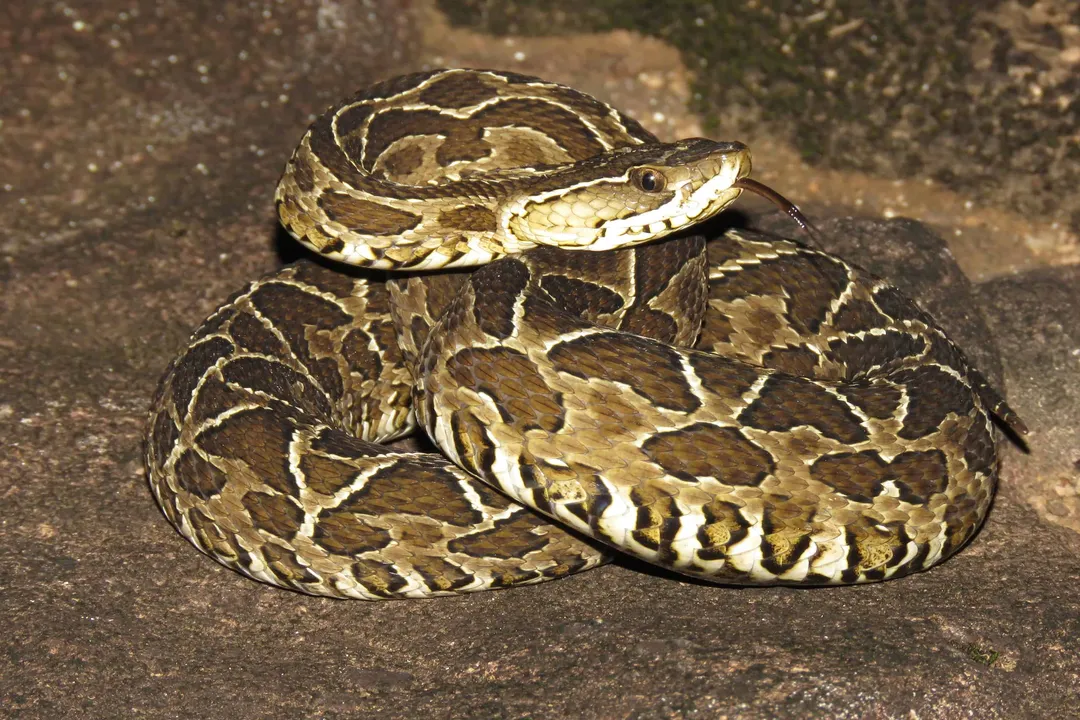
A remarkable aspect of *B. jararaca* biology is the sexual dimorphism observed not just in physical size—where females are larger—but also in the functional characteristics of their venom. While male venom demonstrates higher potency in coagulant, phospholipasic, and myotoxic activities, the venom produced by females is specifically noted to be more potent in terms of hemorrhagic effects (causing bleeding) and hyaluronidasic activities (enzymes that break down connective tissue). This suggests an evolutionary specialization where the venom profiles of the genders may target slightly different physiological systems or prey types.
Related Questions
What peptide isolated by Sérgio Henrique Ferreira led to the development of ACE inhibitors for hypertension?Which behavior utilizes the white tail tip by juvenile *B. jararaca* to attract prey?What is the primary prey difference reflecting the ontogenetic diet shift in *B. jararaca*?What is the most abundant major component quantified in the venom composition of *B. jararaca*?What specific pattern often seen along the spine distinguishes *Bothrops alternatus* from *B. jararaca*?In the reproductive cycle of *B. jararaca*, when does parturition (live birth) typically occur?Which gender of *B. jararaca* exhibits greater potency regarding hemorrhagic and hyaluronidasic venom activities?What distinctive physical characteristic is typically found on the tail tip of juvenile *B. jararaca* specimens?What classification does the IUCN Red List currently assign to *Bothrops jararaca*?Which enzyme found in *B. jararaca* venom has been clinically applied as an antihemorrhagic drug?Where is *Bothrops jararaca* endemic, spanning southern Brazil into which two other countries?Which activity associated with venom potency is greater in male *B. jararaca* venom compared to female venom?