What is an interesting fact about Yellow-bellied Sapsucker?
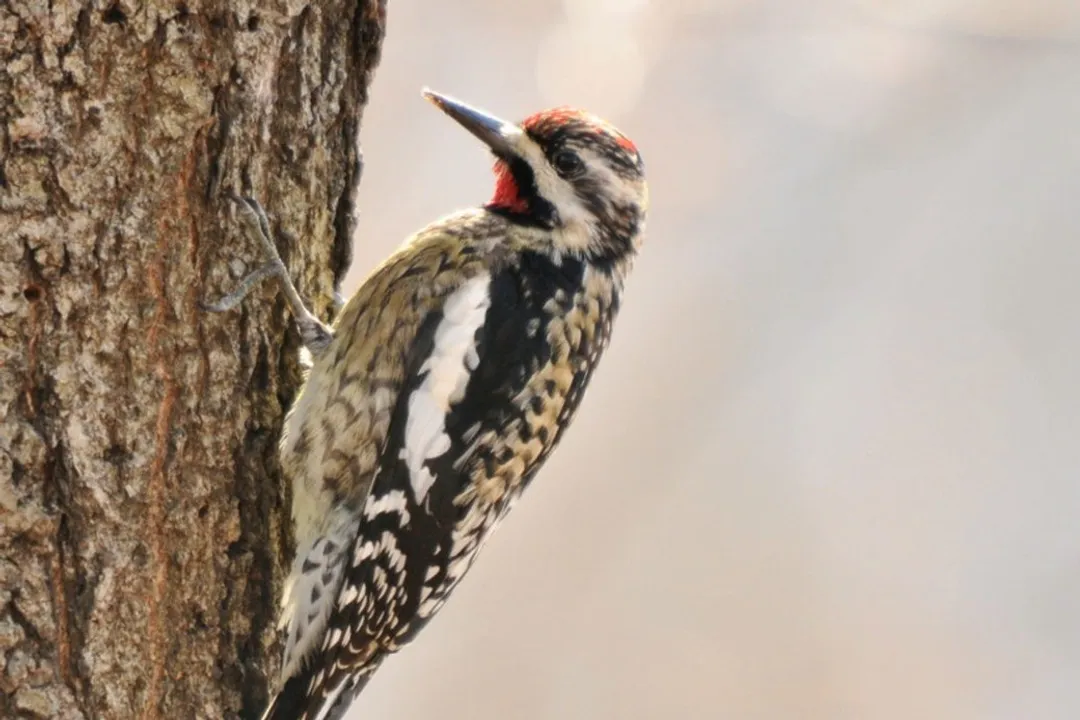
The most compelling characteristic distinguishing the Yellow-bellied Sapsucker from its woodpecker relatives is not merely its color pattern, but its highly specialized method of procuring sustenance: the deliberate drilling of sap wells. [1][2][3] While most woodpeckers specialize in excavating wood to find hidden insect larvae—drilling deep holes to pursue borers and grubs—the Sapsucker often focuses on tapping the circulatory system of the tree itself, making it a true arboreal farmer of sorts. [3][5] This behavior sets it apart, transforming a creature often assumed to be strictly insectivorous into a dedicated sapivore for significant portions of the year. [1][4]
# Drilling Patterns
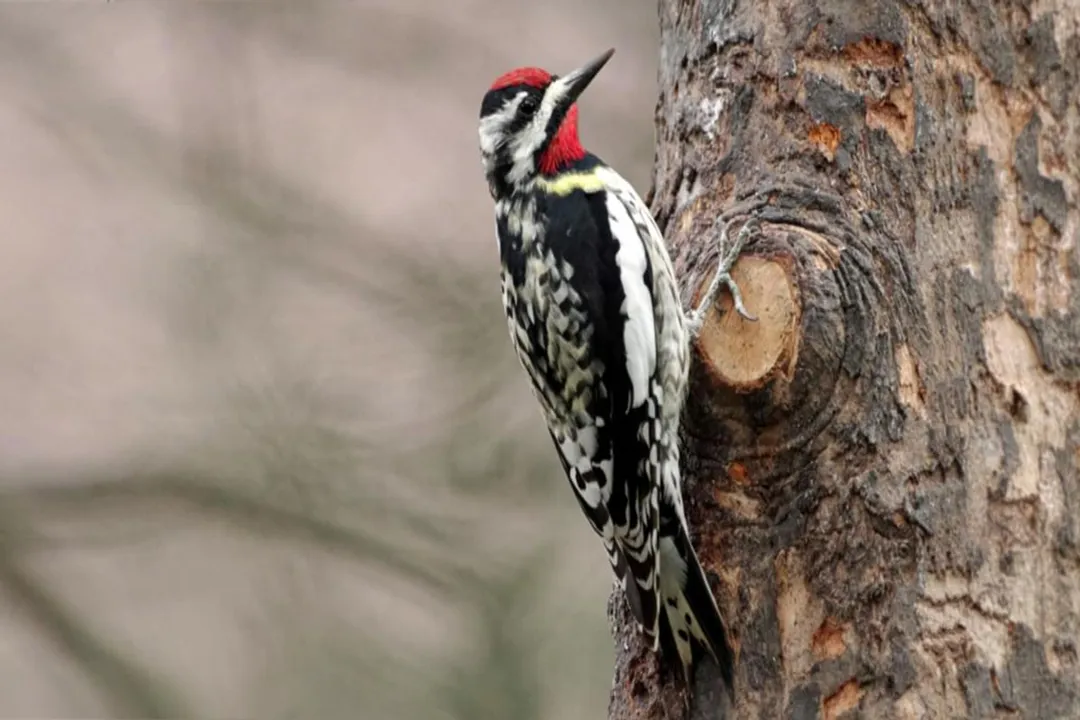
The resulting structures left by this feeding habit are remarkably neat, a stark contrast to the often ragged excavations left by a pileated or downy woodpecker searching for dinner. [3] The Yellow-bellied Sapsucker meticulously drills rows or patches of small, shallow, round holes, typically about one-eighth to one-quarter of an inch in diameter. [2][3][5] These holes are often aligned horizontally or vertically, sometimes creating patterns that look distinctly organized, almost like neat rows of tiny punctures ringing the trunk or branch. [1][3] The bird doesn't just randomly hammer the tree; it seems to create a 'sugar map' to maximize its meal. [2]
The purpose of these wells is twofold, though the primary attraction is the sweet liquid that wells up after the drilling. [1][4] When the bird drills, it severs the outer sapwood, allowing the sugary liquid, the tree's circulatory fluid, to ooze out. [1][3] This sap provides essential carbohydrates and moisture. [5] However, the Sapsucker is not only after the sap. As the sweet liquid pools, it attracts small insects, such as ants, spiders, and various flying insects. [1][3][6] The bird will return to these wells repeatedly to consume the sap and snatch any unfortunate bugs that have become trapped in the sticky offering. [1][2] This dual-feed strategy—sucking up liquid and snagging insects—demonstrates a sophisticated energy-gathering technique. [5]
# Tree Selection
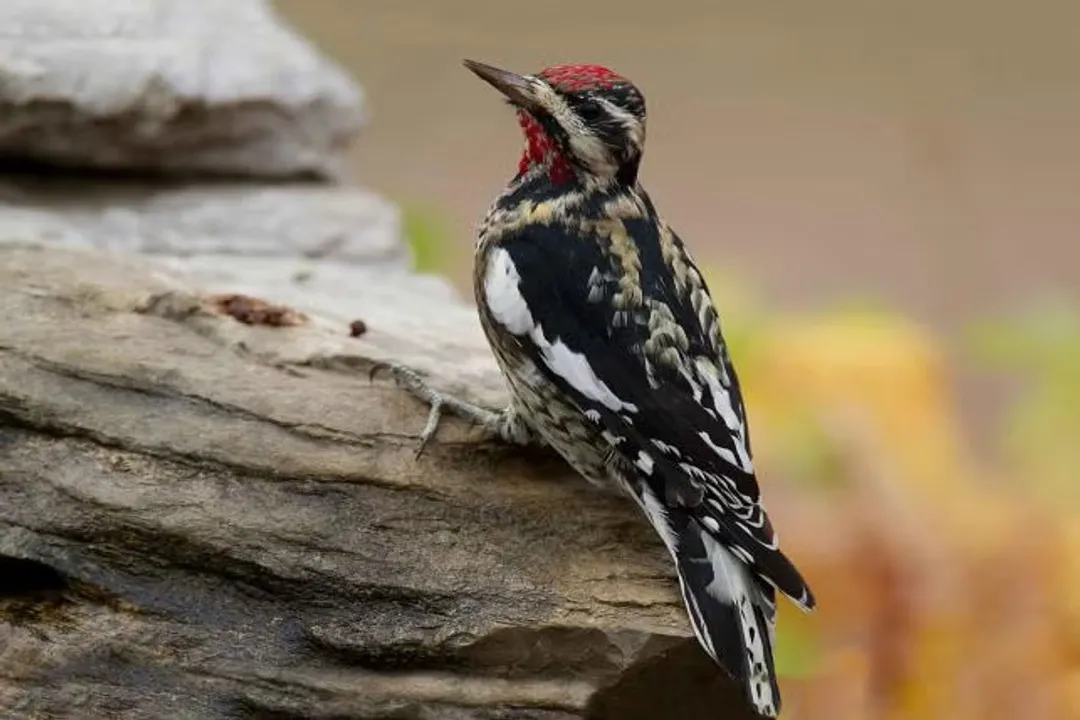
A fascinating aspect of this feeding strategy is the bird's apparent favoritism toward certain tree species, a choice based less on the wood's hardness and more on the sap's palatability and flow rate. [3][5] In different parts of their range, observers note distinct preferences. For instance, in the eastern and central United States, birches, maples (especially sugar maple), and beech trees are frequent targets. [1][5][6] In the south, they might favor pines or oaks depending on the season and local availability. [6][9]
Observing local woodlands can reveal which species your resident Sapsuckers favor. If you notice sap oozing from small holes on an apple tree or a hickory in early spring, you might be witnessing the work of a Yellow-bellied Sapsucker looking for the first flows of the season. [6][9] This contrasts sharply with how, say, a Hairy Woodpecker selects a location, which is usually determined by the presence of carpenter ants or beetle larvae just beneath the bark. [3] The Sapsucker is essentially a specialized harvester, while the other woodpeckers are deep miners. [3]
It is worth noting the potential impact on the trees. While a healthy, mature tree can easily withstand the drilling from a single bird or even a small family unit, an infestation of Sapsuckers drilling extensively on a young or stressed tree can cause significant damage. [1][5] If the wells are drilled too close together, they can girdle the branch or trunk, effectively cutting off the flow of nutrients and water to that section. [1][5] This can result in branches dying back, which is why some homeowners mistake their feeding for outright malicious destruction, though the bird's intent is purely nutritional. [5] This potential for localized girdling is a key difference in the "damage" profile compared to insect-focused woodpeckers, whose harm is generally less superficial unless the insect infestation itself is severe. [3]
# Visual Markings
The bird's name offers a clue to its appearance, though the eponymous yellow belly is often subtle, especially on birds seen foraging quickly or in poor light. [1][5] The Yellow-bellied part of its name refers to a faint wash of yellowish wash across the flanks and belly, which is more noticeable on adults than on juvenile birds. [1][5][9]
Identification is usually more reliable by observing other field marks. Adult males are quite striking: they possess a glossy black back speckled with white, and a bold black bib beneath a white throat. [1][9] The crown (top of the head) is a bright red, as is the throat patch, giving them a distinct cap and bib combination. [1][9] Females are similar but typically have a paler crown, often white or off-white instead of solid red, and may lack the extensive red on the throat. [1][5] Young birds are much duller, often grayish-brown overall, making them harder to distinguish from other juvenile woodpeckers without observing their feeding behavior. [1]
Comparing the sexes and ages reveals an interesting dynamic in field identification. If you see a small black-and-white woodpecker with a reddish cap, it's likely a male. If the red is muted or absent from the throat, and the crown is less vibrant, it leans toward a female. [5][9] If the bird is generally dusty and brown, look for the pattern of holes rather than the plumage for confirmation in the fall and winter months. [1]
# Range and Movement
Yellow-bellied Sapsuckers are creatures of movement, though their migratory habits vary significantly based on latitude. [1] They breed across the boreal forests of Canada and the northern reaches of the northeastern United States. [1][4] When the northern woods freeze up and sap flow ceases, they travel south. [1]
The southern extent of their range defines them as a common winter resident in the southeastern US, including states like Georgia and Alabama, where they are often spotted visiting backyard feeders or ornamentals when deciduous trees are bare. [6] Their movement south can be quite noticeable; one might not see them during the summer breeding season but suddenly find them appearing in a suburban park or woodland patch during migration stopovers. [1][4]
A point of practical interest for backyard birders in the transition zones—places like the mid-Atlantic or the lower Midwest—is recognizing when the bird is just passing through versus when it has settled in for the winter. [9] During migration, they may seem restless, moving quickly from tree to tree, often pausing to drink from bird baths or sip at hummingbird feeders if available. [1][4] In contrast, a winter resident might establish a territory around a preferred cluster of sap-producing trees and defend that small area until the spring thaw calls them northward. [9]
# Vocalizations and Display
While their drumming and drilling sounds are certainly audible, their vocalizations are also a key identifier. [1][3] They have a distinct, often melancholy, mewing call, which is quite different from the loud drumming or sharp calls of other woodpeckers. [1][3] This simple, nasal call is often the first clue an observer has that a Sapsucker is nearby, particularly when they are high in the canopy and hard to see. [3]
Their drumming pattern is another unique trait. Instead of the loud, persistent drumming used by other woodpeckers to establish territory or attract mates—which relies on hitting resonant deadwood—the Sapsucker’s drumming is often described as more hesitant or stuttering. [1][3] It's a rapid, uneven series of taps, sometimes described as a "snoring" sound, created by striking their sap wells or specific resonant spots on the tree. [1][3] The drumming sound itself can be an indicator of intent; a rapid, even drumming usually signals territorial display or courtship, while the uneven sound might be associated with foraging or simple maintenance. [3]
To put their specialized diet into a local context for observers in areas where they winter, consider the relative value of sap versus insect food sources. In mid-January in a temperate climate, the caloric reward from a pool of sap, which is essentially sugar water, might be more readily accessible and require less energy expenditure than digging deep for dormant insect larvae encased in freezing wood. [6][9] This suggests the Sapsucker’s adaptation is an energy conservation strategy perfectly timed for periods of low overall food availability, making them highly efficient survivors when other birds struggle to find enough high-protein meals. [5] Their ability to shift seamlessly between sap-sipping and insect-gleaning—sometimes consuming a high-sugar diet and sometimes a high-protein one—is a testament to their adaptability as generalist-specialists. [2][5]
# Artistic Impression
The visual record of the Yellow-bellied Sapsucker often centers on photographs of its work. A stunning image of a tree trunk covered in neat, weeping sap wells can look less like natural damage and more like abstract, temporary modern art imposed upon the bark. [3] This artistic quality of their foraging behavior is arguably what makes them so interesting to non-ornithologists—it’s visible, measurable evidence of a bird's unique lifestyle etched directly onto the landscape. [1][2] When you see those orderly rows, you are not seeing a bird destroying a tree; you are seeing a bird cultivating a micro-ecosystem where its primary food source, sap, is supplemented by its secondary food source, insects, all thanks to its specialized drilling technique. [4] This is a level of sustained, almost agricultural interaction with a host plant rarely seen among North American avian species. [5]
Considering the broader avian community, the Sapsucker fills a unique niche. While other birds might occasionally peck at sap—like certain flycatchers or warblers in the spring—no other group dedicates itself so completely to this resource, creating and maintaining dedicated feeding stations throughout the colder months. [1][4] This distinction solidifies the Yellow-bellied Sapsucker as one of North America's most fascinating woodpeckers, defined entirely by the sticky, sweet reward drawn from the very wood it calls home. [1][3]
#Videos
Yellow-bellied Sapsucker. A real bird! Exciting Facts for You!
Related Questions
#Citations
More Cool Facts About the Yellow-Bellied Sapsucker
Yellow-bellied Sapsucker - All About Birds
Yellow-bellied sapsucker - Wikipedia
Yellow-bellied sapsucker
Here are a few interesting facts about the yellow-bellied sapsucker ...
Out My Backdoor: Yellow-bellied Sapsuckers
Yellow-bellied Sapsucker. A real bird! Exciting Facts for You!
Birds of Brooklyn: Yellow-Bellied Sapsucker
Yellow-Bellied Sapsucker - Missouri Department of Conservation