What are some facts about the Dandie Dinmont Terrier?
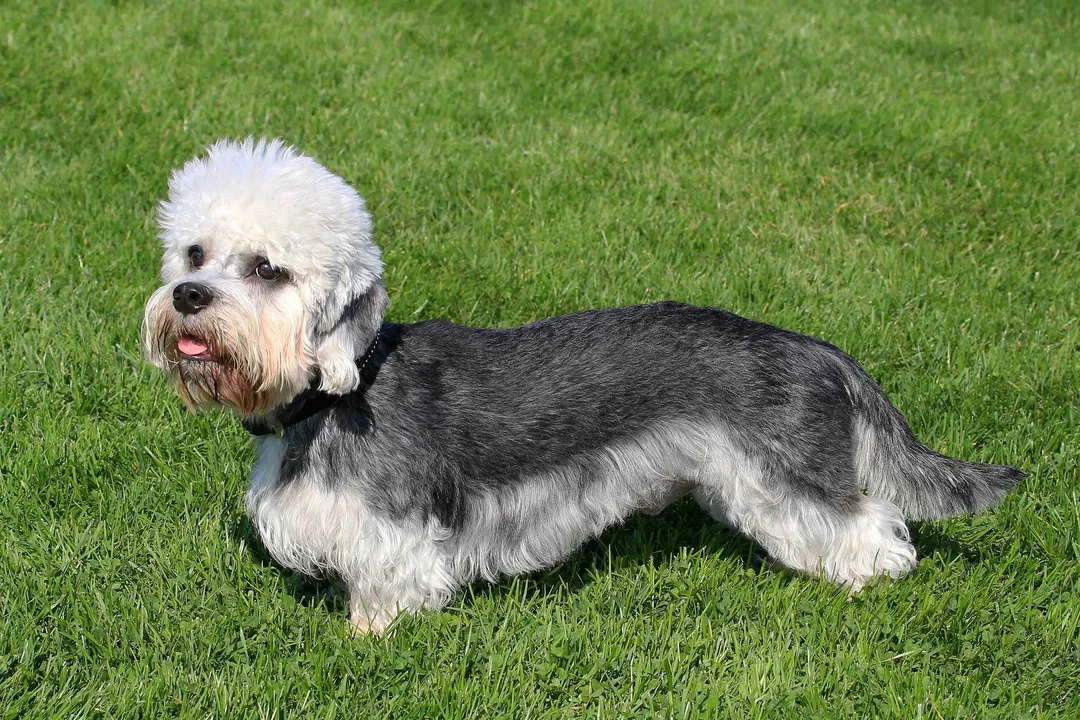
The Dandie Dinmont Terrier is a truly unique canine specimen, instantly recognizable by its elongated silhouette and that famous fluff of hair crowning its head. This small Scottish breed carries the heart of a determined hunter tucked within a compact, curved frame, presenting a fascinating contrast that appeals to many who seek a dog with character. Despite its gentle demeanor often earning it the nickname "gentleman of the terrier world," this breed possesses a lineage steeped in the rough-and-tumble work of the Anglo-Scottish border country.
# Literary Origin
The story of how this breed acquired its modern name is perhaps its most famous fact, setting it apart from nearly every other registered dog breed. The Dandie Dinmont Terrier is the only dog breed named after a fictional character. This honor comes from Sir Walter Scott’s novel, Guy Mannering, published in 1815. In the book, the character Dandie Dinmont owned six terriers named Pepper and Mustard, reflecting the two primary coat colors.
While the fictional character gave the breed its name, the actual originator of the modern type is believed to be farmer James Davidson. Davidson had the habit of naming his dogs according to their coat color—Mustard or Pepper—mirroring the fictional Dinmont. It is a common anecdote that Scott’s character was based on Davidson, though the novelist confirmed his rugged character was actually a composite of the hardy farmers he met in his travels, and Davidson only met Scott a year after the book was released.
The breed's roots stretch back further, to the 1700s, where these "rough native terriers" worked near the border between England and Scotland. They were highly valued by local farmers and, at one point, by Romani families, for their prowess in hunting vermin, specifically badgers and otters, requiring them to "go to ground" in underground lairs. To perform this essential farm work, the dogs needed to be perfectly sized: not too large to get stuck, nor too delicate to handle the quarry. Early dogs associated with the Allans of Holystone in Northumberland during the early 1700s are key to understanding their development. Some suggest ancestry includes traces of Skye and Scottish Terriers, while others speculate a mid-1800s introduction of Dachshund blood, though this is contested.
The breed's formal structure began to solidify in the mid-1800s. The Dandie Dinmont Terrier Club (DDTC) in the UK formed in 1875—making it one of the world’s oldest breed clubs—and established the breed standard shortly after in Melrose, Scotland, in 1876. The American Kennel Club recognized the breed in 1886. Historically, the Dandie has enjoyed varied patronage, from being popular with gypsies to the favor of royalty, including Queen Victoria and King Louis Philippe of France.
# Physical Form
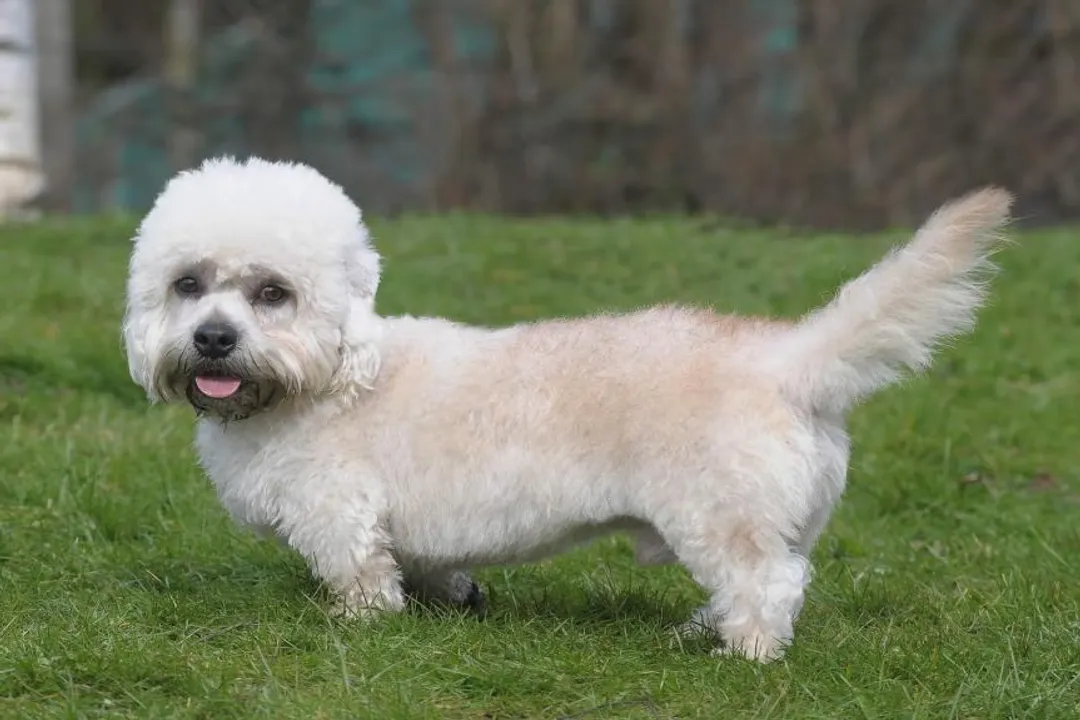
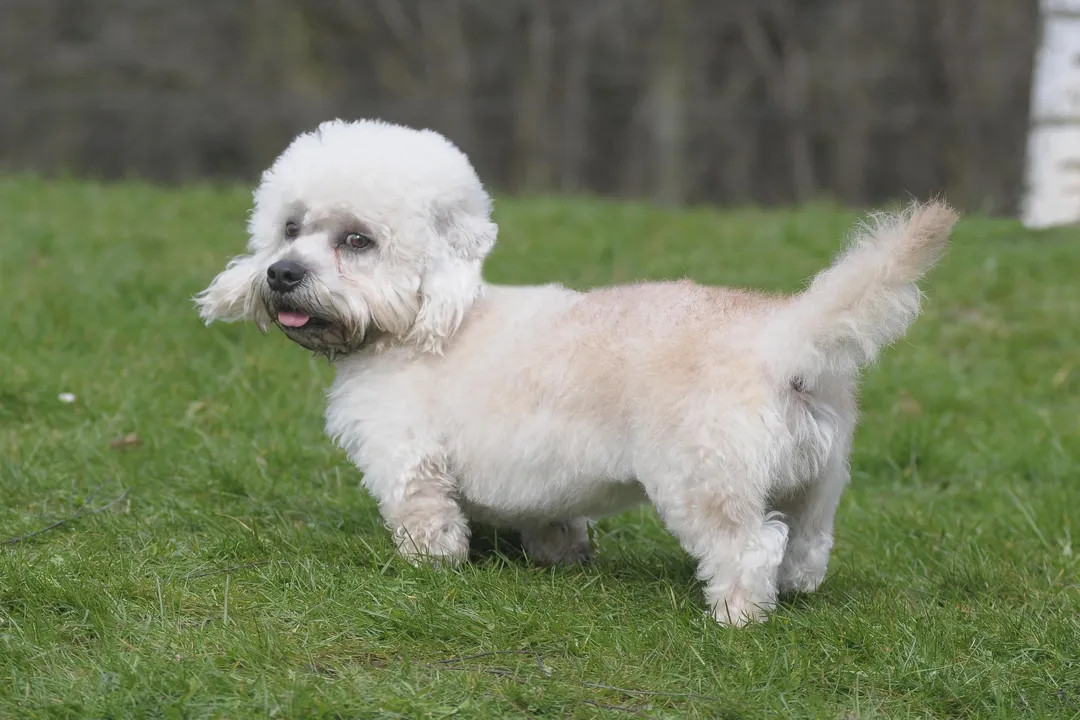
If you picture a typical terrier, you likely imagine a silhouette composed mostly of straight lines; the Dandie Dinmont completely subverts this expectation, being described as a "symphony of curves". This low-slung, sturdy dog stands only about 8 to 11 inches at the withers and typically weighs between 18 and 24 pounds.
The distinctive shape is defined by several key physical traits. They possess a long back, short, powerful legs, and, uniquely among many Scottish terriers, pendulous (floppy) ears. Their neck is notably muscular, a functional trait developed from confronting larger game. The topline exhibits a gentle curve, rising up slightly over the loin before dipping toward the tail, which itself curves like a scimitar. The front legs often turn slightly outward, aiding in their natural digging inclination.
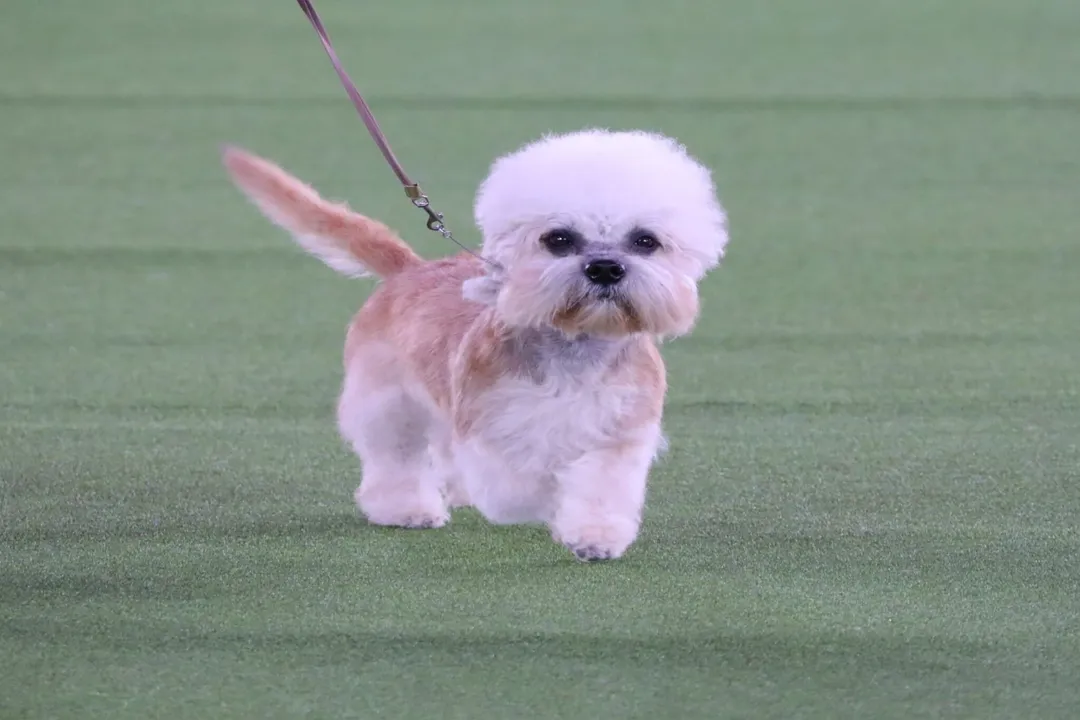
The head is often described as large and domed, topped by the breed’s signature feature: the silky topknot. Their eyes are large, dark, and often noted for looking bright and expressive, sometimes described as having the look of a nobleman in disguise.
Coat color is defined by two official terms, which derive directly from the names James Davidson used for his dogs: Pepper and Mustard.
- Pepper: This color ranges from a dark bluish-black to a light, silvery gray.
- Mustard: This varies from a reddish-brown to a pale fawn shade.
In both color variations, the topknot is typically white, and the legs tend to be a darker shade, blending softly into the lighter body color. The coat itself is a mix of hard and soft hair, described as rough-coated, with a depth that can reach up to two inches. While the main coloring is usually established by eight months, the Dandie continues to develop physically until around two years of age.
# Dual Nature
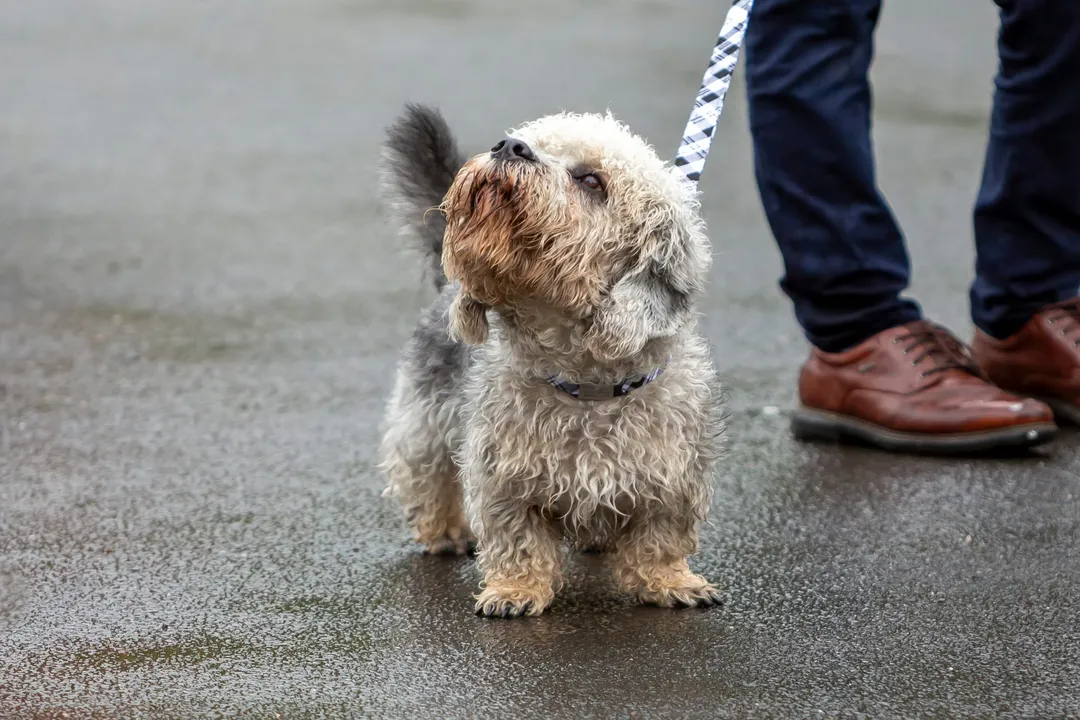
The Dandie Dinmont Terrier embodies a fascinating duality. On one hand, they are the working terrier, brave, tenacious, and ready to challenge animals far larger than themselves. Their hunting instinct remains strong; they are known for their ability to dig impressive holes and will dart off after anything that sparks their prey drive, meaning secure fencing or a leash is mandatory when outdoors. They also have an impressive, deep baritone bark, suggesting a much larger dog lurking within.
On the other hand, they are famously known as the "gentlemen" of the terrier group. They are generally calmer, more devoted, and less hyperactive than many of their terrier cousins. They are highly intelligent and affectionate companions that bond deeply with their families, often content simply to relax and cuddle on the couch after their exercise. They are described as being very funny and charming.
When it comes to social interactions, the Dandie usually fares well. They are often patient with children, particularly since they are close to the children’s level physically. While generally good with other dogs, caution is advised with same-sex pairings, and their strong prey drive means they cannot be trusted around smaller household pets like hamsters, rats, or rabbits unless raised with them from puppyhood. Training requires patience; while they are smart and food-motivated, their independent nature means they can be stubborn and may get bored with repetition. Owners find that positive reinforcement and making training sessions fun yields the best results.
# Daily Needs
Caring for a Dandie involves balancing their moderate exercise requirements with their intensive grooming needs and structural considerations.
# Exercise
These dogs are not built for long-distance endurance; their low-slung bodies make them unsuitable partners for jogging or long bike rides. They thrive with moderate activity, ideally consisting of about half an hour of brisk walking or active playtime, such as chasing a ball, twice a day. Because their instincts to chase remain potent, they must be kept on a leash or in a securely fenced area when outside.
Beyond physical activity, mental stimulation is important. Since they are highly intelligent and food-motivated, using puzzle toys or slow feeder bowls during mealtimes can provide welcome mental engagement while they eat.
# Structural Caution
The very feature that makes the Dandie distinctive—the long back and short legs—presents a specific maintenance challenge related to climbing. Because ascending and descending stairs can be difficult for them, this difficulty becomes especially pronounced as they age. Proactively installing pet ramps for access to furniture or beds is a sound consideration for prospective owners of this breed, helping to prevent potential strain on the spine [Self-Analysis/Tip].
# Coat Care
The Dandie Dinmont Terrier sheds very little, a trait that makes them appealing to some allergy sufferers, but this does not translate to low grooming effort. Their unique, two-part coat requires dedicated maintenance to keep the dog comfortable and the breed looking authentic.
The coat consists of the soft coat (found on the underbody, topknot, and legs) and the pencil coat (the stiffer, longer hair on the body).
To maintain the crisp, traditional texture characteristic of the breed, the pencil coat must be hand-stripped a few times a year. This time-consuming process involves pulling out loose hairs by hand or using a stripping tool to maintain the coat's crispness. Clipping, while easier, can alter the texture permanently, potentially changing the coat's color quality as well. For pet owners who do not show their dogs, professional clipping that follows the established pattern is considered sufficient, though it still requires professional attention several times a year.
In addition to stripping or clipping, daily maintenance is crucial:
- Brushing: Daily brushing is necessary to prevent mats, especially around joints where hair may knot.
- Eyes and Ears: Due to the topknot, the hair can fall into their large eyes, requiring regular checking for irritation and monitoring for signs of glaucoma. Ears should also be checked regularly for any signs of infection.
- Nails: Toenails require trimming about once a month.
When factoring in the commitment needed to maintain the classic look, owners must weigh the time required for weekly hand-stripping against the regular financial outlay for professional shaping or clipping every couple of months [Self-Analysis/Tip].
# Health Status
The Dandie Dinmont Terrier is generally considered a vigorous and healthy breed, often boasting a long lifespan, generally ranging from 11 to 15 years. A 2024 UK study showed an average life expectancy of 12.8 years for the breed. While they are healthier than some breeds, responsible ownership demands awareness of a few specific genetic predispositions.
The primary concern stems from their structure: intervertebral disc disease (IVDD) is a risk due to the elongated body. If discs slip, symptoms can range from weakness to full paralysis. Because obesity puts added strain on the spine and joints, maintaining a lean weight is particularly important for this breed.
Other documented health considerations include:
- Cancer: The breed has a slightly higher risk of cancer than the general dog population, with lymphoma being noted.
- Eye Issues: Glaucoma, which can lead to sudden blindness if not caught, is a condition owners must watch for.
- Portosystemic Shunts: One study indicated a higher risk for extra-hepatic congenital portosystemic shunts in Dandies compared to the general population.
- Cushing’s Disease: Some lines may be prone to this adrenal hormone disorder.
To mitigate risks, routine veterinary care—including annual checkups, parasite prevention, dental care, and monitoring vaccinations—is essential. Responsible breeders conduct genetic testing on breeding stock to help prevent inheritable issues.
# Rarity
Today, the Dandie Dinmont Terrier faces a conservation challenge. In the UK, The Kennel Club recognized its dwindling population by placing it on the list of Vulnerable Native Breeds in 2006. This designation is for breeds originating in the British Isles that register fewer than 300 puppies annually. In 2003, only 90 puppies were registered with the Kennel Club, compared to over 9,800 West Highland White Terriers that same year. While numbers have seen slight improvements since then, their status remains low compared to many other popular breeds, making them quite rare to encounter.
Related Questions
#Citations
Dandie Dinmont Terrier - Dog Breeds - American Kennel Club
The Dandie Dinmont Terrier Dog Breed - Hill's Pet Nutrition
What to Know About Dandie Dinmont Terriers - WebMD
Dandie Dinmont Terrier - Wikipedia
Dandie Dinmont Terriers - Dog Breeds - Embark
Dandie Breed History | DDTCA
Dandie Dinmont Terrier - Dog Breeds - PetMD
Dandie Dinmont Terrier - The Westminster Kennel Club