What specific pattern often seen along the spine distinguishes *Bothrops alternatus* from *B. jararaca*?
Answer
Markings that frequently form a cross shape, earning it the name *víbora de la cruz*
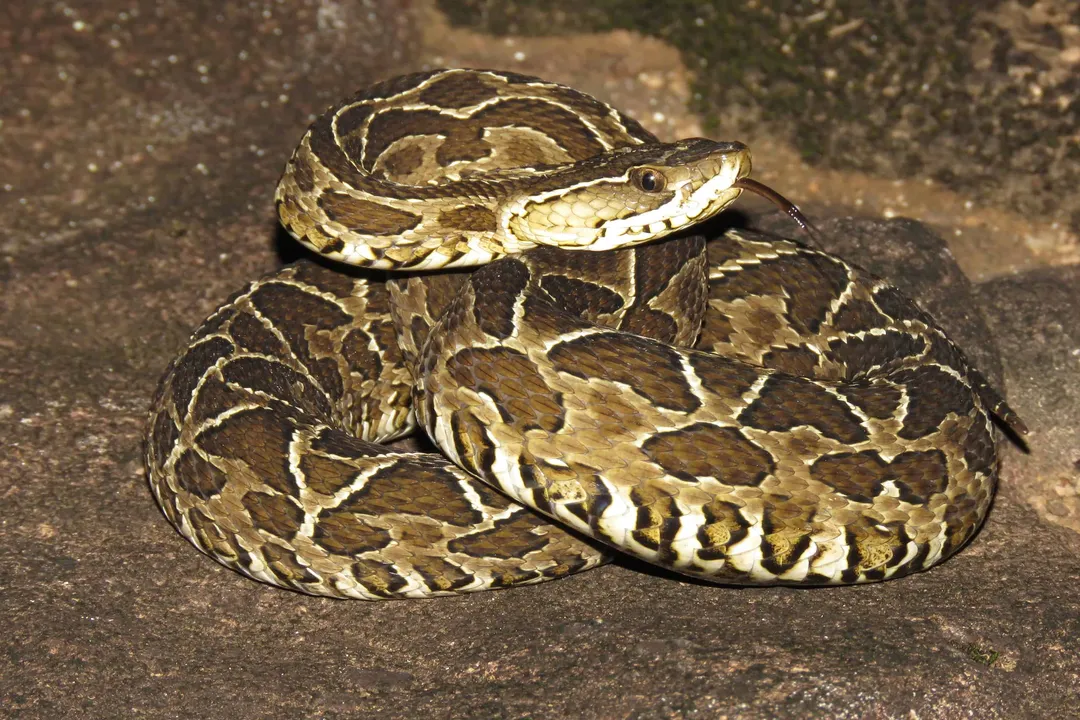
*Bothrops alternatus*, also known as Urutu or Yarará Grande, possesses a distinctive dorsal pattern that differentiates it morphologically from *B. jararaca*. While *B. jararaca* features variable trapezoidal markings, *B. alternatus* is noted for markings that frequently alternate along the spine in such a way that they form a recognizable cross shape. This characteristic appearance is so pronounced that it has historically led to this species being referred to as *víbora de la cruz* in certain contexts, contrasting with the more varied patterning of *B. jararaca*.
Related Questions
What peptide isolated by Sérgio Henrique Ferreira led to the development of ACE inhibitors for hypertension?Which behavior utilizes the white tail tip by juvenile *B. jararaca* to attract prey?What is the primary prey difference reflecting the ontogenetic diet shift in *B. jararaca*?What is the most abundant major component quantified in the venom composition of *B. jararaca*?What specific pattern often seen along the spine distinguishes *Bothrops alternatus* from *B. jararaca*?In the reproductive cycle of *B. jararaca*, when does parturition (live birth) typically occur?Which gender of *B. jararaca* exhibits greater potency regarding hemorrhagic and hyaluronidasic venom activities?What distinctive physical characteristic is typically found on the tail tip of juvenile *B. jararaca* specimens?What classification does the IUCN Red List currently assign to *Bothrops jararaca*?Which enzyme found in *B. jararaca* venom has been clinically applied as an antihemorrhagic drug?Where is *Bothrops jararaca* endemic, spanning southern Brazil into which two other countries?Which activity associated with venom potency is greater in male *B. jararaca* venom compared to female venom?