What are some facts about the Hyaenodon?
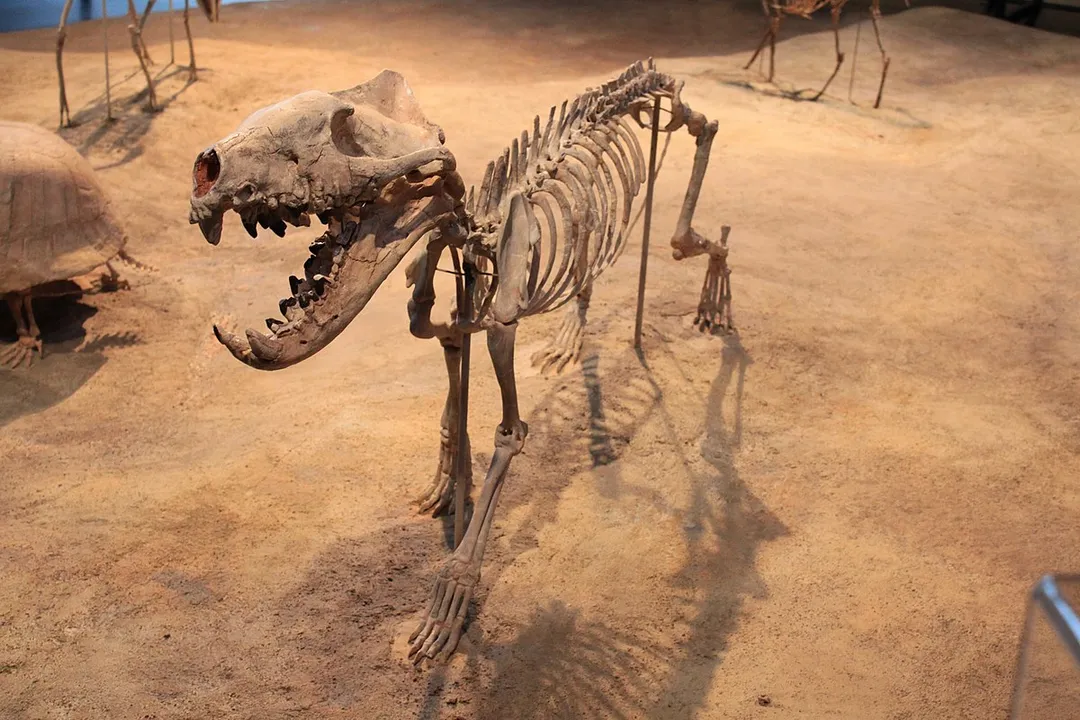
The creature known as Hyaenodon evokes images of savage, prehistoric hunting, often drawing immediate comparisons to the modern carnivores it shares a superficial resemblance with—the hyenas. However, these ancient beasts, which roamed across North America, Europe, and Asia millions of years ago, were not related to today's striped or spotted scavengers at all. [1][2][4][5] The name, meaning "hyena tooth," was assigned due to the sharp, shearing nature of its carnassial teeth, which functioned somewhat similarly to those found in modern hyenas, but this similarity is a classic case of convergent evolution. [1][2][5]
# Hyena Tooth
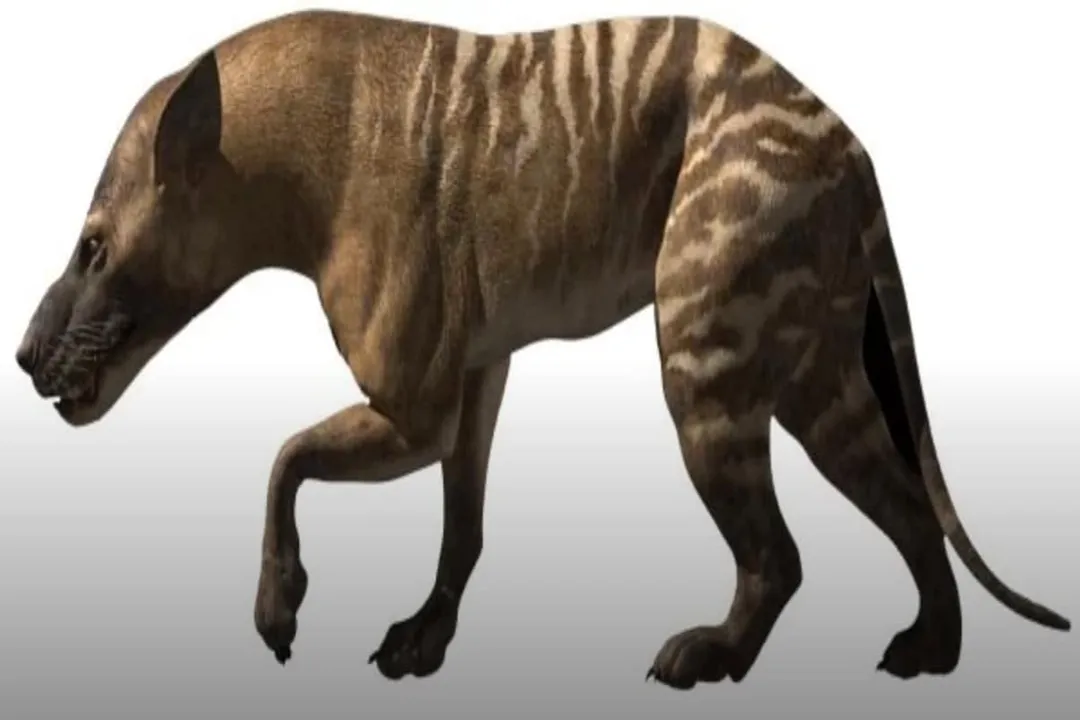
The nomenclature itself provides a starting point for understanding this animal’s identity. Hyaenodon literally translates to "hyena tooth". [1][2][4][5][6] This designation was given because its powerful jaws and specialized teeth were exceptionally well-suited for slicing flesh. [1][2][4] Despite this moniker, Hyaenodon belongs to the extinct order Creodonta, making it part of a lineage of early placental mammals that specialized in predation long before the modern carnivoran groups rose to prominence. [1][4] It is important to understand that if you were to encounter a Hyaenodon in the Paleogene badlands, it would not have shared any recent ancestry with the Hyaenidae family of today. [1][5]
The sheer size of some species further separates them from their namesakes. While modern hyenas vary in size, the larger Hyaenodon species were considerably more massive and robustly built. [1][4] This difference in build, coupled with their unique dental structure, highlights a significant evolutionary divergence from what we recognize as modern carnivores. [1] A practical way to visualize the difference in killing mechanisms is to consider the bite: modern hyenas often rely on crushing bone with their massive molars—a feature Hyaenodon lacked—instead favoring a strong shearing bite powered by its incredibly muscular neck and jaw, designed for rapid, deep tissue removal. [1]
# Geologic Span
Hyaenodon was a successful predator that persisted through a significant portion of the Cenozoic Era, specifically during the Eocene and Oligocene epochs. [1][4] Its reign stretched from roughly 34 million years ago (MYA) until about 23 MYA. [1][4] This longevity—spanning nearly 11 million years—indicates remarkable adaptability across changing global environments. [4] It was a key player in the terrestrial ecosystems of the Paleogene period. [9]
The fossil record shows that Hyaenodon species were widespread geographically. [1][4][5] Fossils have been recovered from North America, across Europe, and into Asia. [1][4][5] This vast distribution suggests that the environmental conditions supporting these large predators were prevalent across multiple continents during this time frame. The survival across such an enormous time span suggests that while some smaller relatives might have come and gone, the core predatory strategy embodied by the Hyaenodon genus was highly effective for an extended period.
# Size and Species
One of the most fascinating aspects of Hyaenodon is the extreme variation in size seen across the genus. It is not a single animal, but rather a group of related species that occupied different ecological niches depending on when and where they lived. [1]
For instance, the North American species, such as Hyaenodon horridus, is often the one people picture when the name is mentioned. [1][4] H. horridus was a substantial animal, measuring around 1.3 meters (about 4.3 feet) in length, not including the tail. [1][4] Its skull alone could measure about 40 centimeters (16 inches) long. [1] Estimates suggest that the larger individuals of this species could weigh well over 150 kilograms (330 pounds). [1][4] Imagine an animal roughly the size of a modern leopard or a very large wolf, but built with the heavy bone structure often associated with bears. [4]
Contrast this with other members of the genus. Some Hyaenodon species were significantly smaller, sometimes comparable in size to modern badgers or large weasels. [1] This spectrum of sizes within a single genus is a prime example of adaptive radiation, where a successful body plan is modified to exploit different food sources across various habitats. [1] If you were studying the Oligocene fauna of Eurasia versus North America, you would encounter different Hyaenodon species filling niches from medium-sized ambush hunters to true apex predators, demonstrating how successful this general morphology was when scaled appropriately for the local environment. [4] The diversity suggests that the ecological pressure favoring a powerful, bone-shearing carnivore was present across the globe for millennia, just tailored to local prey availability.
# Predatory Characteristics
As formidable carnivores, the anatomy of Hyaenodon reflects a life dedicated to hunting large prey. [1][5] The skull was a particularly distinctive feature: it was quite large relative to the rest of the body, housing immense musculature to power the jaw. [1]
The defining characteristic remains the dentition. The teeth were sharp and specialized for cutting meat, suggesting a reliance on rapidly dispatching prey and processing carcasses efficiently. [2][4] While they possessed strong jaws, their feeding style was likely more focused on rapid, deep lacerations rather than the bone-crushing that defines modern hyenas. [1] The structure of the jaw allowed for a very strong closing force concentrated in the shear provided by the specialized carnassials. [1]
It is easy to view Hyaenodon as a lone hunter, given its imposing stature, but speculation exists regarding social behavior. Some analyses suggest that the killing method, perhaps targeting the head or neck—a behavior that might have earned it the nickname "headhunter" in some modern descriptions [9]—could have been more effective, or even necessary, when tackling prey larger than itself, which might imply some level of cooperative hunting, although concrete fossil evidence for pack behavior remains elusive. [4]

# Ecology and Extinction
In the environments they inhabited, especially during the Oligocene, large Hyaenodon species were likely among the dominant terrestrial predators. [1] They shared their world with other large mammals, including early relatives of rhinos, horses, and camels, providing ample targets for a predator of their stature. [1] The presence of such an efficient, specialized carnivore indicates a healthy, complex food web capable of supporting top predators for millions of years. [4]
The eventual decline and extinction of the genus around 23 MYA is tied to broader environmental shifts at the Eocene-Oligocene transition. [1][4] As global climates cooled and habitats changed—for example, the spread of grasslands and the drying of certain regions—the available prey base likely changed as well. [1] The specialized morphology that made Hyaenodon so successful in warmer, more heavily forested or varied Oligocene landscapes may have become a liability when faced with competitors possessing more generalized feeding adaptations, such as the ancestors of modern bears and canids that began to diversify in the later Cenozoic. [4] While they disappeared, their legacy is etched in the fossil record as a prime example of the diverse and sometimes brutal evolutionary paths taken by early mammalian carnivores. [1] The success of the Hyaenodontidae family overall, even after Hyaenodon itself vanished, speaks to the effectiveness of their ancestral predatory blueprint across the globe for a vast span of time. [4]
#Videos
Hyaenodon: Most successful mammalian carnivore ever - YouTube
Related Questions
#Citations
Hyaenodon - Wikipedia
Hyaenodon leptorhynchus - A-Z Animals
Hyaenodon: Extinct Mammalian Carnivore with Unique Teeth
Hyaenodon - Prehistoric Wildlife
Hyaenodont Facts for Kids
Hyaenodon | Anomaly Research Centre - Primeval Wiki - Fandom
Hyaenodon: Most successful mammalian carnivore ever - YouTube
Hyaenodon - Kids | Britannica Kids | Homework Help
Hyaenodon, the headhunter of the Paleogene badlands - Reddit