What are some interesting facts about the Texas Spiny Lizard?
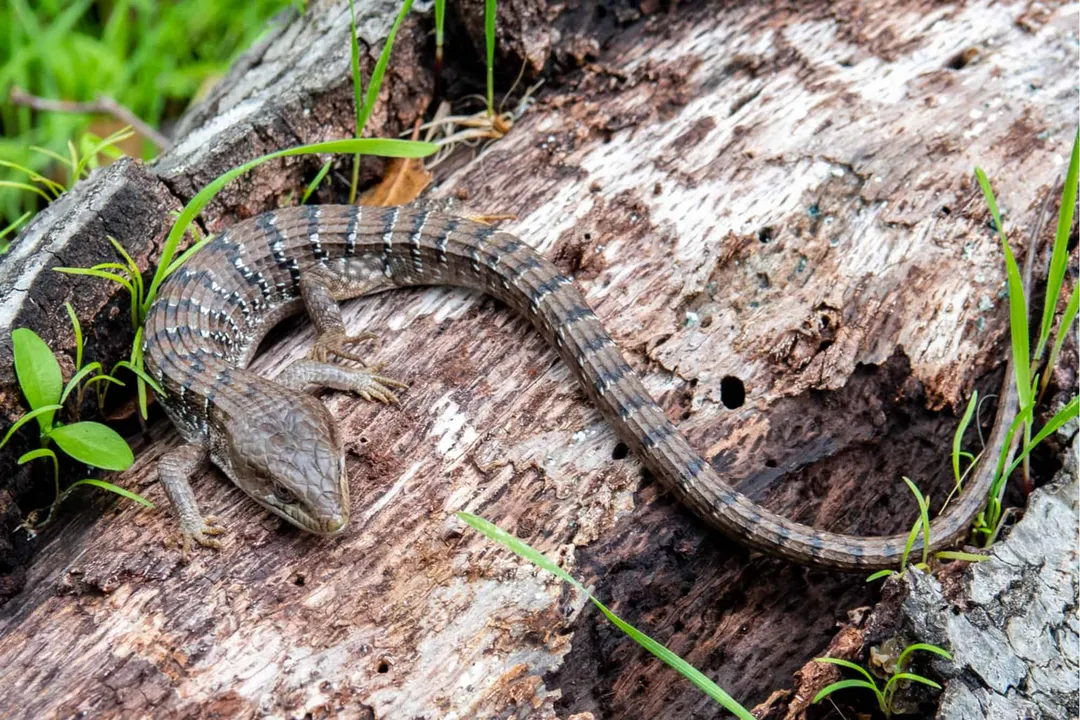
The Texas spiny lizard, scientifically known as Sceloporus olivaceus, is a familiar reptile throughout its native range, often spotted climbing trees or sunning itself on man-made structures. [4] These lizards call the south-central United States home, specifically inhabiting areas across Texas, Arizona, and Oklahoma, extending their reach into northeastern Mexico in states like Tamaulipas, Coahuila, and Nuevo León. [3][7] Their presence is a good sign for local ecosystems, as they are common, active participants in backyard biodiversity. [2]
# Color Camouflage
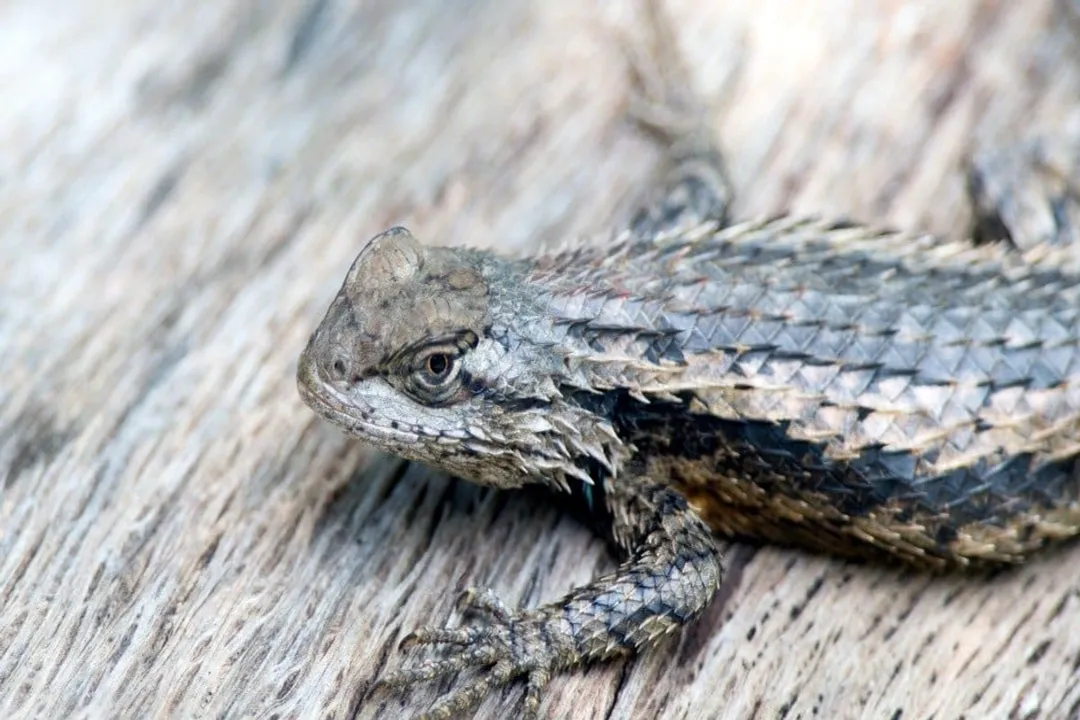
One of the most striking features of the Texas spiny lizard is its excellent camouflage, which is crucial for survival against a variety of predators. [3][7] Adults typically display a base color of gray, overlaid with black, white, or reddish-brown blotches or spots along the back. [1][4][7] This variegated pattern is not random; it functions as effective crypsis, perfectly mimicking the textures and shadows found on the bark of the trees they frequent. [3] For instance, in yards dominated by live oaks or mesquite, their coloration allows them to nearly vanish against the rough wood surfaces. [6] This superb blending ability extends to their preferred basking spots; they are so adept at matching their background that a homeowner might see them only when they move suddenly or when a shadow shifts, perhaps even startling a nearby bird that didn't notice the lizard resting on a stump. Interestingly, their preference for basking on wooden fences and utility poles suggests their evolutionary color palette has been naturally selected to suit not only forest environments but also the structures humans introduce to their landscape. [4]
# Spiny Details
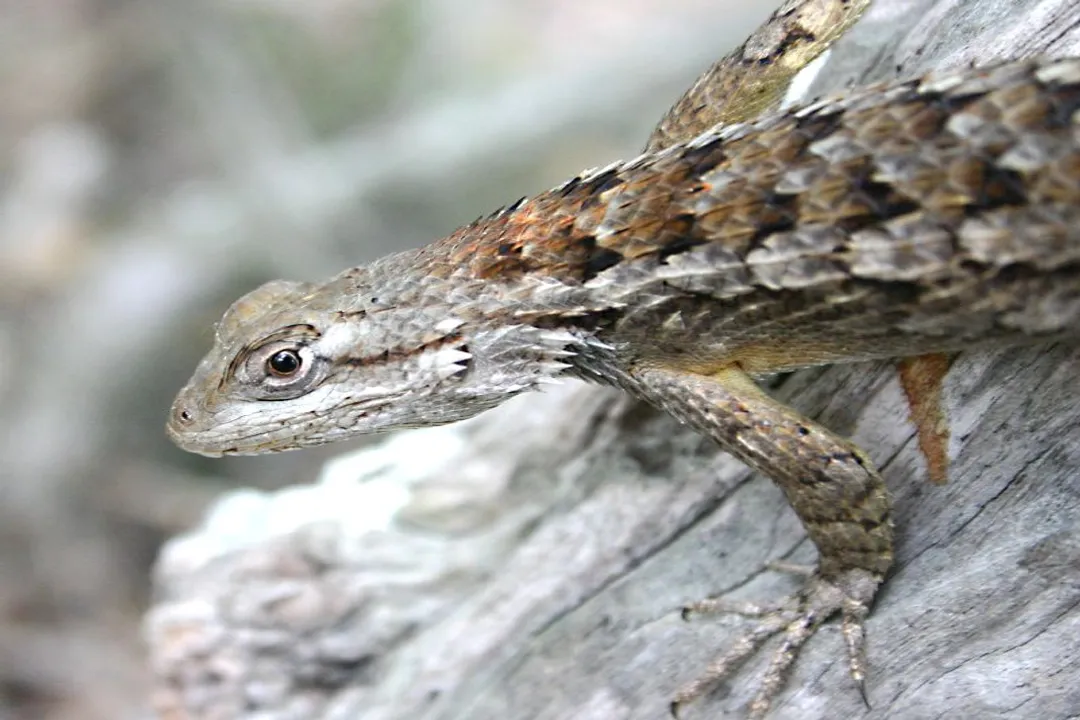
Physically, the Texas spiny lizard is characterized by its texture. Its scales are distinctly spiny, giving the species its common name. [1][4] They possess long toes tipped with sharp claws, anatomical tools essential for their arboreal lifestyle, allowing them to grip and ascend vertical surfaces like bark and fence posts with agility. [2][3] While juveniles measure quite small at hatching—around 22 to 28 mm in snout-vent length (SVL)—adults can attain a total length ranging from 190 to 280 mm, or about 7.5 to 11 inches. [3][7] A significant portion of this total length is dedicated to the tail, which is thin and very long. [6]
The sexes exhibit sexual dimorphism, meaning they look different from one another. [3] While males and females share the cryptic dorsal patterns, males boast small, noticeable bright blue patches on each side of their bellies that females lack. [1][2][4] Further subtle differences exist: males possess two enlarged post-anal scales absent in females, and while hatchlings are the same SVL, adult females tend to achieve a larger maximum SVL than males. [3] It is worth noting that, unlike some other lizards, the Texas spiny lizard's skin is not just rough, but some observers have described it as "shaggy," suggesting a complex textural quality beyond simple spines.
# Arboreal Routines
Texas spiny lizards are diurnal, meaning they are active during the day, making the most of the sunlight. [1][4][7] They are primarily arboreal and scansorial, spending the majority of their active hours climbing and perching in trees, with mesquite trees (Prosopis) being a notable favorite. [2][3][4] When the day warms up, they are often seen basking to regulate their ectothermic bodies—a common sight on branches, rocks, or wooden fences. [2][3][7] Despite their agility, they are described as fairly sedentary regarding migration, generally maintaining a defined home range of about 50 to 500 square meters, though older or less fortunate individuals might roam slightly further to secure resources. [3] They are generally solitary creatures, only seeking out others for mating purposes. [4]
As temperatures drop, the lizard's activity slows down. In cooler parts of their range, they will enter hibernation or brumation for several weeks during the winter. [2][3][7] They find shelter by burrowing underground or hiding deep within leaf litter. [2][3] This reliance on leaf litter for winter cover highlights an interesting ecological loop: that ground cover serves a dual purpose. It protects them when dormant and provides a fertile hunting ground for insects when they emerge hungry in the spring, making them welcome guests for gardeners looking for natural pest control. [2][4]
# Territorial Displays
Though generally shy around potential threats like humans or large animals—their first instinct being to flee rather than fight [2][7]—male Texas spiny lizards become quite social and competitive during the breeding season. [3] They are territorial, and when one male encounters another encroaching on his space or near a potential mate, visual signaling becomes key. [3][7]
Their most unique form of dominance assertion is the "push-up" contest. [1][2][6] This ritual involves the males rapidly bobbing the front part of their bodies up and down in a push-up motion. [3][7] The display continues until one lizard concedes defeat and runs away, often saving both from serious injury. [1][6] Beyond push-ups, males also use other visual cues to communicate fitness, such as extending their dewlap (the throat fan) and flattening their bodies dorsoventrally to prominently display those tell-tale blue belly patches to rivals and females alike. [3] These interactions are backed up by chemical communication, as they leave scent marks using pheromones secreted near their hindlimbs or cloaca, which other lizards detect with their vomeronasal organs. [3]
# Life Cycle
The reproductive timeline for Sceloporus olivaceus is tied to the warmer months, with breeding occurring throughout the spring and summer, typically from April through June. [2][3][4] The mating system is described as polygynandrous or promiscuous, meaning both males and females may have multiple partners within a single season. [3] Females invest energy into producing multiple clutches of eggs; they can lay up to four clutches annually, provided nutrient availability is sufficient. [1][2][4][7] Each clutch generally contains between 4 and 20 eggs, with an average closer to 11. [2][3][4]
Once fertilized, the female incubates the eggs internally for a long period, ranging from 90 to 100 days. [2][3] After this gestation, the female deposits her eggs in a shallow nest she digs in dry, sun-exposed soil on the ground, backing into the hole to lay them before covering the nest with dirt. Critically, there is no parental investment beyond the laying of the eggs; the female does not return to guard or tend to the nest. [3][4] The eggs then undergo incubation for approximately 45 to 83 days. [2][6] Upon hatching, the young are precocial, meaning they are fully developed, mobile, and completely independent from the moment they emerge, capable of fending for themselves within days. [1][2][4] They reach sexual maturity relatively slowly, typically taking one to two years. [2][3] In the wild, their lifespan is generally estimated between two and five years, though they can occasionally reach up to seven years in captivity. [2][4]
# Defense Mechanisms
Survival for a small, diurnal lizard in an environment shared with numerous predators requires specialized defenses, and the Texas spiny lizard employs several strategies. [3] The primary line of defense is its excellent cryptic coloration, which makes it difficult to spot in the first place. [3][7] When camouflage fails and a threat is perceived, the lizard is incredibly vigilant and capable of rapid movement to reach cover—be it a tree trunk or the protective tangle of leaf litter below. [3]
If a predator manages to grab hold, the lizard utilizes autotomy, the ability to selectively detach its tail. [2][3][6] The wriggling, severed tail acts as a potent distraction, diverting the predator’s attention just long enough for the lizard to escape to safety. [2][6] This is a temporary sacrifice, as the Texas spiny lizard can later regrow a new tail. [2][6] While they can detach their tail for defense, it’s important to know they are not venomous and do not pose a biting threat to people appreciating their presence in the garden. [2]
# Ecological Niche
As carnivores, Texas spiny lizards play an important role in population control within their habitat. [4] Their diet consists primarily of small invertebrates, making them specialized insectivores. [1][3] They actively hunt or employ an ambush predator strategy, consuming beetles, wasps, grasshoppers, spiders, and crickets. [2][4] They are rarely found far from vertical structures when hunting, often waiting high up in shrubs or trees for suitable prey to pass by underneath. [3] By consuming vast numbers of these small arthropods, they contribute positively to the balance of the local insect community. [3][6]
This beneficial role in pest control contrasts with the dangers they face. Texas spiny lizards serve as prey for a wide array of animals, including snakes like Coachwhips and Bullsnakes, raptors such as hawks and roadrunners, weasels, and even larger lizard species. [2][3] Vulnerability is highest when they are young hatchlings or small adults. [3] Furthermore, these lizards are not immune to microscopic threats; they can serve as hosts for ectoparasites like mites and are known carriers of saurian malaria, a protozoan parasite. [3]
# Status and Future
Globally, the Texas spiny lizard is classified by the IUCN Red List as a species of Least Concern. [2][3][4] This designation reflects a generally healthy and stable population across its broad native range. [2][4] However, stability is not guaranteed, especially in the face of increasing human development. [3] A significant concern noted by herpetologists is habitat fragmentation, particularly the expansion of urbanization across central Texas. [3] As cities and suburbs grow, natural scrubland and forest patches become isolated from one another by roads and development. [3] This isolation can severely restrict gene flow between local lizard populations, increasing the risk of inbreeding depression and making smaller, isolated groups more susceptible to local extinction events. [3] Protecting these lizards, therefore, often aligns with broader conservation goals, such as establishing wildlife corridors that connect fragmented natural areas, which would help maintain genetic diversity across the species' territory. [3] While they are sometimes seen in the pet trade, they are uncommon as pets, meaning their primary value remains in their native function as insect controllers and native fauna of the south-central United States. [2][3][4]
#Videos
Texas spiny lizards: The best close-up video you will ever see
Related Questions
#Citations
Texas Spiny Lizard - Facts, Diet, Habitat & Pictures on Animalia.bio
Sceloporus olivaceus (Texas Spiny Lizard) - Animal Diversity Web
Texas Spiny Lizard - Sceloporus olivaceous - A-Z Animals
Texas spiny lizards: The best close-up video you will ever see
Texas spiny lizard - Wikipedia
Texas spiny lizards: The best close-up video you will ever see
Texas spiny lizard Facts for Kids