What are some interesting facts about Goonch Catfish?
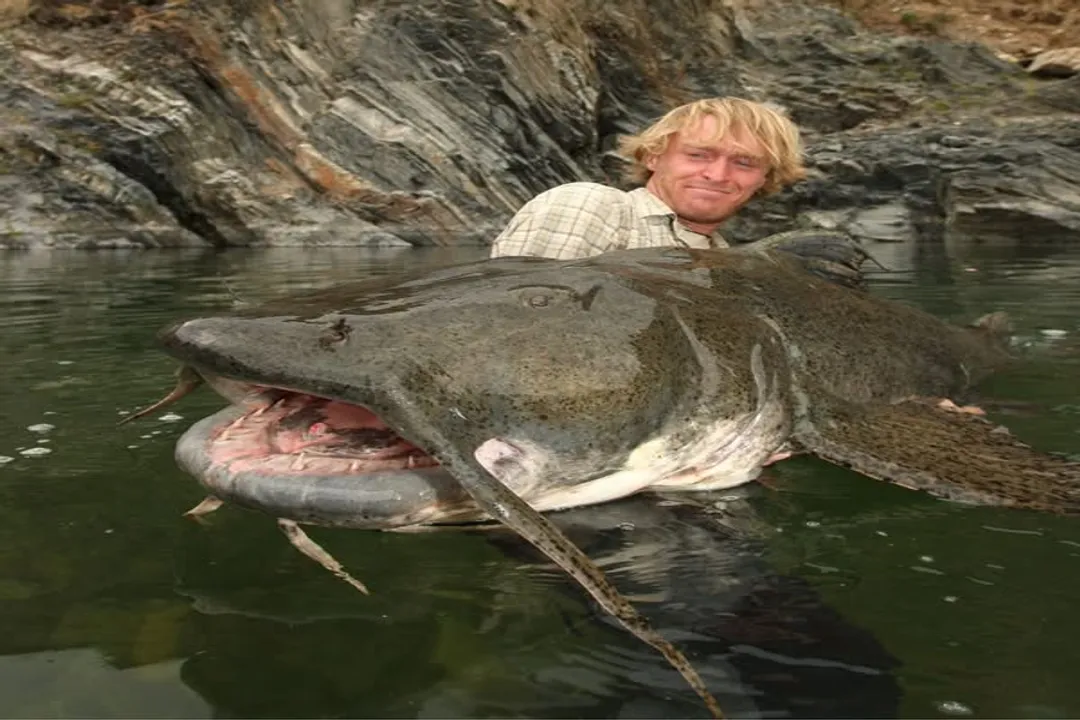
The Goonch Catfish, often spoken of in hushed tones by anglers and ichthyologists alike, is one of the true leviathans lurking in the freshwater systems of Southern Asia. It commands attention not just for its imposing size—which can easily rival the length of a grown person—but also for its formidable appearance and the mystique that surrounds it in local folklore. [1][6][8] This species is not merely a large fish; it represents the pinnacle of predatory specialization within its riverine environment, warranting a closer look at the facts that define this giant. [2]
# Species Identity
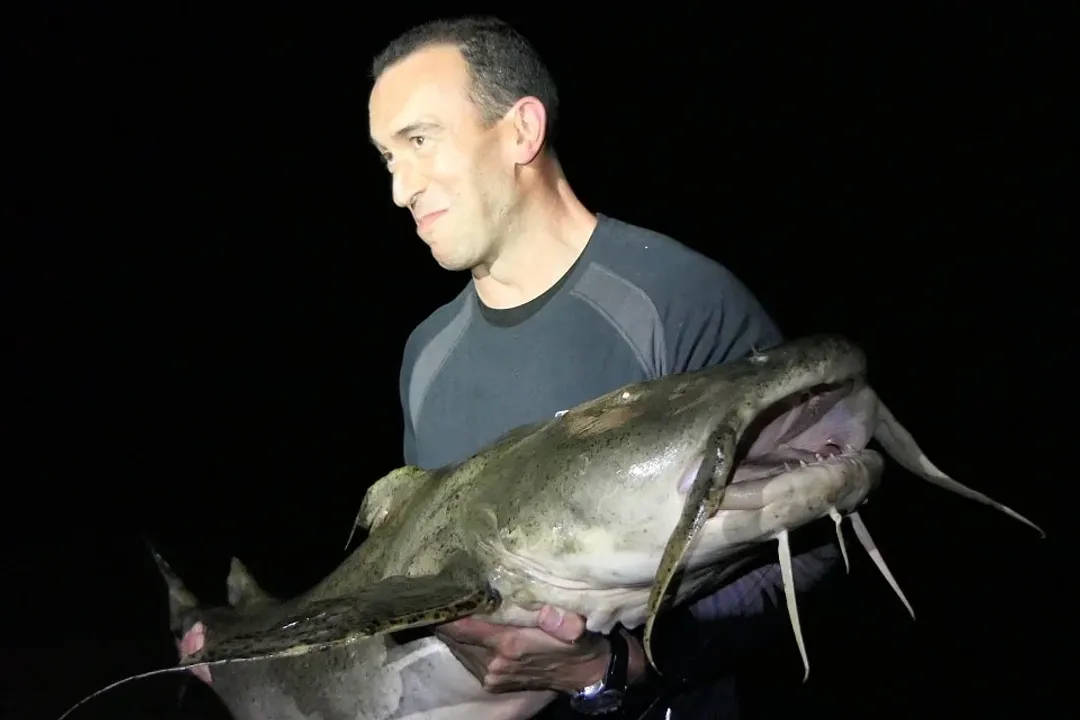
The scientific classification of this formidable creature is a key starting point for understanding its place in the natural world. The species most commonly referred to as the Goonch is formally known as Bagarius yarrelli. [3][5] However, like many widely distributed and impressive species, it carries a host of common monikers that reflect its reputation or appearance across different regions. Among its most striking alternative names are the Giant Devil Catfish or simply the Devil Catfish. [5][7] This evocative naming suggests a history of awe, perhaps even fear, associated with encounters with large specimens. [6] Belonging to the family Sisoridae, which includes several species of catfish known for their flattened undersides, the Goonch shares characteristics with other bottom-dwelling, often powerfully built fish. [3] It is important to distinguish this giant from related species, as common names can sometimes be applied loosely across vast geographical areas, but B. yarrelli stands out for its sheer potential scale. [1]
# Immense Size
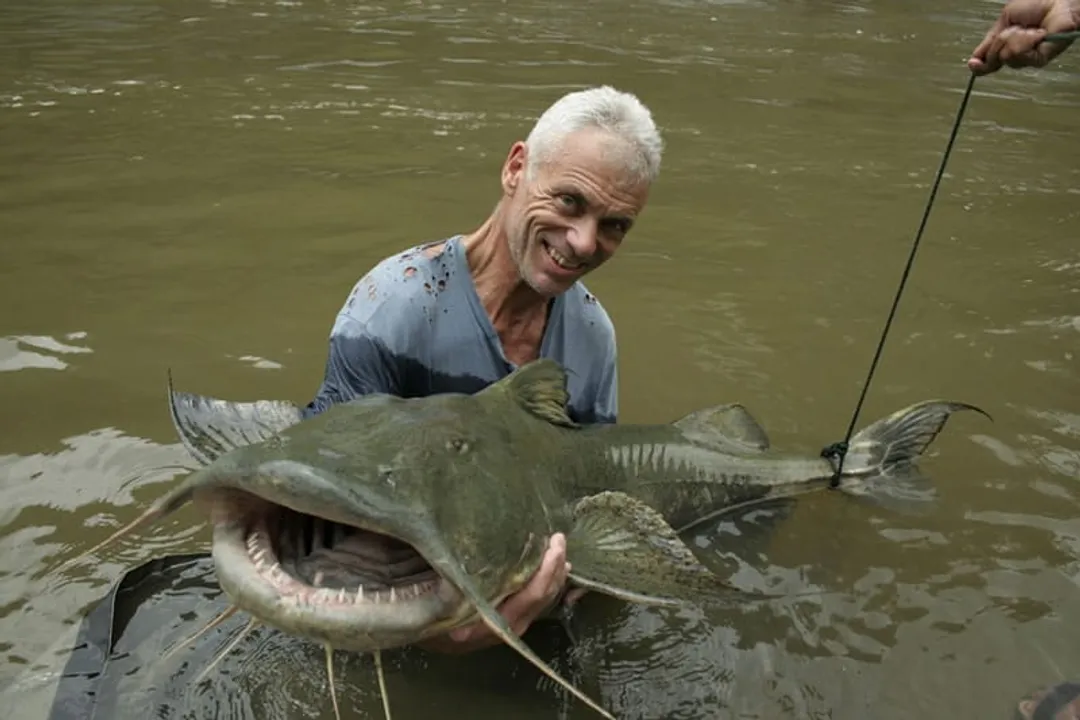
The defining characteristic of the Goonch is undeniably its colossal potential size. Reports frequently suggest that this catfish can reach impressive lengths, with some accounts placing the maximum size near 6.6 feet (or 2 meters). [8] For context, a fish reaching this size in a river system is a true apex predator, capable of influencing the entire structure of the fish community below it. [2] While the Bagarius genus contains several large species, B. yarrelli is highlighted for its capacity to grow truly enormous. [1] A practical way to visualize this is to consider that a specimen approaching 6.5 feet is longer than the wingspan of a standard adult Bald Eagle, a creature we typically associate with great aerial power, contrasting sharply with this powerful, submerged giant. [7][8] Given the often murky and remote nature of its habitat, there is a strong possibility that even larger, unverified specimens might exist in the deepest reaches of its range. [2] The sheer biomass represented by a full-grown Goonch places it among the most massive freshwater inhabitants globally, a fact that has undoubtedly contributed to its legendary status. [6]
# Asian Rivers
The native range of the Goonch Catfish is concentrated across Southern Asia. [8] Specifically, Bagarius yarrelli is distributed across the major river basins of this region. [3] This area encompasses diverse environments, from fast-flowing streams in foothills to the broad, slower stretches of major lowland rivers. [1] The distribution covers countries such as India, Bangladesh, Nepal, and parts of Southeast Asia. [3] Rivers like the Ganges, Brahmaputra, and Mekong systems are often cited as potential homes for these giants. [1]
Thinking about the geography in practical terms for a local observer or researcher, the environment dictates much about the fish's life. In regions where the monsoon season brings massive, turbulent flood events, these catfish have adapted to maintain position and hunt effectively in powerful currents, unlike many smaller, more delicate species that seek sheltered backwaters. [2] This adaptation to high-energy flow regimes is a direct function of their massive, muscular bodies, which are designed to navigate the shifting power of Asian hydrology. [3]
# Physical Traits
When examining a Goonch Catfish, one immediately notices features adapted for a life spent near the bottom and for capturing large prey. [1] They possess a distinctive, somewhat flattened body profile, characteristic of the Sisoridae family, which aids in maintaining position against strong river currents. [3] Their coloration is typically an olive or grey-brown, often mottled or spotted, providing excellent camouflage against rocky or muddy substrates. [2]
A particularly interesting, though exceedingly rare, variant that captivates the aquarium and angling communities is the Golden Goonch Catfish. [4] This is not a separate species but rather an extremely rare color morph of the infamous B. yarrelli. [4] Imagine the already imposing silhouette of the standard Goonch, but instead of its typical dark camouflage, it exhibits a vibrant golden or yellowish hue. [4] Such genetic anomalies, while stunning, typically present significant survival challenges in the wild due to their lack of effective camouflage against predators or when ambushing prey, making verified wild sightings of the golden variant exceptionally uncommon. [4] The standard fish, however, relies on its subtle patterning to blend in perfectly, making it a ghost of the deep until it moves to strike. [1]

# Predatory Life
The Goonch is an obligate carnivore, meaning its diet consists entirely of other animals. [2] Given its immense size, its prey spectrum is broad. They are known to consume smaller fish that inhabit the same waters, but their powerful jaws and sheer bulk allow them to tackle substantial meals. [1][2] While the sources do not detail specific recorded prey, one can infer that they prey upon whatever sizable fish move within striking distance near the riverbed. The association with the name "Devil Catfish" or similar monikers often stems from anglers who have battled them or from local stories of their predatory prowess, even sometimes including tales of them preying on small terrestrial animals that venture too close to the water's edge. [5][7]
This species gained international recognition, appearing on the television show River Monsters, which focused on uncovering the identities of legendary fish specimens worldwide. [6] Such media attention, while raising awareness, also highlights the ecological role of the Goonch as a dominant, top-tier predator within its aquatic network. [6] Understanding its predatory nature suggests that localized depletion of its preferred prey could have cascading effects on the lower trophic levels of the river system. For instance, if one were to track the health of a Goonch population, the diversity and abundance of medium-sized, bottom-dwelling fish species in that same river segment would serve as a crucial, immediate indicator of ecosystem balance. [1][2] This apex position means that monitoring the Goonch offers a valuable, if challenging, barometer for the overall health of its native river systems across Asia. [3]
# Conservation Awareness
The fame attached to the Goonch, particularly following its televised appearances, brings with it a corresponding responsibility for conservation awareness. [6] When a species becomes an icon—especially one that can be targeted by sport fishing due to its size—it becomes susceptible to overfishing if not properly managed. [1] The potential for growth up to 6.6 feet means that every large adult represents decades of slow, steady accumulation of mass and reproductive viability. [8] Removing these large, established breeders can disproportionately impact the gene pool and the species' ability to recover from other environmental stresses like pollution or habitat degradation. [3]
For those interested in observing or photographing these magnificent fish, whether in the wild or in specialized collections, the focus should always remain on ethical engagement. While specific regulations vary widely across the nations where they reside, a general principle for interacting with such significant, slow-growing apex predators is crucial: prioritize catch-and-release practices where legal and feasible, ensuring the specimen is revived quickly and returned to the deep water from which it was taken. [6] Furthermore, supporting local conservation efforts that focus on maintaining the natural flow and purity of the major Asian river systems is perhaps the most direct action one can take to secure the future of the Giant Devil Catfish, ensuring that its massive shadow continues to glide across the riverbeds for generations to come. [1][2]
#Videos
The Goonch River Monster Feeds on Burnt Human Remains!
Related Questions
#Citations
The GOONCH – A GREAT Fish like no other - Deepersonar
Goonch Catfish (Giant Catfish) - Facts, Habitat, Diet, Pictures
Bagarius yarrelli - Wikipedia
The Golden Goonch Catfish is an extremely rare color ... - Facebook
Goonch Catfish - River Monsters Wiki - Fandom
Giant devil catfish Facts for Kids
The Goonch Catfish (Southern Asia) can get up to 6.6 feet long and ...
The Goonch River Monster Feeds on Burnt Human Remains!