Where are nymphs and larvae of D. andersoni most likely found compared to adults?
Answer
Closer to the ground among leaf litter and low-growing plants
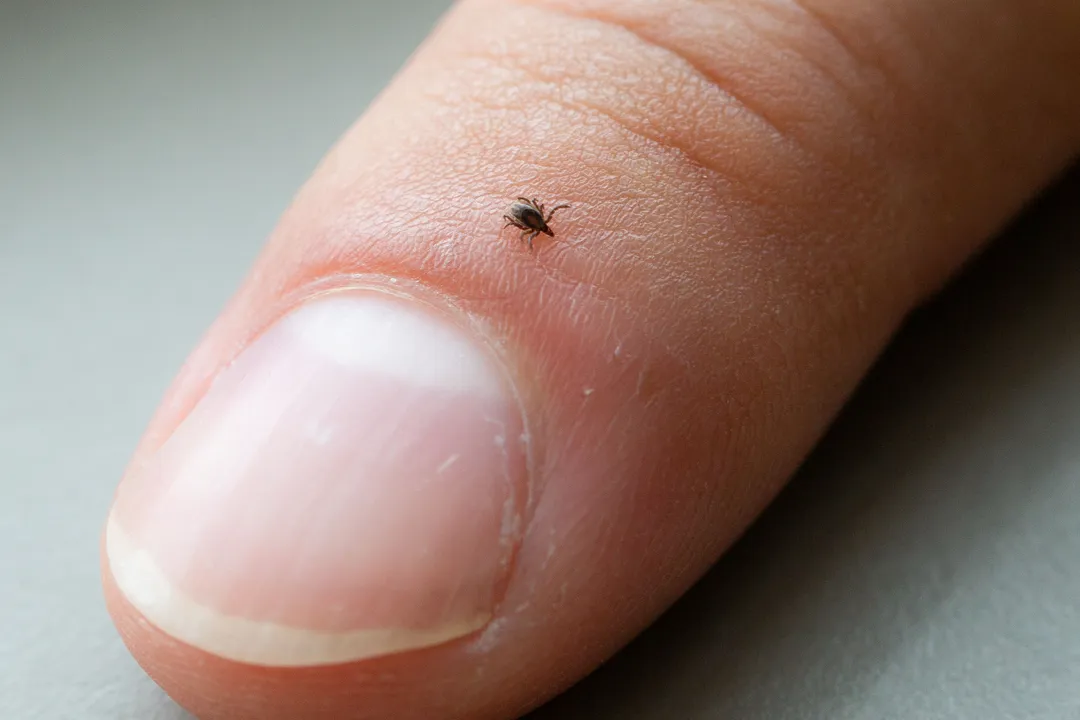
The location preference for *Dermacentor andersoni* changes significantly based on its life stage due to size differences. Adult ticks are known to prefer higher vegetation, often questing from grasses or low shrubs to reach larger hosts. Conversely, the smaller nymphs and larvae are situated much closer to the ground surface. Their microhabitat preference centers around areas offering insulation and moisture retention, specifically within the leaf litter and dense, low-growing plant cover near the soil.
Related Questions
What is the scientific name for the Rocky Mountain Wood Tick transmitting Tick Paralysis?Which geographic range primarily hosts the distribution of Dermacentor andersoni?What habitat contrasts with the preferred environment of the Rocky Mountain Wood Tick?What elevation range is most commonly associated with the Rocky Mountain Wood Tick?What delayed allergic reaction is linked to Dermacentor andersoni bites in the Rocky Mountain region?What posture do wood ticks adopt while waiting for a host on vegetation?Which tick transmits RMSF in Eastern and Midwestern states, sometimes called a wood tick?Where are nymphs and larvae of D. andersoni most likely found compared to adults?Where does the most intense exposure risk often occur for wood ticks in known harbor areas?What characteristic increases the unnoticed transmission risk from nymphs causing RMSF?