Wood Duck Locations
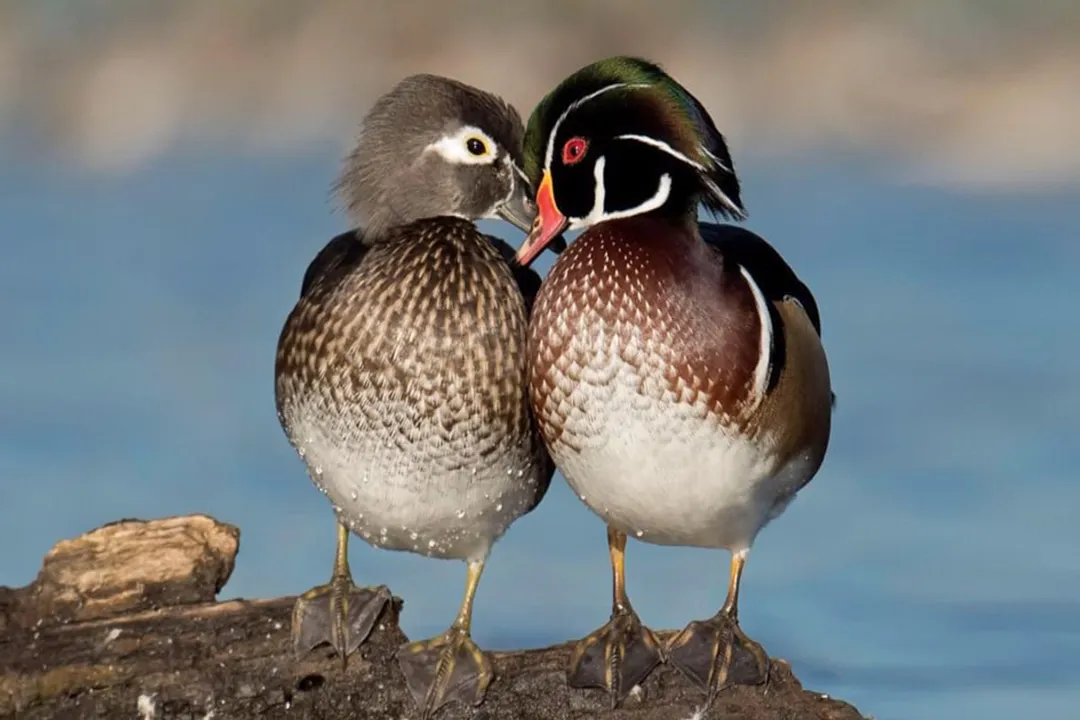
The Wood Duck, or Carolina Duck, is immediately recognizable across its range, not just for the male's astonishingly vibrant, iridescent plumage, but for its unique preference for trees—a trait that sets it apart from most other North American waterfowl. [1][4] Its presence is a direct indicator of specific wetland conditions, making the study of its locations critical for understanding and conserving forested aquatic ecosystems throughout the continent. [1] This species, closely related only to the Asian Mandarin Duck, occupies a wide swath of North America, yet its distribution is far from uniform. [1][4]
# North America
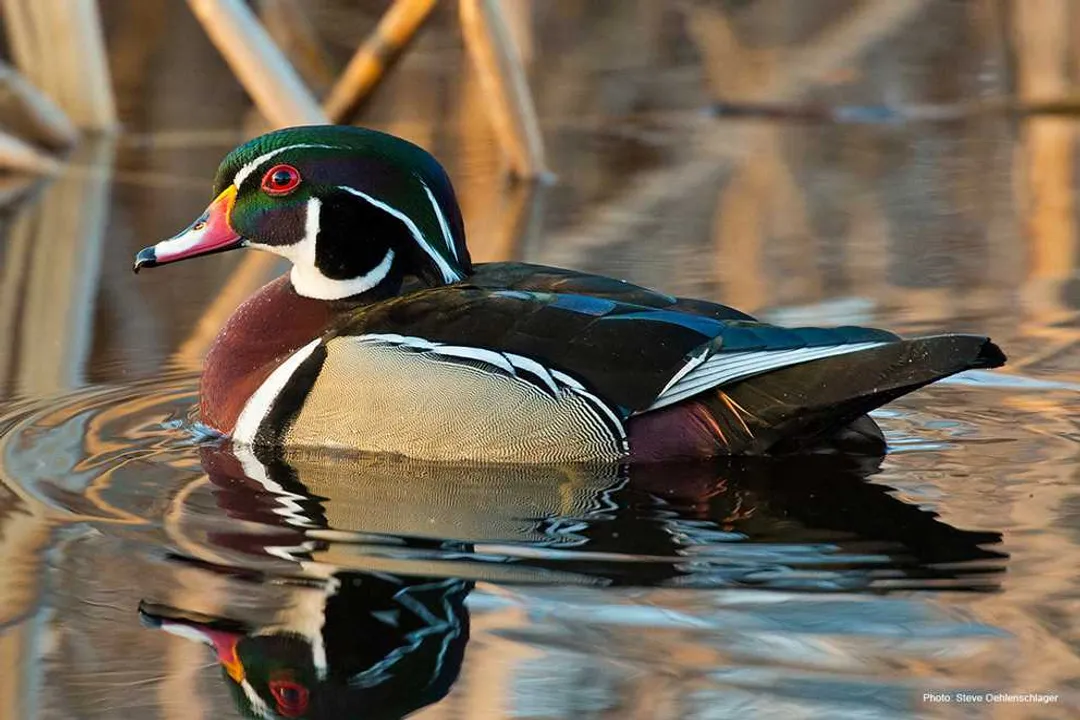
The broad scope of the Wood Duck’s range covers nearly all of the United States and extends into southern Canada and down to Cuba. [2][4] However, a crucial distinction must be made when discussing where to find them: the continent is effectively divided into two major, largely separate breeding populations, East and West. [2][4] Biologists regard the species as “forest adapted,” which is generally accurate, as their life cycle is tightly bound to wooded environments. [2]
Overall, northern populations undertake migration flights to escape harsh winters, while those in the southern tier of their range are often permanent residents. [1][4] A notable exception to migratory patterns exists in the Pacific Flyway, where roughly three-quarters of the Wood Ducks remain non-migratory year-round. [1]
# Eastern Wetlands
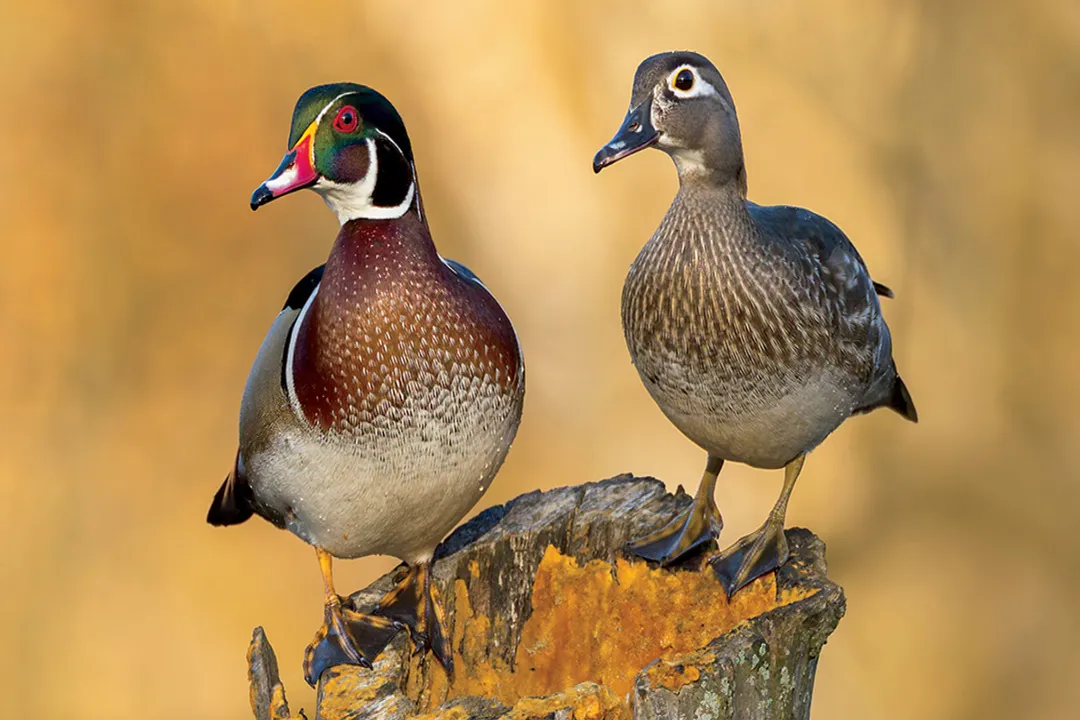
The primary and much larger breeding area for Wood Ducks encompasses the central and eastern United States, reaching into adjacent parts of southern Canada. [1] Within this vast area, legendary habitats like the bottomland hardwood forests and swamps of the Mississippi Alluvial Valley support significant breeding numbers, as well as large populations of wintering birds. [2][1] In the Midwest and the Atlantic states, you can find them utilizing slow-moving rivers, streams, beaver ponds, and emergent wetlands nestled within forested areas. [2] The historical decline of the species was strongly linked to the over-harvesting of these very bottomland hardwood forests, which provide both food (acorns) and nesting cavities. [1][2]
A fascinating dynamic occurs here: while older adult hens exhibit strong homing tendencies, often returning to nest within a few miles of where they were hatched, the males do not share this fidelity. [1] This means the genetic integrity of the local Eastern breeding population is primarily maintained by the females, with the males following their mates from varied origins across the continent to the nesting sites. [1]
# Western Pockets
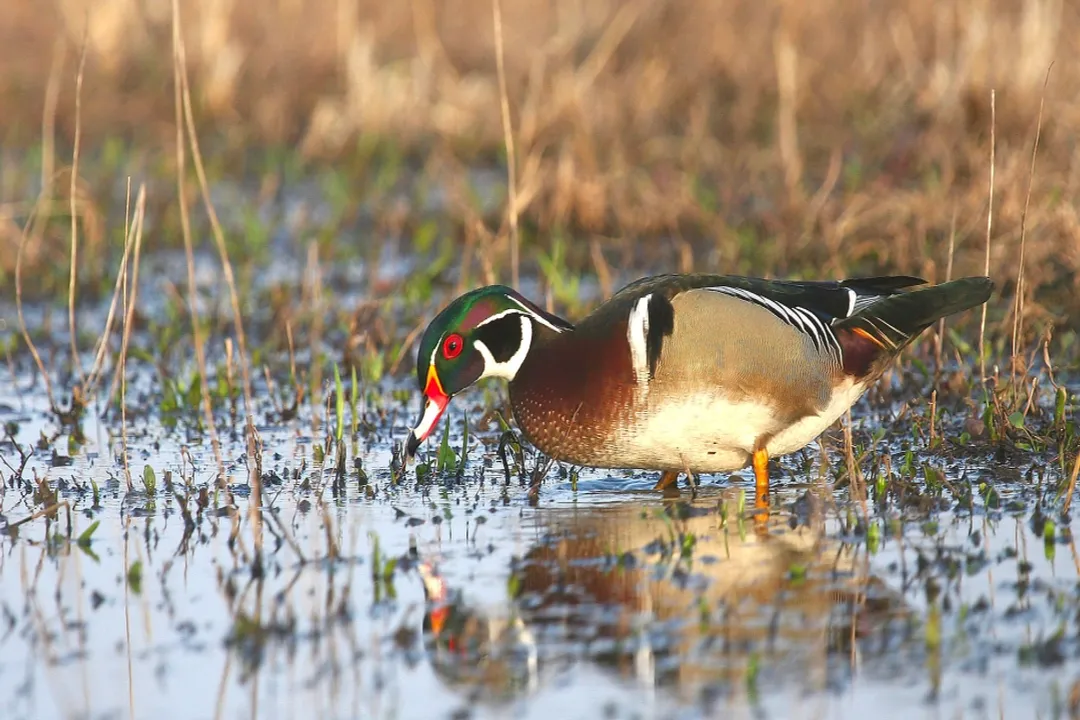
The Western Wood Duck population is geographically separated, or disjunct, from its eastern counterpart. [2] This population breeds along the West Coast of the United States, including areas in western Washington, Oregon’s Willamette Valley, and along the Columbia River, extending south to the west coast of Mexico. [1][4] California hosts the largest number of Western Wood Ducks, with the Butte Sink in the northern Sacramento Valley being a stronghold, encompassing about 18,000 acres of suitable habitat. [2]
What makes the Western story unique is the habitat context. While the East relies heavily on extensive, naturally occurring bottomland forests, areas like California’s Central Valley historically lacked these contiguous lowland timber tracts that supply the necessary tree cavities. [2] This environmental difference has led to a unique management solution: Wood Duck box programs in the West have been extraordinarily successful, almost single-handedly boosting the population where natural holes were scarce. [2] In essence, the combination of a Mediterranean climate providing ample insect food (especially for ducklings) and the introduction of artificial nesting sites allowed this population to thrive where natural tree cavities were the limiting factor. [2]
# Winter Range
When migration begins in the early fall, northern breeders travel south to avoid freezing conditions. [1] The wintering grounds are concentrated along the Atlantic seaboard and the Gulf Coasts. [1][4] For observers interested in Wood Ducks during the colder months, the southeastern United States—states like Louisiana, Arkansas, Mississippi, and the Carolinas—hosts the greatest abundance of individuals. [3]
Texas provides an excellent case study for observing both resident and migratory populations mixing. While Wood Ducks are found year-round in the eastern portion of the state, winter migrants from northern regions swell the local numbers. [1] These visitors have been sighted across Texas, though most numerous in the East and Southeast, with encounters stretching west to El Paso and south to Brownsville. [1] In late winter, as spring migration approaches, these composite flocks begin to segregate, with the resident Texas-raised hens leading their mates back to the areas where they were reared. [1]
# Habitat Needs
Regardless of whether they are in Maine or Monterey, the habitat requirements for successful Wood Duck location remain consistent: they need a mix of water and cover. [4] They are intrinsically linked to forested wetlands. [2] Key locations include swamps, marshes, slow-moving streams, and the vegetated margins of ponds and lakes, particularly where large trees overhang the water, creating essential shade. [1][2]
The core necessity stems from their nesting habits. As obligate secondary cavity nesters, they cannot excavate their own holes; they rely on existing cavities in living or dead trees, or readily accept man-made boxes. [2] A location is only truly suitable if it offers this nesting substrate near shallow water areas for brood-rearing. [1] The ducklings need immediate access to water teeming with aquatic invertebrates—the protein source vital for their rapid growth during the first few weeks of life. [1] Furthermore, adults also require heavily vegetated wetlands with good cover during the summer molt when they are temporarily flightless. [3][1]
# Nesting Clues
Confirming whether Wood Ducks are merely stopping over during migration or are established local breeders is important for targeted habitat work, especially where management efforts focus on nest boxes. [1] In areas like East Texas, where resident birds nest from January through July, the presence of ducks during the non-migratory season is not a good indicator of local breeding. [1]
A practical observational threshold exists: if you observe Wood Ducks between April and August, it is highly probable that nesting hens are occupying an area nearby, thanks to their strong homing instinct. [1] Since males follow the nesting females, finding ducks during this April-to-August window strongly suggests that the habitat you are surveying is part of the established breeding grounds, making it a prime location for supporting nest box projects. [1] Conversely, if you only see them in October through February, they are most likely wintering migrants from further north. [1] Therefore, understanding the time of year is as important as understanding the geography when seeking out breeding Wood Duck locations.
Related Questions
#Citations
Wood Duck Range Map, All About Birds, Cornell Lab of Ornithology
Wood Duck | Audubon Field Guide
Wood Duck (Aix sponsa) | U.S. Fish & Wildlife Service
Understanding Waterfowl: Wood Ducks East to West
Wood duck - Wikipedia
Wood Duck Species Info & Hunting - Ramsey Russell's GetDucks.com
[PDF] Managing for Wood Ducks in East Texas