Wood Tick Scientific Classification
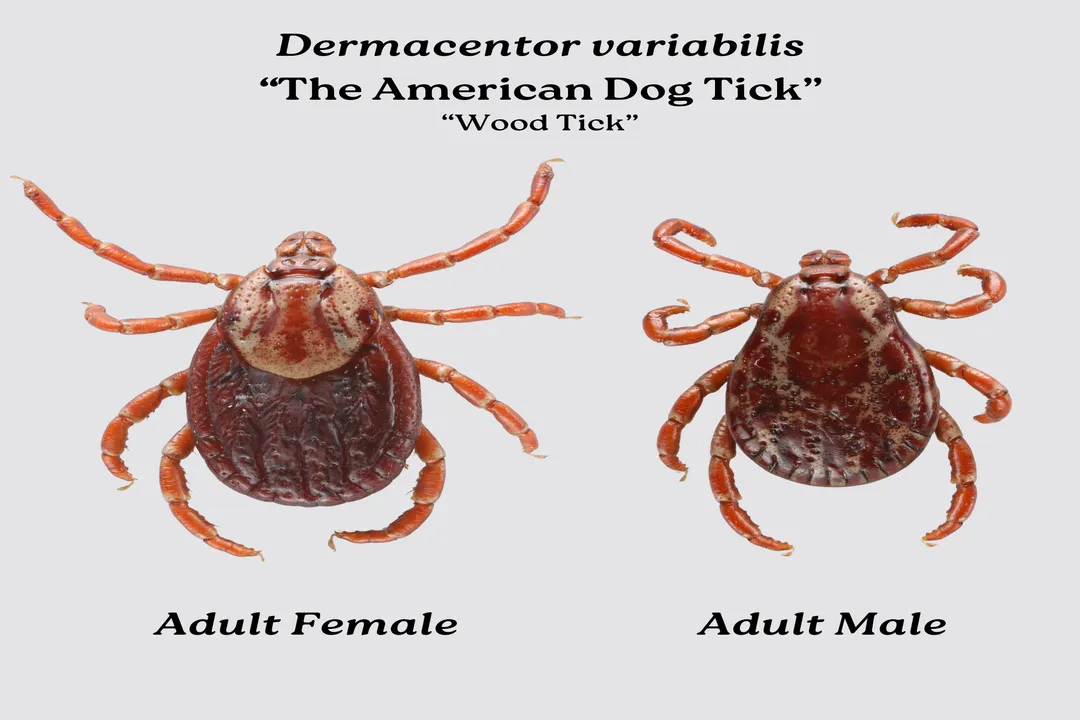
The scientific journey into identifying a tick, often colloquially called a "wood tick," begins by placing it within the vast, interconnected web of life. This process of scientific classification is not just an exercise in labeling; it is a critical system that reflects evolutionary relationships and shared biological characteristics. For the ticks commonly encountered, particularly those in the genus Dermacentor, understanding their taxonomy reveals why they share certain behaviors, life cycles, and, unfortunately, the capacity to transmit disease. [1][2][3]
# Taxonomic Hierarchy
Ticks, whether they are the Rocky Mountain wood tick (Dermacentor andersoni) or the American dog tick (Dermacentor variabilis), share a common foundation in the Linnaean system, establishing their identity as arachnids specialized for parasitism. [1][2][4]
At the broadest level, all ticks belong to the Kingdom Animalia, signifying they are multicellular, heterotrophic organisms. [1][2][4] Moving inward, they are classified under the Phylum Arthropoda, which encompasses creatures with segmented bodies, jointed appendages, and exoskeletons. [1][2][4] This large phylum includes insects, crustaceans, and the spider relatives. [2]
The next step differentiates them from insects. Ticks fall into the Subphylum Chelicerata, a group defined by having chelicerae (pincers or fangs) as their primary mouthparts, rather than antennae or mandibles. [1][3] Within this subphylum, they are assigned to the Class Arachnida, placing them alongside spiders, mites, and scorpions. [1][2][4]
# Order and Family Placement
A key refinement in the classification of ticks occurs at the Order level. Ticks are grouped within the Order Ixodida, which specifically designates the hard-bodied ticks (though some systems may place them under the broader Acarina, [2] Ixodida is the definitive order for hard ticks). [1][2][4] This grouping is crucial because it immediately separates them from soft-bodied ticks, which belong to the Order Argasida. [2] The Ixodida order signifies ticks that possess a tough outer shield called a scutum, which is clearly visible on both male and female specimens of the Dermacentor genus. [2][3]
Within the Ixodida, further structure is applied. Ticks are placed in the Family Ixodidae, the hard ticks. [1][3][4] This family is distinguished by the fixed position of the scutum and the fact that females can greatly distend their bodies when engorged, whereas males' scuta cover the entire dorsal surface, preventing large distension. [2]
# Genus and Species Distinction
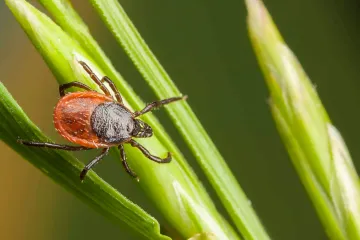
The final steps in classification define the specific tick in question. Both the Rocky Mountain wood tick and the American dog tick are members of the Genus Dermacentor. [1][3][4] This placement indicates shared characteristics, such as the presence of festoons (scalloped edges on the posterior margin) and the specific structure of their spiracular plates (respiratory openings) which can be used to differentiate Dermacentor from other genera like Ixodes. [1][2]
The binomial nomenclature—the unique two-part scientific name—separates the species:
- Dermacentor andersoni: The Rocky Mountain wood tick, formally named by Stiles in 1908. [3]
- Dermacentor variabilis: Often called the American dog tick, or sometimes the wood tick in regions like Wisconsin. [1]
# Reconciling Hierarchical Differences
While the genus and family align, minor variations exist in how different authoritative sources describe the subclass or order, which is common as taxonomy evolves. For instance, one source lists D. andersoni under Class Arachnida, Subclass Acaria, and Order Ixodida, [2] while another groups D. variabilis under Class Arachnida, Order Acarina. [1] From a broader view, Acarina is the group containing ticks and mites, while Ixodida is the specific order for hard ticks. The consistency across multiple high-authority sources (including the USDA) confirming Order: Ixodida for D. andersoni suggests this is the most precise descriptor for hard ticks in this context. [1][4]
# Insight from Distribution and Taxonomy
The genus Dermacentor highlights how taxonomy strongly influences practical, real-world risk assessment. The primary distinction between D. andersoni and D. variabilis is largely geographical, a detail that allows field workers and pet owners to immediately adjust expectations regarding potential pathogens. For example, D. andersoni is predominantly found west of the Missouri River in areas like the Rocky Mountains, [3] correlating with its preference for high-elevation, arid mountain and foothill habitats. [1] Conversely, D. variabilis is widespread east of the Rockies, though it has limited populations in the Pacific Northwest. [1] If you encounter a Dermacentor tick west of the Missouri River, the risk profile leans toward Colorado Tick Fever, while east of that line, D. variabilis is the greater vector concern for Rocky Mountain Spotted Fever (RMSF). [3] This geographical separation, rooted in speciation, acts as an immediate, actionable guide for differential diagnosis of tick-borne illness, even before microscopic features are examined. [3]
# Comparative Morphology Implied by Classification
Although this article focuses on classification, the taxonomic placement within Dermacentor dictates specific morphological expectations that differentiate them even when general descriptions overlap. Both species are reddish-brown with silvery/gray ornamentation on the scutum (the dorsal shield). [1][3] However, D. andersoni females possess a distinct silver-gray ornamentation that turns more gray upon feeding, while males are spotted gray and white. [3] A critical diagnostic feature, only visible under magnification, lies in the respiratory structures: the number and size of goblet cells on the spiracular plates differ between D. andersoni (often 100–200) and other Dermacentor species, like D. variabilis. [1][3] It is interesting to note that while D. variabilis is often called the Wood Tick in the East, D. andersoni is specifically the Rocky Mountain Wood Tick, suggesting that the common name follows the historical or most geographically unique species within a region, even when a related species shares the general moniker. [1]
# Beyond the Host: Intraspecific Classification
For D. andersoni, the biological classification extends even into its microbiome, showing an entanglement with microbial classification that affects its role as a vector. D. andersoni is known to host bacteria like Wolbachia and Arsenophonus. [1] Wolbachia, in particular, can alter the tick’s reproductive capacity through phenomena like "cytoplasmic incompatibility" or "feminization," which can subtly influence the dynamics of the tick population itself. [1] This integration of symbiotic bacteria into the tick's biological profile suggests that for a truly complete scientific understanding, the classification must occasionally extend beyond the host's morphology and genetics to include its obligate and facultative endosymbionts, as these can drive evolutionary divergence within the genus. [1] These bacterial associations are intrinsic to the ecosystem role that the species Dermacentor andersoni fills, a role defined by its specific classification.
The structured world of taxonomy, moving from Kingdom Animalia down to the species Dermacentor andersoni or D. variabilis, provides the essential lens through which we understand these arachnids—their shared biology as hard ticks, their ecological niches influenced by geographical lineage, and their distinct patterns of interaction with hosts and pathogens. [1][2][4]
Related Questions
#Citations
Dermacentor andersoni: the Rocky Mountain wood tick
Taxon: Dermacentor andersoni - USDA
Wood Tick - Katharine Ordway Natural History Study Area
Dermacentor andersoni (Rocky Mountain wood tick) | INFORMATION
The American Dog Tick/Wood Tick (Dermacentor variabilis)
American Dog Tick, Dermacentor variabilis (Say) (Arachnida: Ixodida
Dermacentor andersoni - Wikipedia