What visible sign confirms that parasitoid wasps, such as those in Braconidae, are controlling *A. nerii*?
Answer
The appearance of darkened, swollen, or mummified aphids
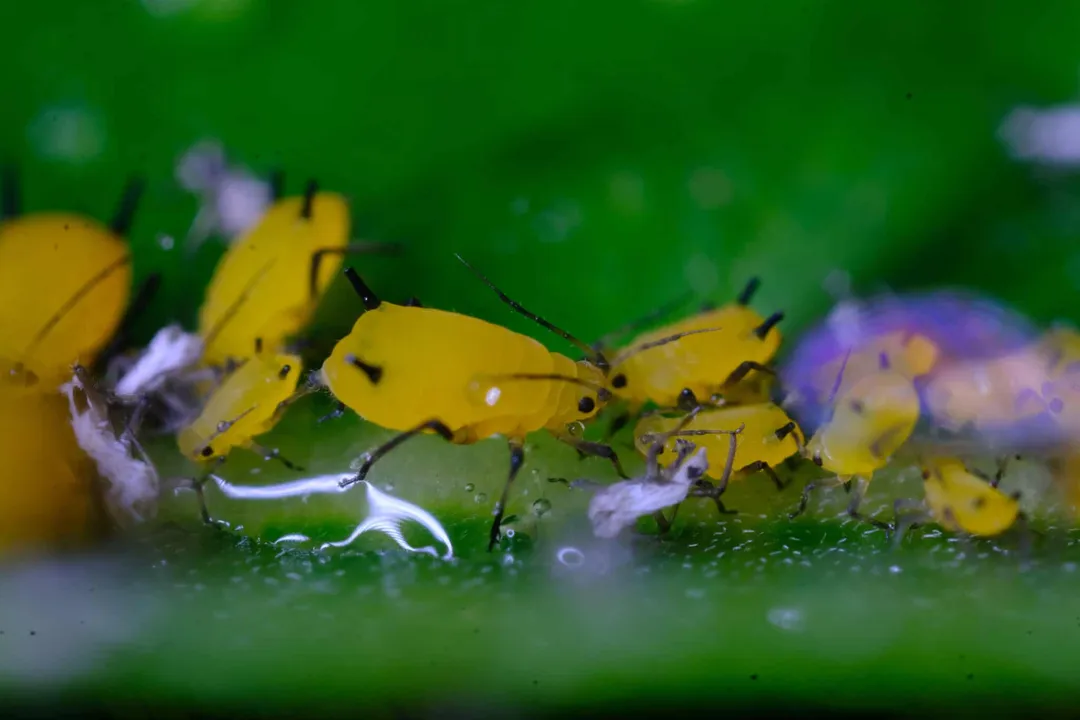
A key indicator of successful biological control exerted by parasitoids, particularly wasps belonging to the family Braconidae, involves distinct physical changes in the infested aphids. When these wasps lay their eggs inside the soft bodies of the aphids, the developing wasp larva consumes the host internally. Upon maturation, the wasp pupates, causing the aphid's body to change appearance dramatically. Affected aphids become visibly darkened, often appearing swollen or rigid, eventually resulting in a 'mummified' state. Monitoring for these mummies provides direct evidence that natural enemies are active and successfully modulating the yellow aphid population.
Related Questions
What key feature distinguishes adult *Aphis nerii* from similar aphids?To which specific order do *Aphis nerii*, classified as true bugs, belong?Why is *Aphis nerii* frequently named the Oleander Aphid?What reproductive strategy characterizes the dominant *A. nerii* population during the growing season?How are the transparent wings of *Aphis nerii* alates distinguished visually?What triggers the shift in *A. nerii* reproduction towards forms that produce overwintering eggs?Besides *Nerium oleander*, what other documented host plant family supports *A. nerii* colonization?What visible sign confirms that parasitoid wasps, such as those in Braconidae, are controlling *A. nerii*?Which taxonomic rank do *Aphis nerii* and other related pests share within the classification hierarchy?What feeding specialization defines the Order Hemiptera to which *A. nerii* belongs?