What triggers the shift in *A. nerii* reproduction towards forms that produce overwintering eggs?
Answer
Increasing environmental stress or shortening day length near the end of the season
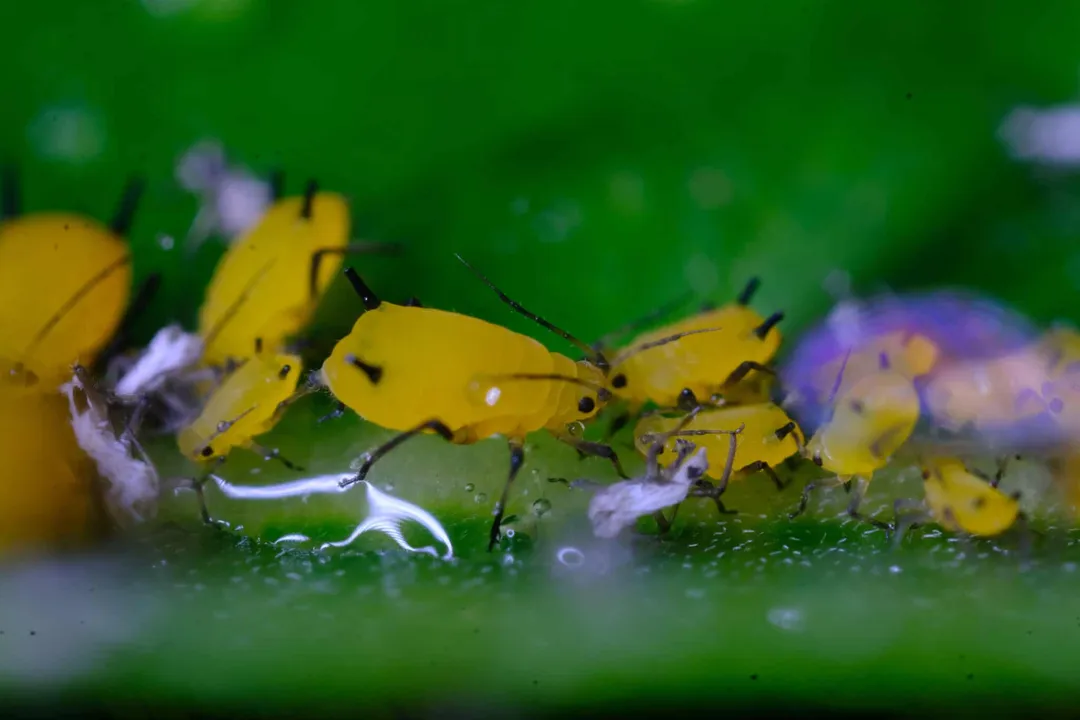
While the active growing season favors rapid asexual, live-bearing reproduction (viviparity), the *Aphis nerii* population structure changes as environmental conditions become less favorable for continuous growth. Specifically, as day length shortens toward the conclusion of the warm period, or when overall environmental stress increases, the reproductive strategy pivots. This results in the population producing sexual forms. These sexual forms are responsible for producing hardened, overwintering eggs, which provide the species with a mechanism to survive colder periods when host vigor is reduced or the plants enter dormancy.
Related Questions
What key feature distinguishes adult *Aphis nerii* from similar aphids?To which specific order do *Aphis nerii*, classified as true bugs, belong?Why is *Aphis nerii* frequently named the Oleander Aphid?What reproductive strategy characterizes the dominant *A. nerii* population during the growing season?How are the transparent wings of *Aphis nerii* alates distinguished visually?What triggers the shift in *A. nerii* reproduction towards forms that produce overwintering eggs?Besides *Nerium oleander*, what other documented host plant family supports *A. nerii* colonization?What visible sign confirms that parasitoid wasps, such as those in Braconidae, are controlling *A. nerii*?Which taxonomic rank do *Aphis nerii* and other related pests share within the classification hierarchy?What feeding specialization defines the Order Hemiptera to which *A. nerii* belongs?