What reproductive strategy characterizes the dominant *A. nerii* population during the growing season?
Answer
Viviparous reproduction leading to live-born nymphs
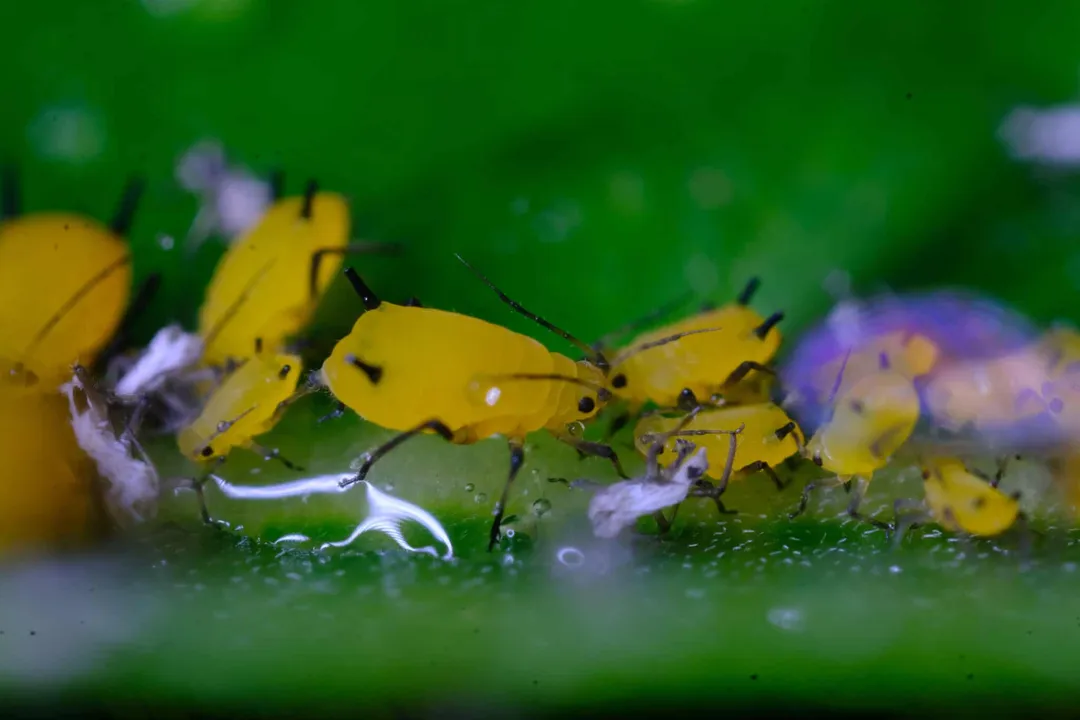
During favorable conditions typical of the growing season—characterized by warmth and ample tender plant material—*Aphis nerii* predominantly reproduces via viviparity. Viviparous reproduction means that the young aphids are born live, already developed into mobile nymphs, rather than hatching from eggs laid previously. This strategy, often occurring concurrently with parthenogenesis (reproduction without mating), allows a single founder female to rapidly establish a large, dense colony. The immediate birth of developed nymphs bypasses the vulnerable egg stage, facilitating explosive population growth essential for maximizing feeding on vigorous host plants.
Related Questions
What key feature distinguishes adult *Aphis nerii* from similar aphids?To which specific order do *Aphis nerii*, classified as true bugs, belong?Why is *Aphis nerii* frequently named the Oleander Aphid?What reproductive strategy characterizes the dominant *A. nerii* population during the growing season?How are the transparent wings of *Aphis nerii* alates distinguished visually?What triggers the shift in *A. nerii* reproduction towards forms that produce overwintering eggs?Besides *Nerium oleander*, what other documented host plant family supports *A. nerii* colonization?What visible sign confirms that parasitoid wasps, such as those in Braconidae, are controlling *A. nerii*?Which taxonomic rank do *Aphis nerii* and other related pests share within the classification hierarchy?What feeding specialization defines the Order Hemiptera to which *A. nerii* belongs?