What adaptation characterizes the Zebrasoma genus of surgeonfishes?
Answer
Elongated snouts for efficient grazing.
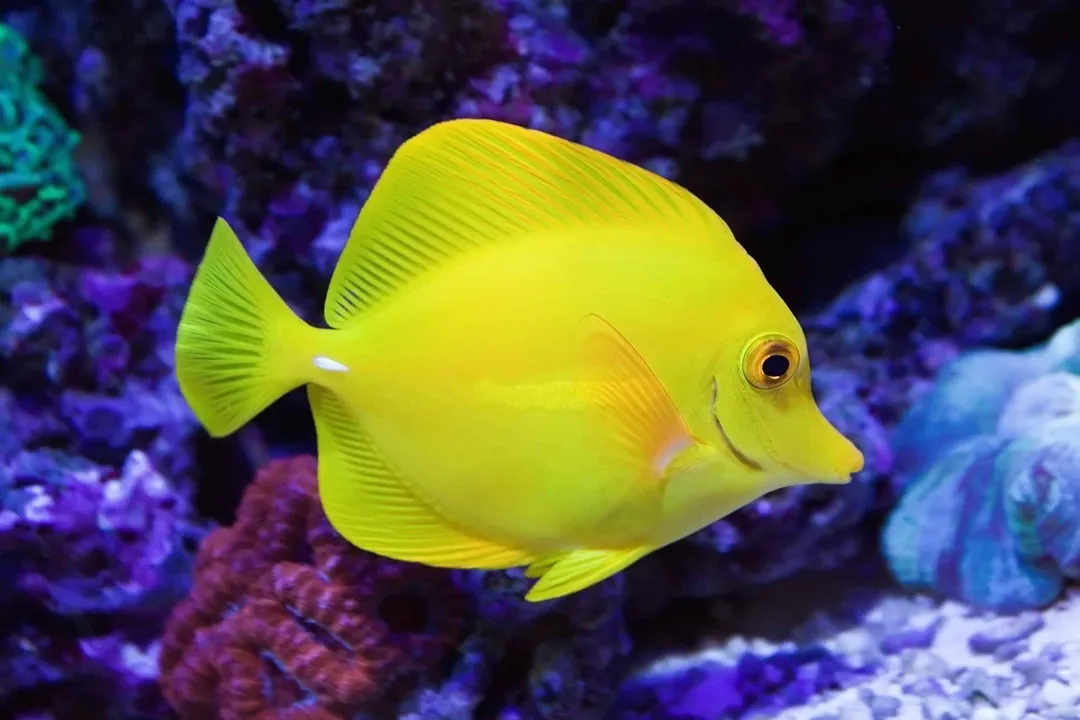
The Genus *Zebrasoma*, which includes the Yellow Tang, is specifically characterized by a physical adaptation involving its snout. Fish within this genus possess noticeably elongated snouts. This specialized mouth structure is crucial for their ecological niche, allowing them to efficiently graze on filamentous algae that grow closely attached to hard surfaces like corals and rocks. This adaptation dictates how they forage and distinguishes them from related surgeonfishes in genera like *Acanthurus*, which typically feature shorter snouts and more oval body shapes. The function of this snout is directly tied to their diet and feeding behavior within the reef ecosystem.
Related Questions
What adaptation characterizes the Zebrasoma genus of surgeonfishes?To which family, referencing sharp caudal spines, does Zebrasoma flavescens belong?What does the specific epithet flavescens in Zebrasoma flavescens signify?What characteristic defines the placement of the Yellow Tang in Class Actinopterygii?What is the common descriptor often associated with the Order Perciformes?What is a known synonym for Zebrasoma flavescens found in older scientific literature?What feature must an organism possess to be placed in Phylum Chordata?How does the Zebrasoma genus differ from the Acanthurus genus in body shape?Why are members of the Family Acanthuridae commonly called "surgeonfish"?What does placement in Kingdom Animalia indicate about Zebrasoma flavescens?