Yellow Bellied Sapsucker Scientific Classification
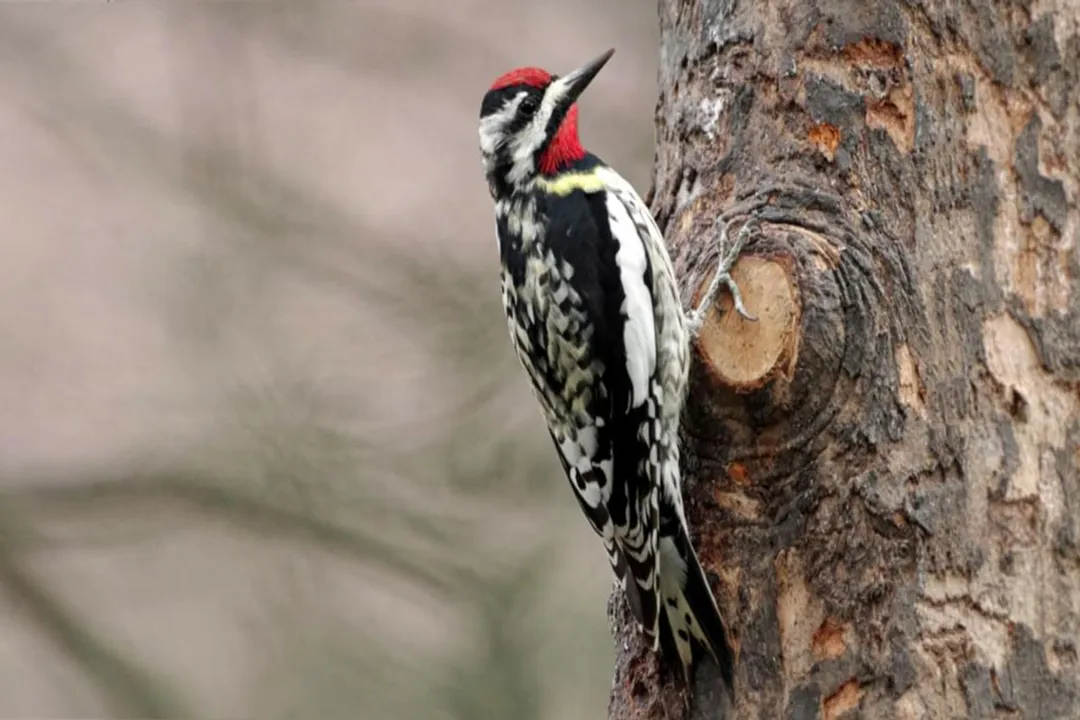
The official placement of the Yellow-bellied Sapsucker, Sphyrapicus varius, within the Linnaean hierarchy offers a precise map of its evolutionary relationships, tracing its lineage from the broadest categories of life down to its specific identity. Understanding this classification system is less about memorizing Latin names and more about appreciating the shared biological architecture and evolutionary history that this distinctive North American woodpecker carries with it.
# Kingdom Animalia
At the very top of the biological scale, the sapsucker resides in the Kingdom Animalia, a classification shared by all multicellular, heterotrophic organisms—creatures that must consume other life forms for energy, as opposed to plants which generate their own food through photosynthesis. This fundamental grouping immediately tells us that the Yellow-bellied Sapsucker is an animal, requiring mobility and a complex set of sensory organs to locate and process its diet of insects, sap, and fruit.
# Phylum Chordata
Moving deeper, the sapsucker falls into the Phylum Chordata, or sometimes classified under its close relative, the subphylum Craniata. This places it within the group defined by having, at some stage in their life cycle, a notochord (a flexible rod supporting the body), a dorsal hollow nerve cord, pharyngeal slits, and a post-anal tail. For the Yellow-bellied Sapsucker, this blueprint is most evident in its internal skeletal structure—a backbone, or vertebral column—which connects it directly to mammals, fish, and reptiles. Even the stiff tail feathers, so critical for bracing against tree trunks, are an expression of this underlying axial support system.
# Class Aves
The next major designation is the Class Aves, the birds. This classification recognizes the suite of features that distinguish birds from other vertebrates, most notably the presence of feathers, the adaptation of forelimbs into wings (even if not used for primary flight, as in some ground-dwelling birds), hard-shelled eggs, and a high metabolic rate supported by a four-chambered heart. Morphologically, the sapsucker exhibits classic avian traits: its lightweight structure, its specialized chisel-tipped bill, and its daily activity patterns.
# Order Piciformes
The classification then narrows into the Order Piciformes, which is highly significant as it groups the sapsucker with woodpeckers, toucans, and barbets. While a casual observer might only note its superficial similarity to other North American woodpeckers, its inclusion in Piciformes suggests a deeper shared ancestry with toucans and barbets than with other birds that might forage in trees, like creepers or nuthatches. This order is characterized by specific skeletal features and, relevant to this bird’s feeding strategy, the arrangement of its toes: zygodactylous feet, meaning two toes point forward and two point backward. This arrangement is essential for securing a grip on vertical surfaces, a necessity for both the sapsucker and its order relatives.
Its placement in the Order Piciformes alongside toucans and barbets, rather than being grouped purely by common behaviors with other widespread woodpeckers, suggests that the deepest splits in avian evolution identified shared characteristics beyond just chisel-billed foraging. For instance, while the stiff tail and specialized tongue place it firmly in the Picidae family, the sapsucker's highly specialized diet centered on tree xylem fluid and insects extracted via rows of small holes—a behavior not shared by, say, a Flicker or Pileated Woodpecker—suggests a unique ecological niche that evolved within the woodpecker family structure. The evolutionary pressure that favored this sap-feeding specialization likely occurred after the initial separation that created the Piciformes order, but before the complete speciation events within Sphyrapicus.
# Family Picidae
Within Piciformes, the Yellow-bellied Sapsucker belongs to the Family Picidae, the true woodpeckers. This family designation immediately links it to species like the Downy, Hairy, and Red-bellied Woodpeckers. Members of Picidae share specialized tools for their lifestyle: the powerful, straight bill for excavation; the thick, padded skull to absorb impact; and a long, barbed, and brush-tipped tongue capable of probing deep into cavities or, in the sapsucker’s case, licking up the flowing sap. The presence of these features solidifies its place as a drilling, cavity-excavating bird, despite its unique preference for sap over sheer insect extraction year-round.
# Genus Sphyrapicus
The shift to the Genus Sphyrapicus marks the recognition of a specific, cohesive lineage within the woodpecker family. This genus is comprised solely of the three recognized sapsucker species: Sphyrapicus varius (Yellow-bellied), Sphyrapicus nuchalis (Red-naped), and Sphyrapicus ruber (Red-breasted). The fact that Sphyrapicus varius was established as the type species for this genus means that its morphology and behavior were the foundational characteristics against which the other two species were compared when Baird erected the genus in 1858.
It is insightful that while these three species share the highly specialized sap-drilling technique that defines the group, the subtle but consistent differences in head and nape coloration—primary identifiers used by birders—are precisely what taxonomists use to delineate these three sister species within the relatively small Sphyrapicus group. This highlights a classification challenge where superficial markings hold significant weight at the species level, even when substantial interbreeding might occur where ranges meet.
# Species Sphyrapicus varius
Finally, we arrive at the specific epithet: Sphyrapicus varius. The specific name varius is Latin for "various" or "variegated," a descriptor fitting for a bird characterized by its sharp, contrasting patterns of black, white, and red markings on its head and throat (with males having the most vibrant red throat patch). This specific designation separates it from its relatives, such as the Red-naped Sapsucker, which displays a red patch on the back of the head (nape) instead of the broad red forehead of S. varius.
The species S. varius is recognized as monotypic, meaning no recognized subspecies currently exist, though there is mention of an infraspecies, Sphyrapicus varius appalachiensis, in some records. Its entire North American range—breeding in the forests of Canada and the northeastern U.S., and migrating south to Central America—is tied to this specific scientific identity, distinguishing its migratory routes and preferred deciduous/mixed woodlands from those of the more western species within its own genus.
To summarize the placement using data common across these records, the organization looks like this:
| Taxonomic Rank | Classification | Significance |
|---|---|---|
| Kingdom | Animalia | Heterotrophic, multicellular life |
| Phylum | Chordata | Possesses a backbone/notochord structure |
| Class | Aves | Feathered, winged vertebrates |
| Order | Piciformes | Relatives of toucans; characterized by zygodactylous feet |
| Family | Picidae | True woodpeckers; possess specialized drilling bills and stiff tails |
| Genus | Sphyrapicus | The sapsucker lineage, distinct within the family |
| Species | S. varius | The Yellow-bellied Sapsucker, identified by specific plumage patterns |
This formal classification, from Animalia down to varius, confirms the Yellow-bellied Sapsucker is evolutionarily closer to a Costa Rican toucan than it is to a flycatcher, while still being defined by the specialized trunk-clinging and drilling mechanics shared with all other members of the Picidae family.
Related Questions
#Citations
Yellow-bellied sapsucker - Wikipedia
Sphyrapicus varius - NatureServe Explorer
Yellow-bellied Sapsucker - All About Birds
yellow-bellied sapsucker - Illinois Department of Natural Resources
Yellow-bellied Sapsucker - Montana Field Guide